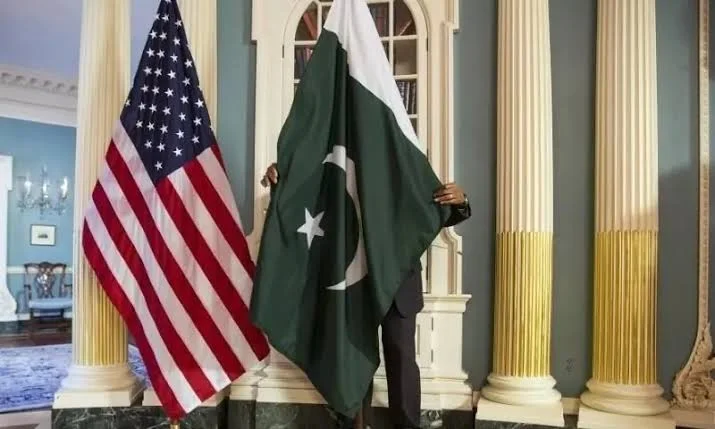


In a major diplomatic development that clarifies the international legal boundaries of the ongoing border conflict, the United States State Department has formally issued an unyielding endorsement of Pakistan’s sovereign right to execute cross-border kinetic operations against terrorist infrastructure in neighboring Afghanistan.
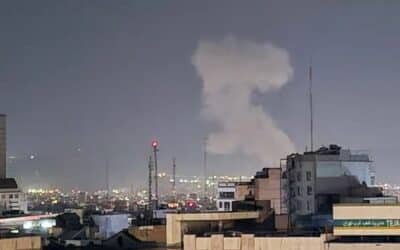
This explicit backing from Washington follows a series of precise, intelligence-based retaliatory strikes launched by the Pakistan Armed Forces along the Afghan border corridor. The operations were triggered by a major cross-border proxy assault on a forward headquarter of the Pakistan Rangers Sindh in Karachi’s Gulistan-i-Jauhar area, which was planned and directed from safe havens inside Taliban-controlled territory.
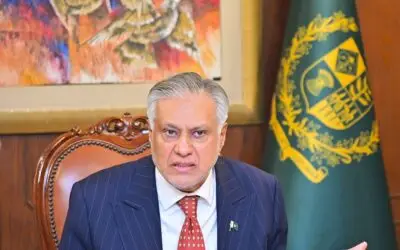
Statement by Ambassador Asim Iftikhar Ahmad,
Permanent Representative of Pakistan to the UN,
At the UN General Assembly’s 96th Plenary Meeting of the 80th Session Under Agenda Item 118 on the 9th Review of the UN Global Counter Terrorism Strategy (GCTS)*
*****Thank you Mr.… pic.twitter.com/Oynf3wm2KK
— Permanent Mission of Pakistan to the UN (@PakistanUN_NY) July 2, 2026
The U.S. Endorsement and Border Kinetics
The official statement from Washington solidifies Pakistan’s legal position under international law as it manages escalating provocations along its western frontier:
“The Pakistani people have suffered greatly at the hands of terrorists. The United States supports Pakistan’s right to defend itself against terrorist attacks.”
— U.S. State Department Official Proclamation
This high-level backing mirrors positions stated by senior American policymakers, including Under Secretary of State Allison Hooker, confirming that Washington continues to monitor the Durand Line closely. By explicitly validating Islamabad’s right to launch targeted, proportional responses against hostile staging grounds, the U.S. has effectively decoupled Pakistan’s localized border defense from broader global diplomatic standoffs, recognizing the existential nature of Pakistan’s counter-terrorism operations.
The UN Fracture: The Collapse of Consensus Over the GCTS
While bilateral security alliances are strengthening, the multilateral architecture at the United Nations has fractured. For the first time since its creation in 2006, the United Nations Global Counterterrorism Strategy (GCTS) failed to achieve its traditional consensus-based adoption during its ninth review, forcing a highly contentious recorded vote in the General Assembly.
The structural breakdown in New York has exposed deep, unresolvable rifts between major global power blocs, splitting the vote across three distinct strategic positions:
-
The U.S.-led Opposition: The United States, Israel, and Argentina voted directly against the resolution. U.S. diplomats slammed the 170-paragraph document as “bloated, outdated, and lacking focus,” arguing that it diluted core counterterrorism operational priorities by ignoring numerous U.S. policy concerns and red lines.
-
The OIC and Muslim Bloc Critiques: While voting in favor alongside 139 other nations to prevent a total collapse of the framework, Pakistan, Iran, Egypt, and Turkiye expressed deep dissatisfaction. The Organization of Islamic Cooperation (OIC) noted that three years of intense negotiations failed to include critical protections against far-right Islamophobia, the repeated targeting of Muslims, and the systematic desecration of the Holy Quran and mosques worldwide.
The Pakistani Mandate: Redefining Global Counter-Terrorism Law
Addressing the UN General Assembly plenary meeting, Pakistan’s Permanent Representative, Ambassador Asim Iftikhar Ahmad, delivered a comprehensive, legally grounded brief that outlines Pakistan’s modern counter-terrorism doctrine. He warned that the international community is relying on an outdated framework to fight a highly decentralized, digitally advanced threat.
The strategy presented by Pakistan outlines five critical areas for structural reform:
1. Distinguishing Self-Determination from Terrorism
Pakistan completely rejected any attempt by foreign occupying powers to equate the legitimate, international law-sanctioned struggle for self-determination with terrorism. The state demanded stronger global condemnation of state-sponsored terrorism and violent actions carried out against populations trapped under foreign occupation.
2. Digital and Financial Regulation
The state called for strict international regulation of digital space to disrupt modern asymmetric warfare. This includes holding social media giants accountable for hosting online radicalization, recruitment, and extremist propaganda, alongside the strict monitoring of digital financial systems, virtual assets, and cryptocurrencies to prevent their exploitation by terrorist networks.
3. De-Weaponization of Intergovernmental Bodies
Ambassador Asim Iftikhar demanded that global financial watchdogs, specifically the Financial Action Task Force (FATF), remain strictly impartial, transparent, and completely insulated from political use by individual states seeking to exploit regulatory frameworks for unilateral geopolitical gains.
4. Direct Accountability for State Losses
Highlighting the heavy human toll borne by the state, Pakistan reminded the assembly that over 1,200 Pakistani citizens and security personnel were martyred in terrorist attacks in the past year alone. Having served at the absolute forefront of global operations against Al-Qaeda and its affiliates, Pakistan warned that it will no longer allow its domestic sacrifices to be overlooked by geopolitical paralysis in New York.
Conclusion: The Sovereign Path Forward
The diplomatic divide at the United Nations serves as a stark wake-up call for global security governance. As multilateral institutions struggle under the weight of political divisions, Pakistan has made its policy framework perfectly clear.
By securing a firm acknowledgment of its right to self-defense from Washington while simultaneously leading the OIC’s legal push at the UN, Islamabad has successfully protected its strategic independence. As operations along the western border continue under strict state mandates, Pakistan has shown that while it remains fully committed to building a fair, multilateral counter-terrorism architecture, it will never allow institutional paralysis in New York to compromise its immediate, kinetic defense of its citizens and sovereign borders.