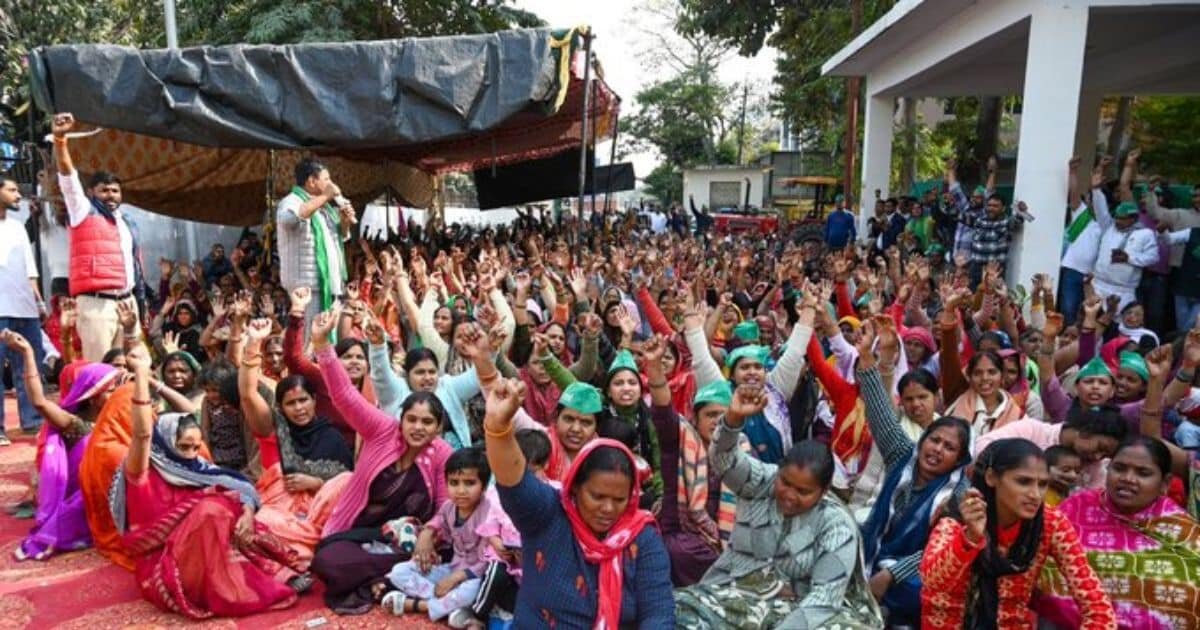




Thousands of farmers took to the streets across India to protest the newly announced U.S.-India Interim Trade Framework. The Samyukt Kisan Morcha (SKM), a coalition of over 100 farm groups, called for a nationwide strike, alleging that the government “surrendered” to American agribusiness. Protesters in states like Punjab, Haryana, and Karnataka burned copies of the pact, fearing that reducing tariffs on U.S. products like soybean oil, tree nuts, and animal feed (DDGS) would flood domestic markets with cheap imports and depress local prices.
Thousands of farmers across India are set to gather for large-scale protests against the country’s long-awaited trade deal with the United States, an agreement that organizers say could pave the way for imports that will hurt domestic agriculture https://t.co/TyQKf1GCYp
— Bloomberg (@business) February 12, 2026
The protests reached a boiling point outside Parliament, where opposition leaders led by the Congress party brandished “Trap Deal” placards. Congress President Mallikarjun Kharge accused Prime Minister Modi of signing the agreement under pressure from U.S. President Donald Trump. Despite the outcry, Trade Minister Piyush Goyal defended the deal, asserting that 90–95% of sensitive farm products, including dairy, rice, and wheat, remain protected. He also highlighted a major win for the industry: Indian textile exporters using U.S. cotton will receive zero-tariff benefits, ensuring parity with regional competitors like Bangladesh.
While the government maintains the pact will double bilateral trade to $500 billion by 2030, farm leaders have warned of sustained agitation. The next round of negotiations is set for March, where both nations aim to finalize the fine print before transitioning to a comprehensive Bilateral Trade Agreement (BTA).
You May Like To Read: