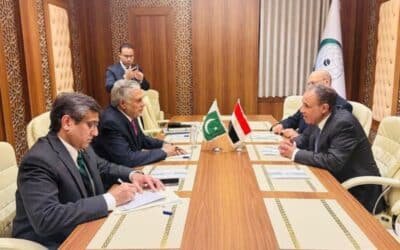
The recent regional developments, in the wake of Pahlgham attacks and the India-Pakistan conflict, demonstrate the evolving geopolitical dynamics. The Quadrilateral Security Dialogue (QUAD) has subtly yet unequivocally distanced itself from India’s persistent false narrative concerning regional terrorism and aggression against Pakistan. Recent joint sessions of the QUAD—comprising the United States, Japan, Australia, and India—highlighted the nuanced diplomatic posture, signalling a growing reluctance among India’s allies to uncritically endorse its often-unsubstantiated claims. This emerging dynamic suggests a potential diplomatic isolation for India, even from its seemingly strongest partners, and carries considerable implications for the future of regional stability.
Diplomatic Isolation: Allies Keep Their Distance
India has long sought to leverage international forums, including the QUAD, to propagate its stance on cross-border terrorism, frequently implicating Pakistan. However, the latest joint statement from the QUAD foreign ministers regarding the Pahalgam terrorist attack in Jammu and Kashmir on April 22, 2025, reveals a distinct shift.
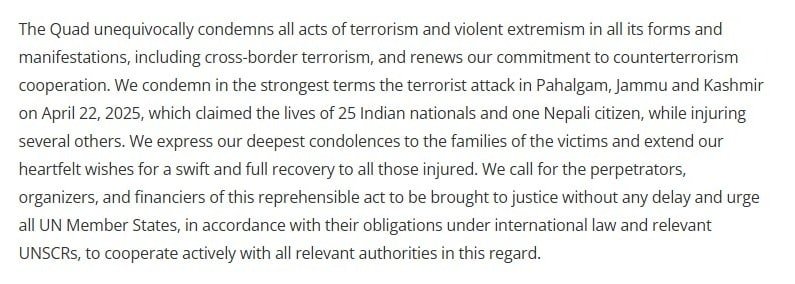
While the Ministers strongly condemned the reprehensible acts of terrorism, they called for the perpetrators, organisers, and financiers to be brought to justice. Evidently, they avoided naming Pakistan or any specific Pakistan-based terror group, conspicuously in disagreement with the false Indian narrative. This omission is particularly noteworthy given India’s past efforts to explicitly link such incidents to Pakistan and its desire for a joint statement that would unequivocally support its narrative. Even the Indian Media and Press expressed concerns over this conscious aloofness to the Indian narrative by QUAD in its joint statement.
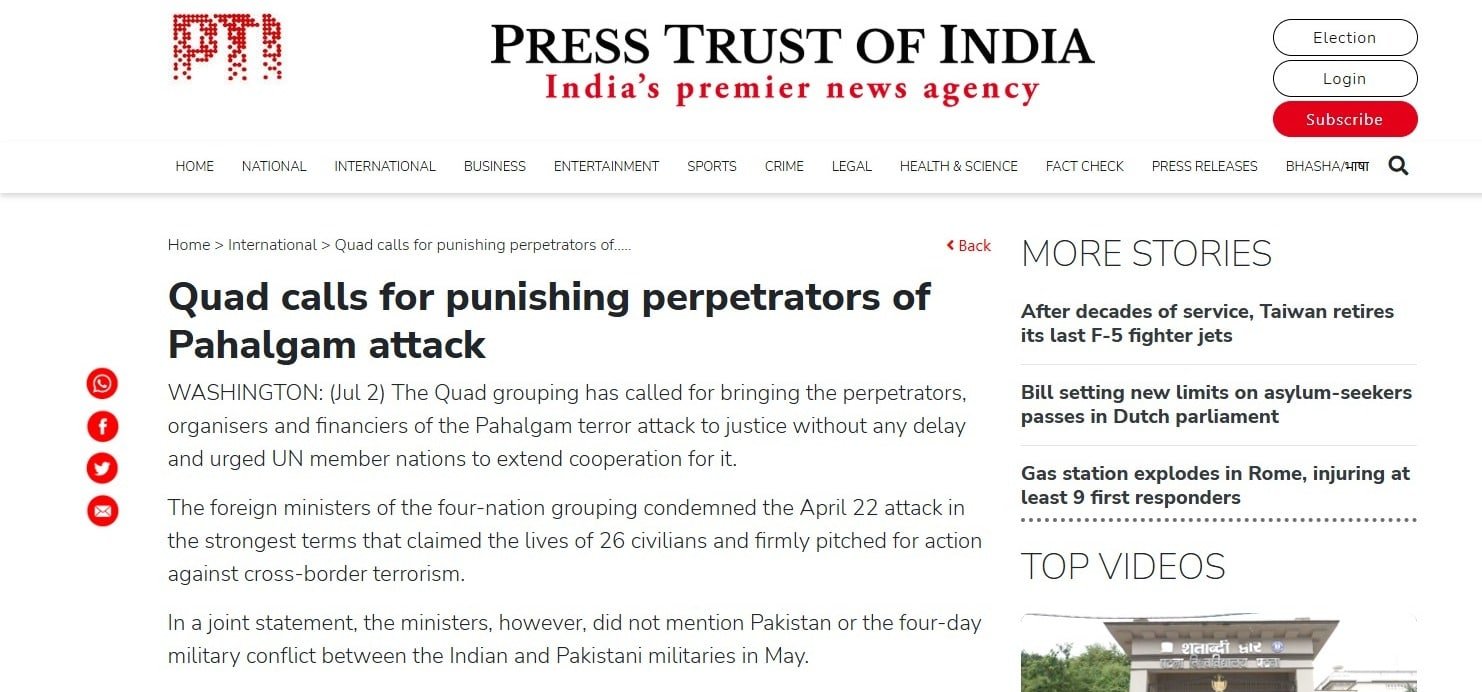
This measured response from the QUAD members suggests a reluctance to be drawn into India’s bilateral disputes or to validate its accusations without verification. The lack of endorsement for India’s claims points to a broader pattern of strategic hesitancy among key global players, which has left New Delhi facing a degree of diplomatic isolation.
This is a significant setback for India, which had hoped to garner unqualified support from its strategic partners, particularly given its growing ties with the United States and its central role in the QUAD alliance. The cautious language adopted by senior US officials has avoided mentioning Pakistan or the Pahalgam attack directly, further illustrating this diplomatic distancing.
QUAD’s Stance: Condemnation Without Endorsement
The joint statement, while condemning terrorism, did not echo India’s allegations of Pakistan’s involvement in the Pahalgam attack. This measured approach contrasts sharply with India’s public accusations and its subsequent military actions, dubbed “Operation Sindoor,” which targeted alleged terrorist infrastructure in Pakistan. The QUAD’s statement focused on the broader principle of countering cross-border terrorism and urged UN Member States to cooperate with “all relevant authorities” in accordance with international law, rather than singling out Pakistan.
This nuanced position is further evidenced by the fact that the QUAD statement, much like a previous UN Security Council condemnation, did not mention the specific perpetrator group, the Resistance Front (TRF), which India claims is an offshoot of a Pakistan-based organisation. The collective decision to avoid naming Pakistan, despite India’s lobbying, highlights a clear departure from blindly accepting or endorsing India’s narrative. It also reflects a desire among QUAD members to maintain diplomatic flexibility and avoid exacerbating regional tensions or supporting false propaganda.
No Endorsement for Indian Aggression
Crucially, the QUAD also refrained from endorsing India’s military aggression against Pakistan, particularly in the aftermath of the Pahalgam incident. The four-day military conflict between India and Pakistan in May 2025, which saw India attacking Pakistani cities and air bases, received no explicit support or justification from the QUAD. Instead, during the cross-border military offensive and counter-offensive, several nations urged New Delhi to exercise restraint or work with Islamabad to diffuse tensions.
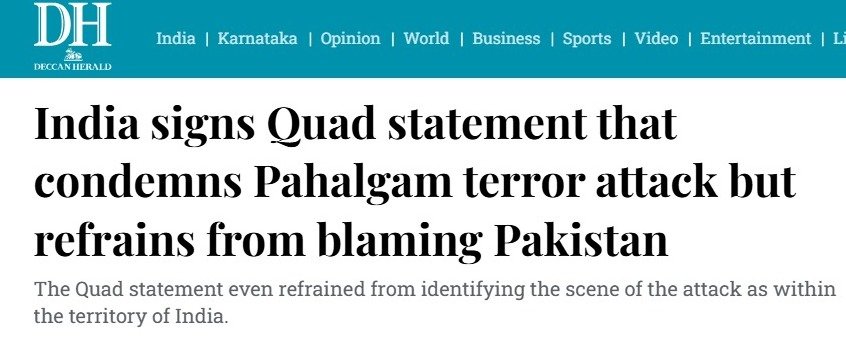
The lack of endorsement for India’s aggression signifies that India’s allies are not willing to provide a blank cheque for its confrontational policies. It suggests that despite India’s attempts to frame its actions as self-defence against cross-border terrorism, the international community, including its QUAD partners, views such escalations with caution and prefers a diplomatic resolution.
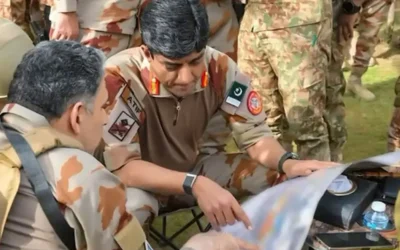
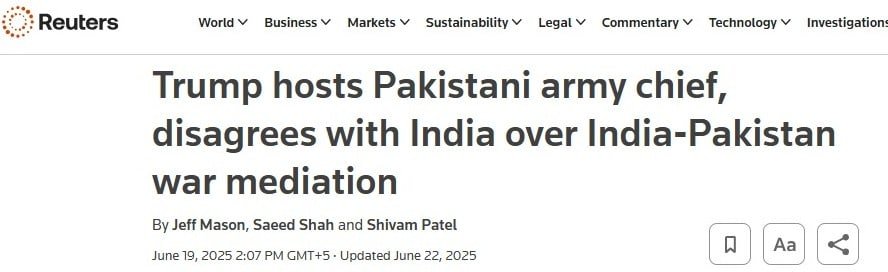
The fact that the US President Donald Trump hosted Pakistan Army chief, Field Marshal Asim Munir, at the White House amidst the tensions further underscored a balanced approach rather than an outright support for India’s aggressive posture. This one-on-one meeting between the President of the US and Pakistan’s COAS signified a rejection of the Indian narrative even by its strongest ally, as reported by Western media outlets.
Future Implications and Impact on Current Geopolitical Dynamics
The QUAD’s evolving stance carries significant implications for regional dynamics. Firstly, it exposes the limits of India’s ability to dictate the narrative on terrorism and security in South Asia. The implicit rejection of India’s claims by its strategic partners forces New Delhi to re-evaluate its diplomatic strategies and potentially adopt a more evidence-based, less confrontational, and sensationalist approach.
Secondly, this development could strengthen Pakistan’s diplomatic standing. The international community’s refusal to endorse India’s allegations or aggression lends credence to Pakistan’s position and its calls for a more balanced and just assessment of regional issues. It also validates Pakistan’s efforts to counter India’s narrative on global platforms.
Finally, the QUAD’s cautious approach may contribute to a more stable regional environment by discouraging unilateral military actions and promoting dialogue. While India continues to emphasise its right to defend its citizens, the lack of unequivocal support from its allies suggests that the international community prioritises de-escalation and a peaceful resolution of disputes. The shift in QUAD’s diplomatic emphasis may well be a critical step towards a more equitable and peaceful resolution of long-standing regional contentions.Operation Sindoor’s Aftermath: India’s Diplomatic Rebuff