The Pahalgam attack marked a pivotal point in South Asia’s volatile security landscape, as India launched a military and diplomatic campaign against Pakistan. Yet, instead of achieving a strategic edge or garnering international support, India faced a double setback: battlefield losses and growing diplomatic isolation. New Delhi attempted to frame the situation as “cross-border terrorism,” but Pakistan countered with a realistic and proactive diplomatic approach. This effectively shifted international opinion, challenging India’s standing both regionally and globally.
Diplomatic Debacle: Rebuff of Indian Narrative
As India aimed at using the Pahalgam attack to isolate Pakistan in the international arena, the international response was not close to what they expected. Shortly after the attack, India started a false global campaign to label Pakistan as a state sponsor of terror, approaching the United Nations and the Western allies as well as regional members. Indian officials were pressing at the international level to condemn Pakistan and either impose sanctions or put pressure through diplomacy. However, world superpowers countered with the demands to de-escalate and not confront.
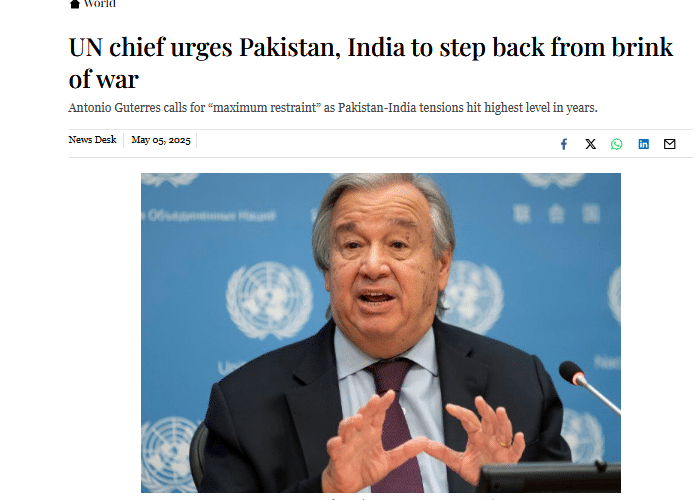
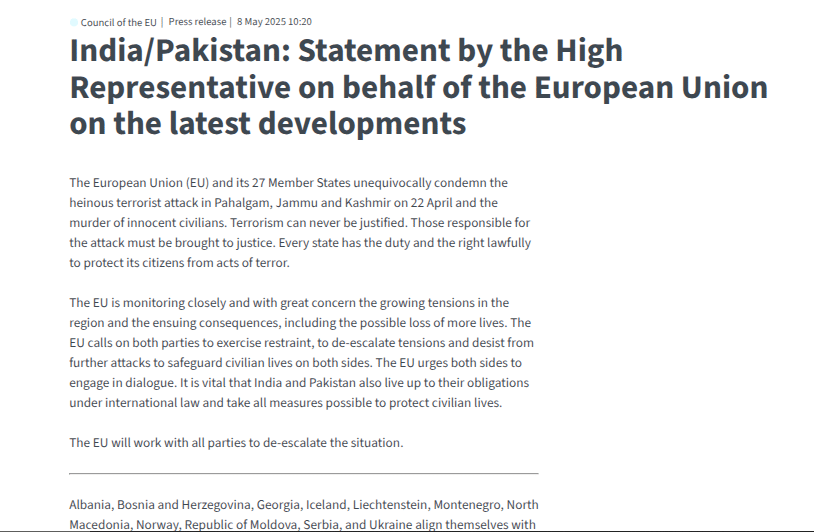
The Secretary-General of the United Nations, António Guterres, called on both Pakistan and India to use utmost restraint and re-enter into dialogue, confirming that Kashmir was an international concern, a disputed territory. Likewise, the European Union requested calm and emphasised that the path should be based on peace and diplomacy as opposed to military solutions that would have destabilised the region.
Even such traditional partners of India in the Gulf region as the UAE and Saudi Arabia did not take sides. They gave neutral statements instead of supporting the Indian account and focused on appealing to peace and denouncing violence in any form. Pakistan, with its close relations with Gulf countries that had been strengthened through diplomacy and economic relations, appeared to keep it away from any diplomatic isolation. In the meantime, China, being a traditional ally of Pakistan and one of the leading powers in the region, repeated its stand in favour of the promotion of peace and dialogue and stressed that one-sided measures towards Kashmir would not be able to resolve this problem.
Conversely, Pakistan took an aggressive but sober diplomacy. The Indian allegations were immediately denied by Islamabad, with the Foreign Office claiming that India was simply trying to divert attention from its human rights violations in the illegally occupied Jammu and Kashmir by accusing Pakistan of the Pahalgam attack.
Pakistan submitted dossiers to foreign missions, the United Nations mission, and even to the international media, with the need to initiate an independent inquiry on the Pahalgam incident. All these campaigns have been successful in shifting the focus of discussion to the bullying nature of the Indian policies.
The Organisation of Islamic Cooperation (OIC) also supported Pakistan’s position and condemned the civilian deaths in Pakistan as a result of the Indian attacks, and reasserted its support for the Kashmiri people. The special envoy of the OIC issued a statement where India was blamed for escalating the conflict in the region, contributing to the instability, and also supporting the UN Security Council Resolutions on Kashmir.
The media abroad were also instrumental in creating the reality. Other media houses, such as The Washington Post and British Broadcasting Corporation, not only covered the Indian military attack but also the toll of human lives in Pakistan. The images of civilian fatality, destruction of mosques, and visual accounts of families were propagated, and eventually, the false narrative of the Indian surgical strike became lost amidst the damage to human lives.
Pakistan’s Diplomatic Triumph
Even more strategic implications had to be faced by India, following the outcomes of the Pahalgam crisis. Its coercive diplomacy and military pressure tried to change the ground realities and turn the narrative against Pakistan. However, these clandestine efforts were not successful, resulting in erosion of its credibility regarding the issue of Kashmir.
In the fast-changing multi-polar world, the Indian rhetoric lost its attraction, with even allies calling for a talk rather than a fight. This international non-support showed India the diplomatic isolation it faced, and also indicated that maintaining a hardline stance toward regional conflicts no longer attracted international support. Consequently, India might become considerably weaker in enforcing its demands in a possible regional crisis.
Pakistan came out of the incident with an enhanced diplomatic power. Islamabad increased its soft power by keeping its head cool when provoked and by portraying itself as the responsible regional stakeholder, unlike aggressive India. The demands of an independent investigation of the Pahlgham incident also put India on the back foot, leaving no room for false Indian accusations to gain validation. Furthermore, this episode allowed Pakistan to strengthen its relationships with the Gulf countries, Turkey, Azerbaijan and most importantly, China.
The Pahalgam attack saw India’s diplomatic offensive against Pakistan fail miserably, leading to further significant international setbacks for New Delhi. Despite strenuous efforts to brand Pakistan as a state sponsor of terrorism and rally global condemnation, India encountered a collective call for de-escalation and dialogue from key international actors like the UN and the EU, who reiterated Kashmir’s disputed status.
Even traditional partners in the Gulf offered neutral statements, eschewing support for India’s narrative. This widespread non-alignment, juxtaposed with Pakistan’s proactive and measured diplomatic counter-narrative—emphasising calls for transparent investigation and highlighting India’s violation of human rights in illegally occupied Jammu and Kashmir—effectively shifted international opinion and revealed India’s extremist ideology. The robust support Pakistan garnered from the OIC, China, Turkey, Azerbaijan and the critical coverage by global media further highlighted India’s diplomatic isolation, revealing the limitations of its hardline approach and its diminished leverage on the international stage.