




Global energy markets faced a severe shock as shipping through the Strait of Hormuz slowed to a virtual standstill. Following the outbreak of the U.S.-Israeli war with Iran, major shipping giants, including Maersk and Hapag-Lloyd, announced the total suspension of transit through the 21-mile-wide waterway. While no physical blockade has been confirmed, the combination of Iranian threats, drone attacks, and a lack of affordable maritime insurance has created a “de facto” closure of the world’s most vital oil artery.
You May Like To Read: Tenth Wave of Strikes: Death Toll in Iran Surpasses 1,000
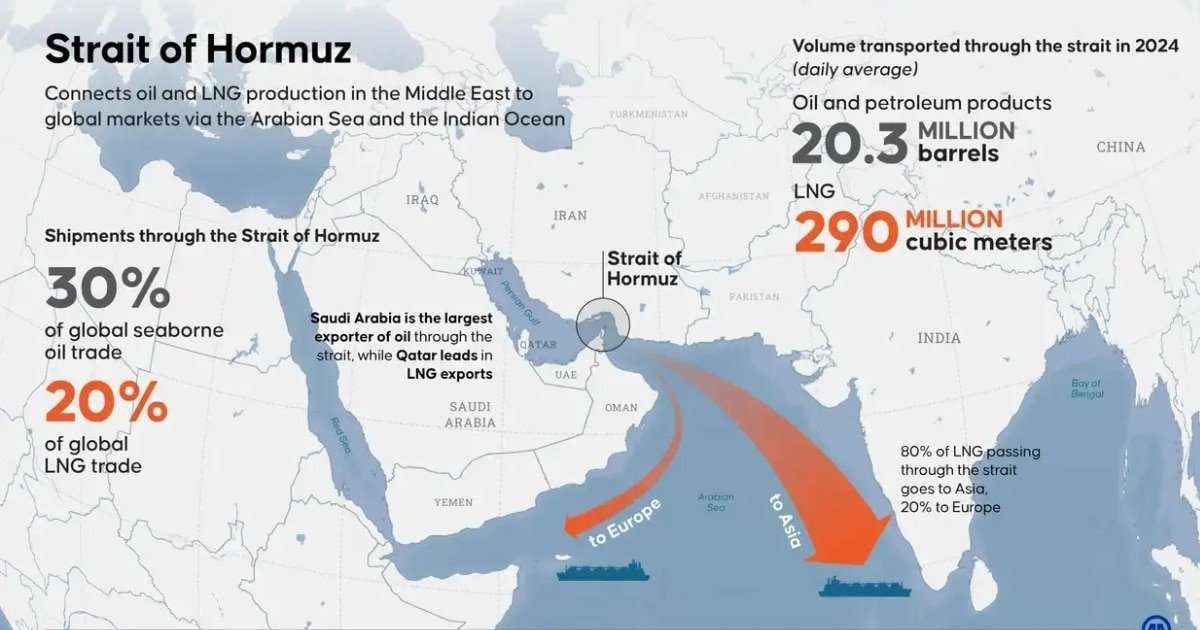
The Strait ordinarily handles roughly 20% of the world’s oil and liquefied natural gas (LNG), serving as the primary exit for exports from Saudi Arabia, the UAE, Iraq, and Kuwait. Analysts from S&P Global warned that if this disruption persists beyond a week, the impact on global markets would be “epochal.” Oil prices have already begun to spike, with experts predicting a surge into triple digits, potentially exceeding $100 a barrel, if the security situation does not improve. Such a prolonged closure could trigger a global recession by starving energy-dependent economies in Asia and Europe.
Strait of Hormuz ship traffic slows to a crawl. Here’s what to know about the key oil waterway. https://t.co/6mWAOvCcCj
— CBS News (@CBSNews) March 3, 2026
While Saudi Arabia and the UAE possess pipelines to bypass the strait, these routes can only handle a small fraction of the 20 million barrels that pass through daily. “There are no meaningful alternatives to that flow,” noted analysts at Pitchbook. As the U.S. and Israel continue to degrade Iran’s naval capabilities, the international community is watching closely to see if Western forces can reopen the passage or if the “chokepoint” will remain a dormant weapon that cripples the global economy.
Check out our latest video: