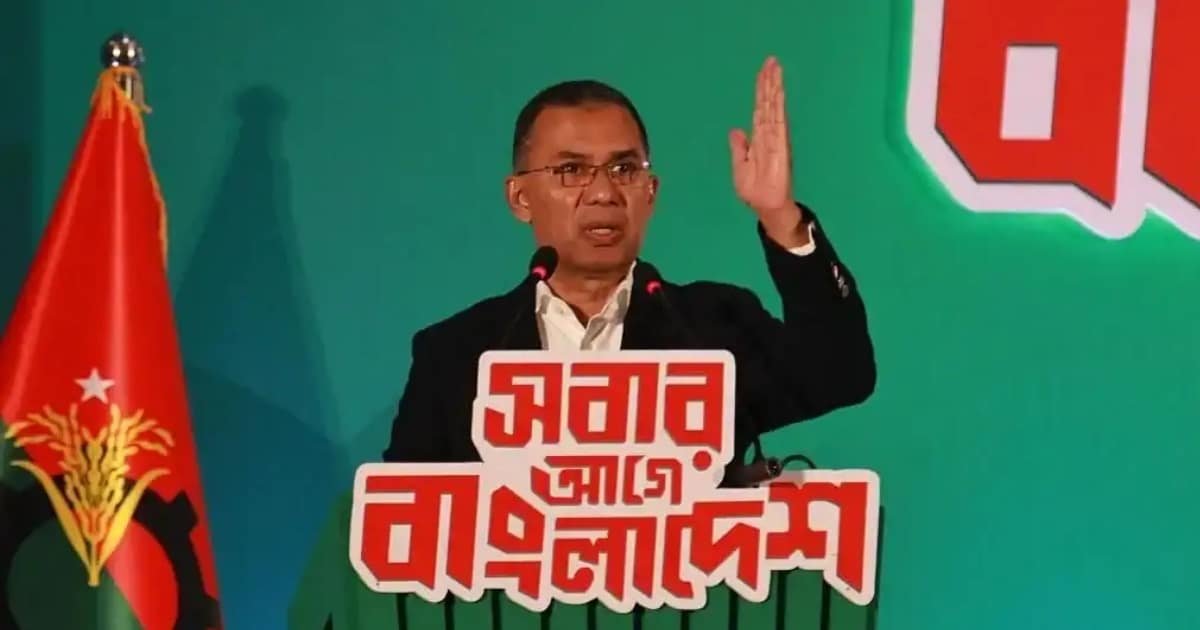





On February 15, 2026, Tarique Rahman, the chairman of the Bangladesh Nationalist Party (BNP) and prime minister-in-waiting, dedicated his party’s landslide election victory to the citizens who fought for democracy during the 2024 uprising. Speaking in Dhaka following the February 12 polls, the 60-year-old leader called for national unity to repair what he termed a “broken” system left behind by the previous regime. The BNP-led alliance secured a commanding two-thirds majority, winning 212 out of 299 seats, while the Jamaat-e-Islami-led bloc took 77.
You May Like To Read: Finance Minister Warns Rapid Population Surge Threatens National Growth
Voters also overwhelmingly approved a historic referendum on constitutional reform, known as the July Charter. This package, backed by the outgoing interim government of Nobel laureate Muhammad Yunus, introduces a 10-year (two-term) limit for prime ministers, a new 100-member upper house of parliament, and greater judicial independence. These changes are designed to dismantle autocratic structures and ensure that no single party can again monopolize power in the nation of 170 million people.
More than a million supporters have gathered in Dhaka to welcome Bangladesh’s opposition leader Tarique Rahman who is returning home after 17 years in exile after long-time leader Sheikh Hasina was ousted last year. pic.twitter.com/GrALLB8ptA
— Al Jazeera English (@AJEnglish) December 25, 2025
Rahman, who returned from 17 years of exile in London just two months ago, now faces the daunting task of stabilizing a fragile economy and restoring law and order. While the Awami League was barred from the contest and its former leader remains in exile, Rahman urged all political forces to move past the era of “revenge and retaliation” to focus on national rebuilding.
Check out our latest video: