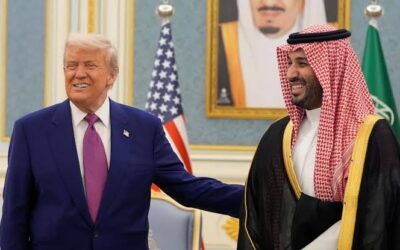





When financial disclosures revealed that U.S. President Donald Trump’s family cryptocurrency venture, World Liberty Financial (WLF), generated over $500 million in token sales last year, the spotlight turned back to an unexpected early partner: Pakistan.
In January, Pakistan’s Ministry of Finance signed a high-profile Memorandum of Understanding (MoU) with SC Financial Technologies, a WLF affiliate, to explore integrating its dollar-pegged stablecoin, USD1, into cross-border payment networks. Hosted by Prime Minister Shehbaz Sharif and Chief of Defence Forces (CDF) Field Marshal Asim Munir, the signing ceremony featured Zach Witkoff—son of Trump adviser Steve Witkoff—and Pakistan’s Finance Minister Muhammad Aurangzeb.
Six months later, state officials confirm that no pilot projects have launched, no licenses have been issued, and no transaction volume has moved through USD1. Yet, analysts point out that the absence of functional utility misses the true objective. The arrangement was never about decentralized ledger tech—it was a highly successful, calculated exercise in state-level transactional diplomacy to secure direct access to the Trump White House.
$500m for Trump, access for Pakistan: How a crypto-diplomatic bet paid off https://t.co/v9znLJvBTn pic.twitter.com/nv6oFwy8kE
— Al Jazeera English (@AJEnglish) July 3, 2026
Macroeconomics vs. Speculative Channels
The structural necessity of deploying a brand-new, unproven stablecoin like USD1 remains heavily questioned by financial analysts and banking executives:
-
Record-Breaking Inflows: The State Bank of Pakistan (SBP) reported an all-time high of $38.3 billion in formal remittances over the last financial year—a 27 percent year-on-year surge. SBP projections indicate formal inflows will cross $42 billion this year, driven by frictionless digital banking channels and instant clearing mechanisms.
-
The Liquidity Friction: In late June, Pakistan’s central bank liquid foreign exchange reserves stood at $16.5 billion, representing roughly two months of import cover. Unless international trade partners accept USD1 directly on their balance sheets, the central bank would still need to liquidate the digital tokens back into physical greenbacks, injecting regulatory friction and settlement delays rather than removing them.
-
The Informal Disconnect: While Chainalysis ranks Pakistan third globally in crypto adoption—with significant informal volumes flowing through Tether (USDT)—those users intentionally bypass banking channels. Forcing a state-backed version of USD1 into the mix fails to resolve the underlying incentives driving parallel or underground capital flight.
The Regulatory Horizon: Architecture Over Counterparty
While the WLF framework remains dormant on an operational level, it served as a catalyst for rapid, sweeping legislative action to formalize the domestic digital ecosystem:
-
The Virtual Assets Act: Enacted in March, the landmark legislation replaced the initial 2025 ordinance, fully empowering an autonomous federal regulator: the Pakistan Virtual Assets Regulatory Authority (PVARA). The framework introduces severe enforcement tools, including up to five-year prison sentences for unlicensed operators.
-
Banking Onboarding: In April, the SBP authorized commercial banks to open operational accounts for fully licensed virtual asset service providers (VASPs), attempting to transition informal liquidity into the documented economy.
-
Graduated Licensing: PVARA is currently processing preliminary documentation. Major global exchanges, including Binance and HTX, have secured provisional No-Objection Certificates (NOCs) to establish legal corporate entities, though full operational authorization is pending finalized compliance guidelines.
Senior banking executives emphasize that the state’s technical dialogue remains platform-agnostic, noting that the architectural safety of the ecosystem takes precedence over any individual commercial counterparty.
The Diplomatic Yield: Pay for Access
When evaluated purely through the lens of international relations and geopolitical strategy, the WLF memorandum has already delivered an immense return on investment for Islamabad.
The baseline engagement began in April last year, closely following acute border frictions with India over an attack in Pahalgam, Kashmir. By June, Pakistan systematically built political capital by nominating President Trump for the Nobel Peace Prize, citing his back-channel statesmanship in defusing the subcontinental standoff. This strategy cleared the path for a historic White House luncheon where Trump hosted Field Marshal Asim Munir—marking the first time a sitting U.S. president received a Pakistani military chief who was not a head of state.
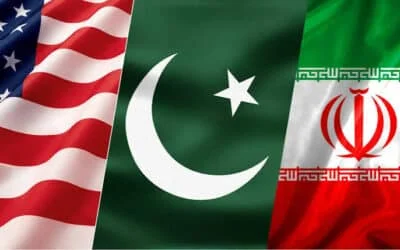
This deep access paid immediate dividends during the outbreak of the U.S.-Israeli war against Iran in February. Leveraging its direct pipeline to both Washington and Tehran, Pakistan successfully positioned itself as the central diplomatic back-channel, ultimately culminating in the signing of the Islamabad Memorandum of Understanding (MoU) to enforce a fragile regional ceasefire.
U.S. Vice President JD Vance publicly acknowledged Munir’s role as a regional statesman during high-level meetings in Switzerland, demonstrating that while the domestic rollout of a Trump-backed stablecoin remains frozen, the geopolitical calculus behind the handshake succeeded spectacularly.
To review an external breakdown of how this digital partnership intersected with macroeconomic vulnerabilities and geopolitical positioning at the time of its signing, you can watch this analysis on the Pakistan Crypto Gamble.