


Pakistan is a land of immense natural beauty, steeped in rich history, and brimming with potential. From the serene valleys of Swat and Hunza to the towering peaks of the Karakoram range, Pakistan’s landscape offers everything a tourist could dream of. The country’s historical landmarks, from the majestic Badshahi Mosque in Lahore to the ancient ruins of Mohenjo-Daro in Sindh, add a cultural dimension to its diverse offerings. Despite its vast potential, Pakistan’s tourism sector remains underdeveloped. However, in recent years, there has been a concerted effort from the government to change this by unlocking the economic benefits of the tourism industry.
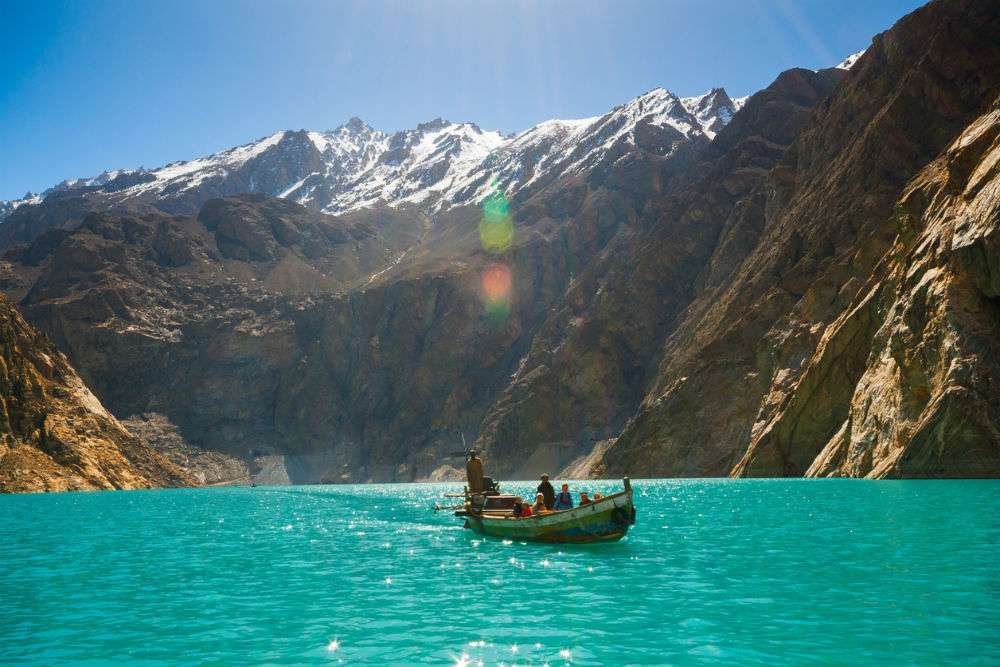
Source: Visitinpakistan | Attabad Lake, Hunza
Government Initiatives and Policy Support
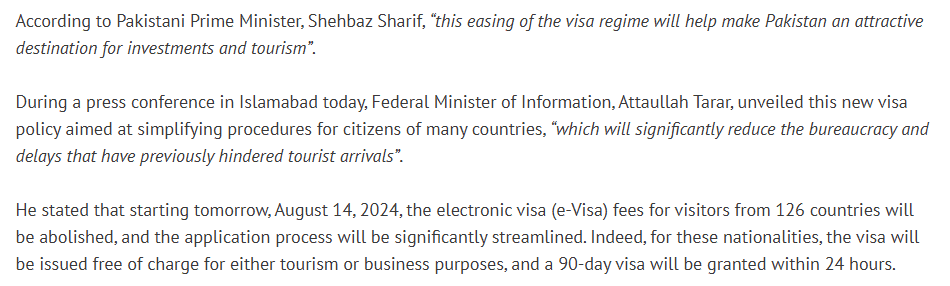
Over the past few years, the Pakistani government has taken significant steps to promote tourism. One of the most groundbreaking measures was the launch of the eVisa system in August 2024, allowing citizens from 126 countries to easily apply for tourist visas online. This initiative simplifies the visa application process, making it easier for foreign tourists to visit Pakistan. In the past, obtaining a visa to Pakistan involved bureaucratic hurdles and long waiting times, deterring many potential visitors. Now, with the eVisa system, Pakistan aims to position itself as an accessible and welcoming destination for tourists from around the world.
Source: Visa News
Moreover, the Kohsar Tourism Expressway, inaugurated in 2024, is a 123-kilometer road connecting Rawalpindi to Muzaffarabad, which will make the northern tourist destinations more accessible. The highway is expected to reduce travel time to some of Pakistan’s most popular tourist spots in the northern regions, including Murree, Naran, and Kaghan, thus enhancing tourist inflows and boosting local economies. The government’s investment in road infrastructure will create jobs, promote local businesses, and encourage investment in the tourism sector, thus supporting regional economic growth.
Economic Impact and Job Creation
The tourism sector plays a significant role in Pakistan’s economic growth. In 2022, the tourism industry accounted for about 5.9% of the country’s GDP, supporting more than 4.2 million jobs. These numbers could rise significantly if the government continues to prioritize tourism. With the right policies, Pakistan can expand its tourism sector to not only create more jobs but also promote sustainable growth across various sectors. Similarly, Pakistan attracted approximately US$16 billion in visitor spending in 2022, projected to reach US$30 billion in 2033. Khyber Pakhtunkhwa province received over 1.2 million domestic and international tourists in 2021 and 2022. The hospitality industry alone, including hotels, restaurants, and entertainment services, stands to benefit greatly from a booming tourism industry.
The government’s focus on infrastructure development, such as the Kohsar Tourism Expressway and the CPEC (China-Pakistan Economic Corridor), has the potential to stimulate local economies by attracting both domestic and international tourists. By providing better access to northern areas, where Pakistan’s most breathtaking landscapes are located, these developments open up new avenues for economic opportunities. They will create jobs in construction, service industries, and local businesses, including small and medium enterprises (SMEs) like hotels, restaurants, and transport services.
The Role of Sustainable Tourism
While promoting tourism, the government has also emphasized the importance of sustainable practices. Responsible tourism, as advocated by the World Bank initiative, promotes a balance between economic growth and environmental protection. Sustainable tourism practices are crucial to ensuring that Pakistan’s natural beauty remains intact for future generations. The government’s promotion of eco-friendly projects and waste management systems is a step in the right direction, but more investment is needed to ensure that tourism development is aligned with sustainability goals.
To safeguard its natural resources, Pakistan must also work closely with environmental organizations and the private sector to implement green tourism practices. For example, promoting eco-tourism and establishing national parks that focus on both tourism and conservation can help protect ecosystems while allowing visitors to enjoy the country’s natural beauty. By integrating eco-tourism principles into tourism development strategies, Pakistan can create a thriving and sustainable industry that benefits both the economy and the environment.
Challenges and Areas for Improvement
Despite the government’s commendable efforts, several challenges remain in fully realizing the tourism sector’s potential. Infrastructure deficits, such as inadequate transportation networks, limited accommodation options, and the lack of advanced tourism facilities, are significant barriers. Many of Pakistan’s most beautiful areas remain underdeveloped in terms of accessibility and amenities.
In addition to infrastructure, human capital development is another crucial factor. The lack of skilled labor in hospitality and tourism management hampers the sector’s growth. This is particularly true in remote areas, where the workforce is often untrained in tourism-specific skills. To address this issue, the government must invest in tourism training programs for local communities and ensure that workers are equipped with the necessary skills to provide top-tier services to tourists.
Another area where improvement is needed is security. Despite Pakistan’s tremendous potential for tourism, many international travelers still have concerns about safety. While the government has made progress in improving security in tourist-heavy areas, a sustained effort to build trust among potential visitors is necessary. Collaboration with international tourism organizations and the establishment of clearer safety protocols can help ensure that tourists feel safe and welcome.
Conclusion
Pakistan’s tourism sector holds great promise for driving economic growth, creating jobs, and fostering sustainable development. With the government’s supportive policies, infrastructure investments, and a focus on sustainability, Pakistan is well-positioned to become a top tourist destination. However, challenges such as inadequate infrastructure, human capital development, and security concerns need to be addressed to fully unlock the sector’s potential. By capitalizing on its natural and cultural assets, Pakistan can build a thriving tourism industry that benefits both its economy and its people.