The Belt and Road Initiative (BRI), now over a decade old, is demonstrably in a transitional phase, characterized by a shift from its initial broad-brush approach to a more nuanced, and arguably more strategic, global footprint. The win-win cooperation narrative, while still officially maintained, is increasingly challenged by concerns over debt sustainability and environmental impact, pushing China to adapt its approach.
Debt Sustainability: A Mid-Life Crisis
The “debt trap” narrative, long a criticism leveled by Western nations, is manifesting in significant repayment challenges for many BRI participants. Reports from H1 2025 indicate a tidal wave of debt repayments due to China, with 75 developing countries facing a record $22 billion in payments this year alone, part of a broader $35 billion total owed by developing nations. This financial strain is forcing these nations to consider diverting funds from critical public services like health and education, raising alarm bells about their economic sovereignty.
For instance Sri Lanka’s Hambantota Port, effectively leased to China for 99 years due to inability to repay loans, remains a potent symbol of these concerns. While China denies accusations of predatory lending, claiming adherence to international norms, it is increasingly acting as a debt collector rather than a generous lender. This shift highlights a more pragmatic, and potentially harder-line, stance from Beijing when faced with defaults.
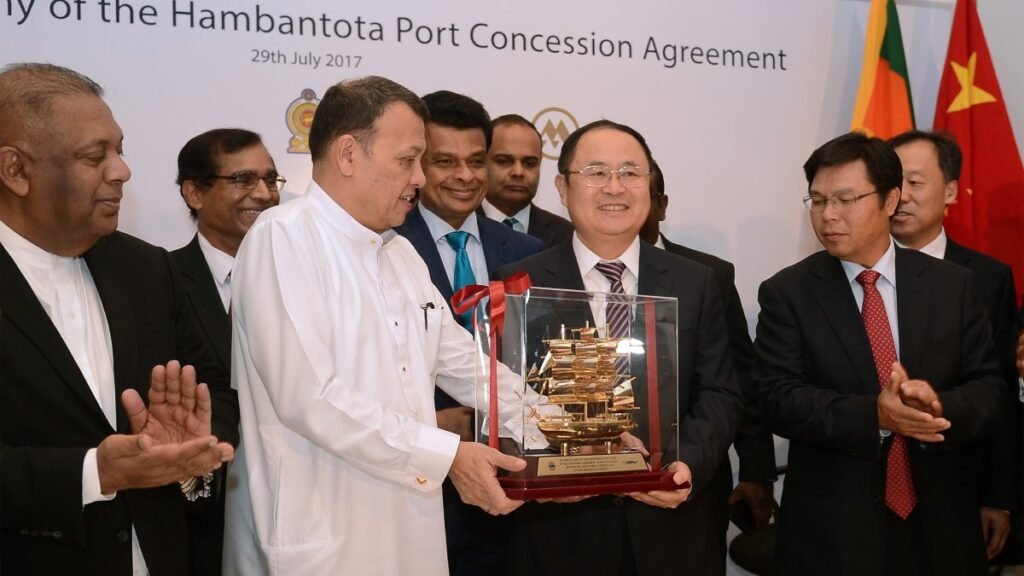
Image Credits: CSIS
Environmental Impact: Greenwashing vs. Actual Sustainability
The BRI’s environmental record has been a major point of contention. While China has made public commitments to “green” the BRI, launching initiatives and setting targets like achieving a green BRI by 2025, the reality on the ground often involves a degree of greenwashing.

Image Credits: UN
Studies indicate that while there are genuine investments in low-carbon infrastructure, particularly in higher-income BRI countries, lower-income nations often see a focus on risk mitigation activities that are selectively enforced.
China’s continued investment in fossil fuel projects, including coal and gas, further fuels skepticism. Despite record levels of green energy engagement in H1 2025, with $9.7 billion in wind, solar, and waste-to-energy projects, oil and gas engagement also surged to record highs of over $30 billion.
You May Like To Read: France to Recognize Palestinian State
This dual approach suggests that economic and energy security considerations often outweigh strict environmental principles in practice. The lack of binding or transparent environmental standards for many BRI projects also contributes to the perception that green rhetoric often outpaces actual green implementation.
China’s Evolving Investment Patterns: A Strategic Rebalancing
China’s engagement in Pakistan for the China-Pakistan Economic Corridor (CPEC) has dropped significantly, by 54% in H1 2025 after a 40% drop from 2023 to 2024. This indicates a potential recalibration of investment in a key, but perhaps increasingly challenging, partner. Reports suggest concerns over Pakistan’s burgeoning debt and security issues impacting Chinese personnel.
In stark contrast, Africa has emerged as the largest recipient of Chinese construction engagement in H1 2025, reaching $30.5 billion (a 395% increase from H1 2024). Central Asia also saw a significant boost, with Kazakhstan receiving a massive $23 billion in investments. This indicates a strategic pivot towards regions offering new opportunities, possibly with higher returns or less political baggage.
The focus of BRI engagement is increasingly concentrated on energy, metals & mining, and technology sectors. While green energy investments are growing, so are investments in oil, gas, and crucial minerals. This suggests a focus on securing resources and advancing technological capabilities, aligning with China’s broader economic and strategic goals. The shift from transport infrastructure to more resource-backed deals and technology indicates a move towards higher-value and strategically important sectors.
There’s an articulated shift towards “small and beautiful” projects that prioritize sustainability and local benefits. This is likely a response to criticisms regarding the scale and impact of earlier, larger-scale infrastructure projects.
BRI: More selective, Sustainable, and Political
Based on current trends, the BRI is evolving in all three directions, though with varying degrees of success and intent. The significant drop in investment in some countries like Pakistan, and the surge in others like Africa and Central Asia, clearly demonstrate a more selective approach. China appears to be prioritizing projects with clearer economic returns, greater political stability, or more direct strategic value. The focus on larger average deal sizes in H1 2025 further underscores this selectivity.
You May Like To Read: Deadly Church Attack in Eastern DR Congo
While there’s a clear rhetorical push and some tangible investments in green energy, the continued heavy investment in fossil fuels and the recurring issues of greenwashing suggest that true, comprehensive sustainability remains a challenge. The commitment to sustainability is likely influenced by international pressure and China’s own long-term energy security goals, but it is not yet fully ingrained across all projects.
The BRI has always had a political dimension, aiming to enhance China’s global influence and create new spheres of cooperation. The shift in investment patterns, particularly towards resource-rich regions and those offering strategic partnerships, reinforces this narrative.
The initiative serves as a vehicle for China’s major-country diplomacy and a tool to counter anti-China narratives by presenting itself as a benevolent global leader. The increasing focus on technology and digital infrastructure also suggests a desire to shape global standards and data flows, which has significant geopolitical implications.
Conclusively, the BRI is indeed undergoing a mid-life crisis, forcing China to re-evaluate its approach. The early “win-win” narrative has given way to a more pragmatic and selective strategy, driven by economic realities (debt, returns on investment), evolving environmental concerns (albeit with lingering greenwashing), and a clear, intensifying political instrumentality aimed at consolidating China’s global footprint and influence.
The future of the BRI will likely be characterized by smaller, more targeted projects, a continued struggle to balance economic development with environmental sustainability, and an increasing emphasis on strategic alignment with China’s broader geopolitical ambitions.