




In a series of public statements, including a post on his social media platform Truth Social, former US President Donald Trump has accused China of conspiring with Russia and North Korea. His comments were a direct response to a massive military parade hosted by China’s President Xi Jinping in Beijing, which marked the 80th anniversary of the end of World War II and served as a powerful showcase of the nation’s military advancements.
A Public Accusation and Historical Context
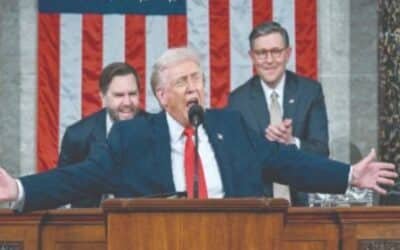
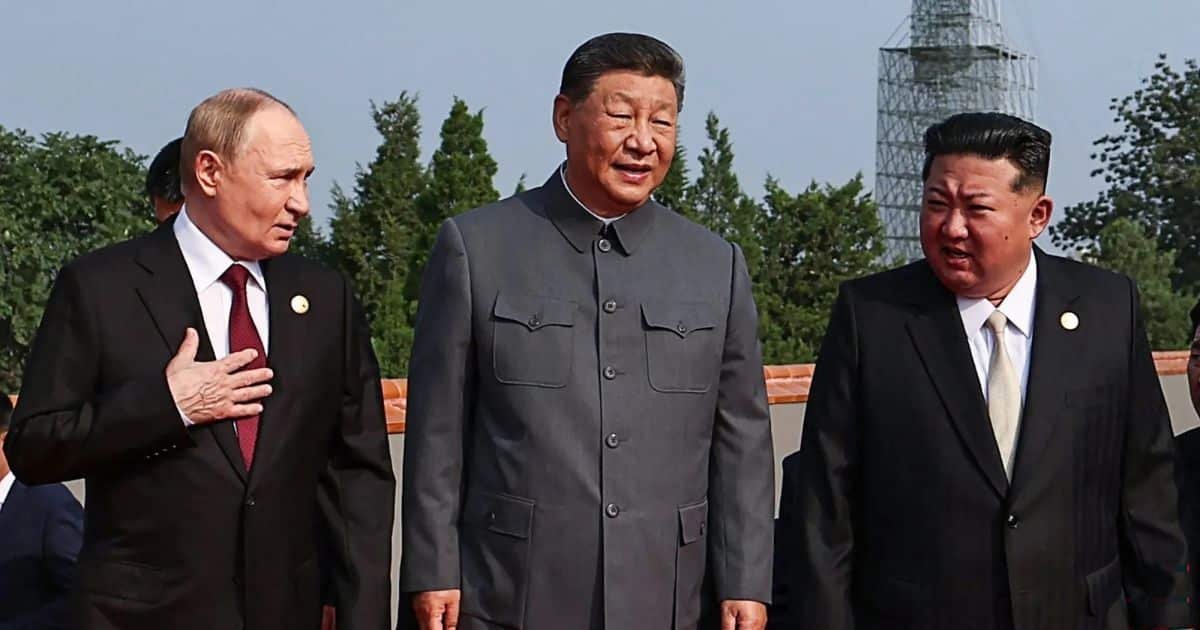
The focal point of Trump’s critique was a photograph showing President Xi Jinping flanked by Russian President Vladimir Putin and North Korean leader Kim Jong Un. This trio, seen by many observers as a symbolic display of a united front, was met with a pointed message from the former US President. “Please give my warmest regards to Vladimir Putin and Kim Jong Un, as you conspire against the United States of America,” Trump wrote on Truth Social. This message casts the event as more than a historical commemoration, framing it as a geopolitical alignment specifically aimed at challenging American influence.
Trump also referenced the historical bond between the US and China during World War II, a period when the two nations were allies against Imperial Japan. He mentioned the “massive amount of support and ‘blood’” the US provided to China and expressed hope that the American soldiers who died would be “rightfully Honored and Remembered for their Bravery and Sacrifice!” This reminder of past cooperation serves as a powerful rhetorical device, contrasting historical unity with a perceived present-day betrayal.
Analysis of a Shifting Geopolitical Landscape
The Beijing parade, attended by more than 25 foreign leaders, primarily from nations that have strained relations with the United States or are considered “middle powers,” has amplified concerns about a potential new world order. The visible unity among these nations—including leaders from Pakistan, Iran, Vietnam, and several Central Asian republics—suggests a growing bloc that is increasingly willing to operate outside of traditional Western-led alliances.
This emerging coalition is challenging the unipolar world order that has largely defined international relations since the end of the Cold War. As China’s economic and military power expands, it is actively seeking to forge deeper ties with nations that share its vision of a multipolar world. The unveiling of advanced military hardware, including a full nuclear triad and hypersonic missiles, at the parade reinforces this message, projecting a military capability that can credibly rival the United States. While Trump has publicly dismissed the threat of such a coalition, his social media post suggests a deep-seated concern about the symbolic and strategic significance of these alliances. The increasing alignment between China, Russia, and others could fundamentally alter global power dynamics, forcing the US to re-evaluate its diplomatic and security strategies.
Trump’s Complicated Stance on Russia and China
Adding to the complexity of his remarks, Trump’s statements reveal a nuanced, and at times contradictory, stance on the matter. Despite his “conspiracy” accusation, he has previously downplayed the threat, stating that “China needs us much more than we need them” and that he is “not concerned” about a Sino-Russian axis. He also told a radio show that the two nations would “never use their military forces against us,” citing the superior strength of the American armed forces.
Trump leaves contradictory MESSAGE:
‘WARMEST regards’ to Putin and Kim Jong Un ‘as you CONSPIRE against the United States of America’
Calling on Xi Jinping to acknowledge ‘US contributions to China’s WWII victory and sent’
Someone sounds a little jealous… pic.twitter.com/r8SFwTHt4T
— RT (@RT_com) September 3, 2025
Furthermore, in the same radio interview, Trump expressed his “disappointment” in President Putin for failing to reach a peace deal on Ukraine during their recent meeting. This comment, while not directly related to the parade, highlights the shifting and unpredictable nature of the relationships between these global leaders. It underscores the fact that while some may view their collective appearance as a united front, the underlying diplomatic and strategic interests of each nation remain complex and often at odds.
The Beijing parade and President Trump’s subsequent comments provide a clear snapshot of a world in transition, one where alliances are being re-forged and long-standing geopolitical hierarchies are being challenged by an increasingly unified bloc of nations. The debate over whether this represents a genuine threat or a fleeting diplomatic maneuver will likely continue to shape international discourse for the foreseeable future.
You May Like To Read: