




Rising Defence Budget: Strategic Necessity or Fiscal Strain?
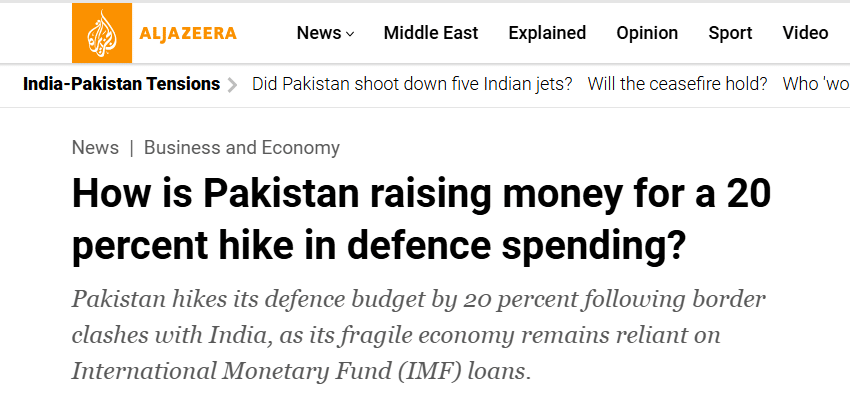
In the 2025–26 fiscal year, Pakistan’s government increased defence spending by approximately 20%, raising the allocation from Rs 2.12 trillion (US $7.5 billion) to Rs 2.55 trillion ( US $9 billion). Including military pensions, total defence outlays now amount to around US $12 billion, roughly 2.5% of GDP. This decision followed escalated military tensions with India earlier in 2025 marked by missile and drone exchanges, prompting Islamabad to prioritize enhanced deterrence amid a challenging regional security climate, reported the Washington Post.
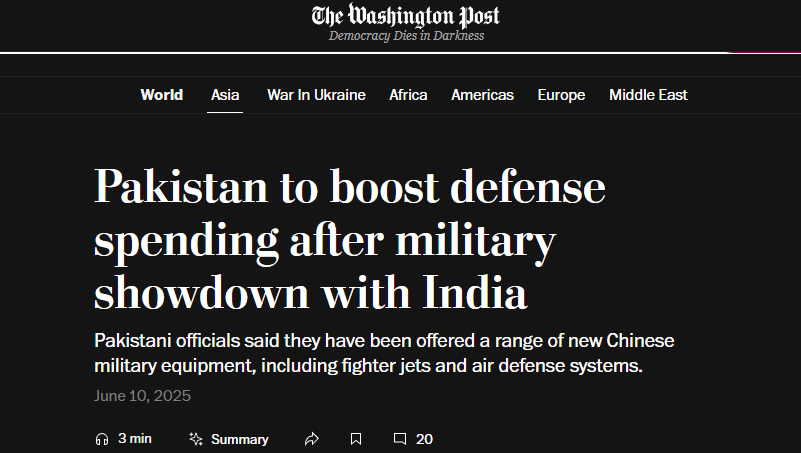
Source: Washington Post
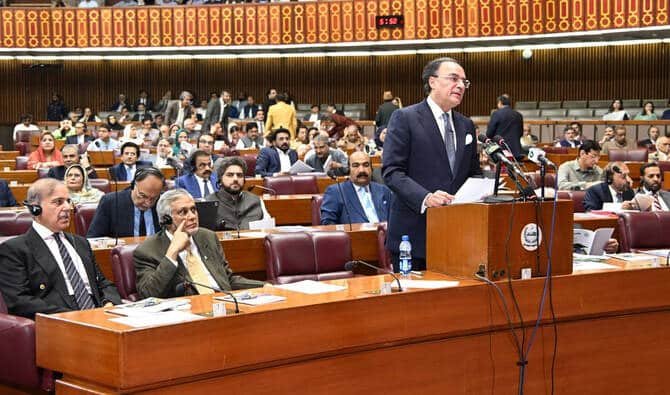
Finance Minister Muhammad Aurangzeb highlighted this as a historical moment for bolstering national defence, enabled by subsidy cuts and lower interest expenses. Key allocations within the defense budget include employee-related expenses; $2.99 billion, operating expenses (fuel, training); $2.48 billion, new procurement; $2.34 billion and civil works (infrastructure): $1.19 billion. The prioritization, apparent from government spending, reflects not only immediate security needs but also the enduring influence of the military establishment on national policymaking.
Social Sector Spending: Trends and Challenges
Despite the defense surge, Pakistan’s government has signaled its intention to protect social sector funding. The 2025-26 development budget allocates substantial resources to welfare, health, and education, particularly at the provincial level. In Punjab, for example, a record PKR 493.5 billion i.e. 40% of the province’s development budget marked for social sector initiatives, including education, health, water, and sanitation. Nationally, the government has:
- Increased the Benazir Income Support Programme (BISP) budget by 27%, expanding coverage and raising cash transfer amounts.
- Allocated PRs 25.7 billion for the Federal Education and Professional Training Division, focusing on infrastructure and vocational training.
- Continued foreign-funded projects targeting water, sanitation, urban development, and skills training.
However, the Budget FY26 demonstrates, overall fiscal squeeze has resulted in some cuts. Federal development expenditures on health, for instance, have been reduced from Rs. 27 billion to Rs. 14.3 billion, impacting new and ongoing health initiatives. The ambitious Sehat Sahulat health insurance program, once a flagship initiative, has seen its direct federal allocation disappear, raising sustainability concerns.

Source: Business Recorder
Education and Human Capital: Stronger Funding, Mixed Signals
Education has received a policy-level push, most notably through the launch of a Rs 100 billion Education Support Fund in FY 2026 aimed at reducing dropout rates; particularly among girls in secondary school. The Punjab Government, which plays a key role post-devolution, dramatically increased its development allocation for education to Rs 148 billion, a 127% increase over the previous year.
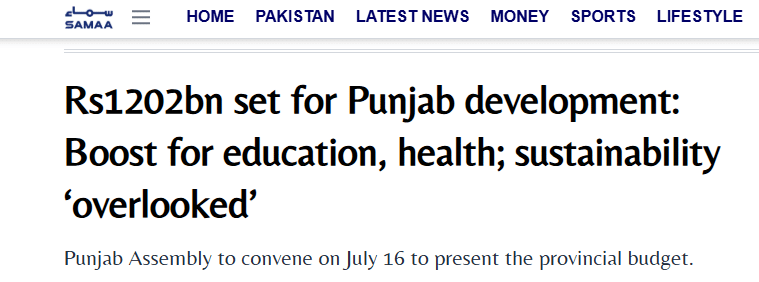
Source: Samaa
Non-development spending stands at Rs 661 billion, reflecting strong provincial commitment. Despite these efforts, federal funding for higher education has declined sharply. The Higher Education Commission (HEC) saw its allocation drop from Rs 61.1 billion to Rs 39.5 billion, raising concerns about underfunded universities and research programs.
Meanwhile, public investments in digital literacy and innovation such as laptops, scholarships, and school reconstruction reflect a broader effort to modernize learning infrastructure and reduce educational inequities.
Navigating the Fiscal Terrain: Budget Cuts, Economic Reforms, and IMF Conditionalities
Amid a significant increase in defence spending, the Government of Pakistan has adopted a broader strategy of fiscal consolidation in its FY2025–26 budget, reducing total federal expenditures by 7%, now capped at Rs 17.57 trillion (approximately US $62 billion). This move comes against the backdrop of Pakistan’s commitment to meet its IMF-backed fiscal reform targets, which aim to narrow the fiscal deficit from 5.9% of GDP to 3.9% within the year.
This deficit reduction is a core requirement under a new $7 billion Extended Fund Facility agreed upon with the International Monetary Fund. At the same time, the government has set an ambitious growth target of 4.2% for FY26, up from 2.7% in the previous fiscal year, a goal many economists view as optimistic given the sluggish private sector performance and global economic headwinds. To achieve this dual objective fiscal restraint and continued growth Islamabad has embarked on an aggressive rebalancing of its expenditures and revenues.
Furthermore, to finance the defense hike and sustain social sector commitments, the government has reduced subsidies and broadened the tax base, introducing new taxes and eliminating exemptions. Shifted some development responsibilities to provinces, particularly in health and education, following the 18th Amendment. And prioritized targeted cash transfers and social protection programs to shield the most vulnerable from inflation and economic shocks. Despite these efforts, Pakistan’s tax-to-GDP ratio remains among the lowest globally, making it difficult to fund both security and development without external support or unpopular austerity measures.
Source: Al Jazeera
The Budgetary Imbalance: Security First, People Later?
Decades of budgetary trends show a disproportionate allocation toward defence and debt servicing, consuming nearly 60% of total expenditures. In stark contrast, combined allocations for health and education linger below 1% of GDP, with health alone hovering under 0.3% in FY 2025.
This imbalance has sparked growing concern. Critics called the state’s underinvestment in health especially during high inflation “a moral outrage,” given the simultaneous 20% hike in defence. Similarly, the increased defense budget and debt costs are driving funding away from core social sectors like poverty reduction, education, and disease control.
Toward Sustainable Public Finance: Pragmatic Steps for Equitable Growth
Addressing Pakistan’s structural imbalance between defence priorities and social sector development requires not just fiscal restraint, but a sustained, evidence-backed approach to economic reform. The following recommendations, grounded in expert analysis and international best practices, offer a practical roadmap:
- Enhance Efficiency in Defence Spending: Shift from blanket budget increases to performance-based allocations within the defence sector. Prioritize lifecycle cost analyses for major procurements (e.g., aircraft, naval upgrades).
- Phase Out Regressive Expenditures Gradually: Rather than abrupt subsidy withdrawals, implement tiered reductions based on income and consumption levels, while scaling up targeted transfers through programs like BISP and Sehat Sahulat.
- Reform Military Pensions and Debt Management: Explore models such as contributory pension schemes for new military entrants and negotiate debt restructuring with bilateral lenders to relieve the fiscal burden.
- Deepen Provincial Capacity for Service Delivery: Invest in provincial health and education management systems, especially in Sindh and KP, through digital tracking, needs-based budgeting, and conditional grants.
- Broaden the Tax Base Through Inclusive Enforcement: Implement real-time data sharing between NADRA, FBR, and provincial registries to formalize under-taxed sectors especially agriculture, real estate, and wholesale/retail while protecting smallholders and informal earners.
- Link Budgets to Measurable Outcomes: Institutionalize results-based budgeting, aligning public spending with quantifiable targets in literacy, healthcare access, child nutrition, and employment. Encourage ministries to publish quarterly performance scorecards.
These steps, while politically challenging, offer a more sustainable path toward balancing Pakistan’s security needs with its human development goals, ensuring that future growth is both inclusive and resilient.
Conclusion: A Delicate Balance of Priorities
Pakistan’s 20% defence hike reflects an understandable urgency for national security amid regional volatility. Yet, the challenge is in not trading away long-term human capital and economic resilience for short-term military readiness. There is progress: social sectors are receiving significant attention via expanded BISP, nutrition, youth, and provincial programmes. But structural issues like chronic underfunding of health and education, rising debt, and heavy military absenteeism threaten sustainable development. Only with a holistic and disciplined fiscal approach can Pakistan ensure national defence and citizen welfare reinforce and not compete with each other.