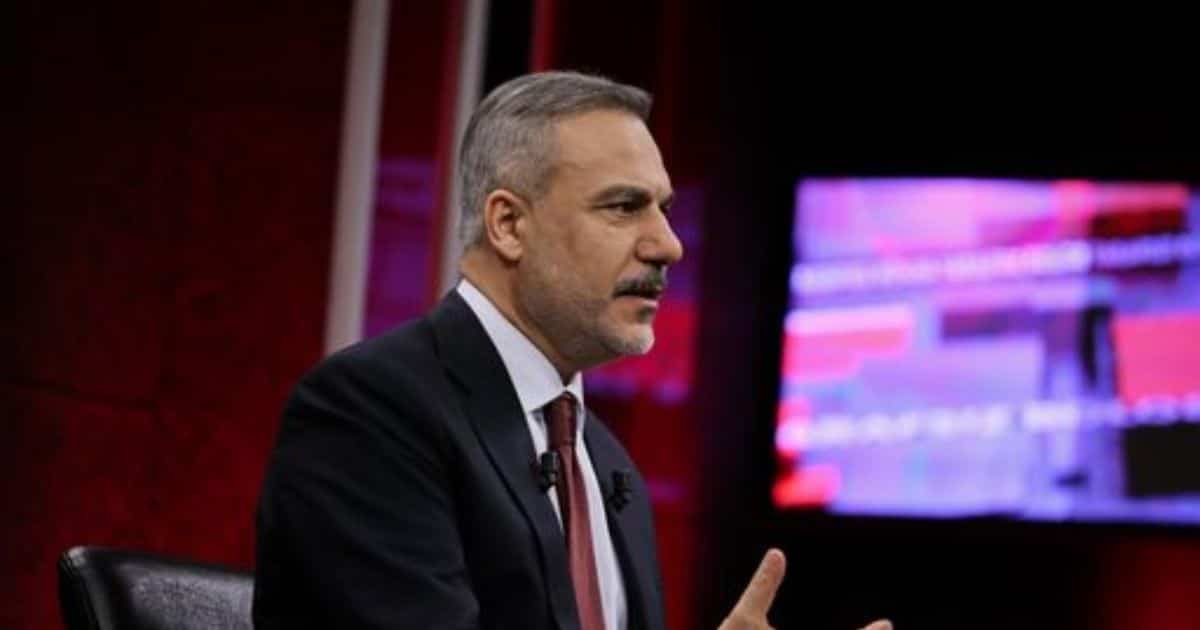




In a comprehensive interview with CNN Turk on Monday, February 9, 2026, Turkish Foreign Minister Hakan Fidan delivered a blunt assessment of the geopolitical landscape, asserting that military airstrikes would fail to topple the Iranian government. Describing the goal of forced regime change as a “pipedream,” Fidan warned that such actions would likely lead to a “more radical” transformation of the existing system rather than its collapse.
The Foreign Minister’s remarks come at a critical diplomatic juncture, as the United States and Iran resumed indirect negotiations in Oman on February 6 after an eight-month hiatus. Fidan confirmed that Ankara remains in active contact with both Washington and Tehran to prevent the outbreak of a regional war that “the region cannot withstand.”
Reporter: Can the regime in Iran be overthrown through air strikes?
Turkish FM Hakan Fidan: No. It wouldn’t collapse. pic.twitter.com/HCHmAfnQya
— Clash Report (@clashreport) February 9, 2026
Key Strategic Insights from Minister Hakan Fidan
-
Regime Resilience: Fidan argued that while airstrikes might weaken infrastructure or the government’s ability to provide services, the systemic power structure in Iran—rooted in a dual elected and spiritual authority—is built to survive external kinetic pressure.
-
Nuclear Reality Check: Drawing on his experience with the IAEA, Fidan stated there is “no data” suggesting Iran currently seeks to build an atomic bomb. He emphasized that the Supreme Leader’s fatwa (religious decree) against nuclear weapons remains a significant structural barrier to weaponization.
-
Regional Arms Race: In a significant shift in rhetoric, Fidan warned that if Iran were to successfully acquire nuclear weapons, it would trigger a regional arms race, potentially forcing Türkiye and other neighbors to seek similar capabilities to maintain the balance of power.
-
Diplomatic Channels: Fidan revealed that the U.S. had recently used Türkiye as a conduit to pass urgent messages to Tehran during periods of high tension, underscored by the “door for negotiations” being slightly ajar in Muscat.
“The problem is not the regime itself; the problem is the decisions the regime makes and the policies it implements,” Fidan noted, urging the international community to focus on policy shifts rather than totalistic goals of overthrowing the government.
The Oman Negotiations
Despite the resumption of talks, Fidan described the situation as “difficult to resolve quickly.” Recent reports indicate that while the Oman round opened a diplomatic window, major hurdles remain, including U.S. demands to include ballistic missiles in the framework—a move Fidan cautioned could “risk triggering another war” if pushed too aggressively.
You May Like To Read: