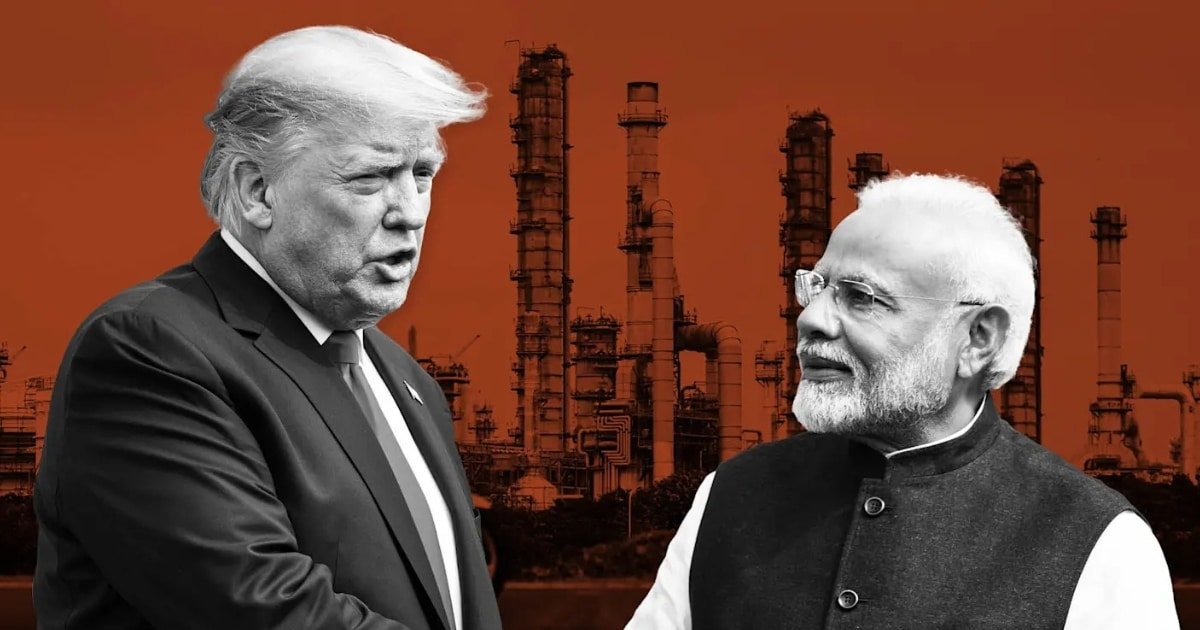





The United States and India have reached a landmark interim trade framework designed to lower tariffs, reshape global energy markets, and deepen economic cooperation between the world’s two largest democracies.
The agreement, announced in a joint statement following high-level negotiations, marks a decisive shift in regional geopolitics as both nations move to diversify supply chains and address non-market economic policies.
#BreakingNews India, US reach framework for “interim” trade agreement; Read the joint statement below: pic.twitter.com/3pUwK29lb7
— Mojo Story (@themojostory) February 7, 2026
Key Highlights of the Trade Framework
- Major Tariff Reductions: Following an executive order signed by President Donald Trump, the U.S. will rescinded a 25% punitive tariff on Indian goods previously imposed due to Russian oil purchases. Most Indian exports to the U.S., including textiles, leather, and organic chemicals, will now face a significantly reduced 18% tariff rate.
- Energy Decoupling from Russia: In a strategic pivot, India has agreed to halt purchases of Russian oil, shifting its energy procurement to the United States and Venezuela.
- $500 Billion Purchase Commitment: India has committed to purchasing $500 billion in U.S. goods over the next five years. This includes oil, gas, coking coal, aircraft, and advanced technology products such as GPUs for AI applications.
- Market Access & Standards: India will eliminate or reduce tariffs on a wide range of U.S. industrial and agricultural goods. Furthermore, New Delhi has agreed to begin adopting U.S. or international safety and licensing standards for medical devices and communications gear within the next six months.
The interests of our farmers remain paramount in all trade negotiations. The Modi Government remains fully committed to protecting our Annadatas and securing rural livelihoods.
No concessions have been extended to sensitive agricultural sector produce in grains, fruits,… pic.twitter.com/6QiohiyKL5
— Piyush Goyal (@PiyushGoyal) February 7, 2026
Protecting Domestic Interests
While the framework opens vast new markets, both sides have maintained protections for sensitive sectors. Indian Trade Minister Piyush Goyal confirmed that the deal “safeguards farmers’ interests” by protecting staples such as rice, wheat, dairy, and poultry from broad liberalization. Similarly, the U.S. will maintain an 18% tariff on various Indian manufactured goods to balance domestic industrial interests.
Strategic Alignment Against Non-Market Policies
Beyond direct trade, the framework includes a commitment to cooperate on export controls for sensitive technologies. The joint statement explicitly noted the intent to address the “non-market policies of third parties,” a strategic reference to shared concerns regarding China’s economic influence.
Under the decisive leadership of PM @NarendraModi ji, India has reached a framework for an Interim Agreement with the US. This will open a $30 trillion market for Indian exporters, especially MSMEs, farmers and fishermen. The increase in exports will create lakhs of new job… pic.twitter.com/xYSjxML6kt
— Piyush Goyal (@PiyushGoyal) February 7, 2026
Looking Toward March 2026
“This framework opens a market worth $30 trillion to Indian exporters, especially our MSMEs and farmers,” said Trade Minister Piyush Goyal. Both governments have expressed the goal of signing a finalized, formal bilateral trade agreement in March, which would put the comprehensive tariff cuts into immediate effect.
You May Like To Read: United States Announces $1.3 Billion Investment in Pakistan’s Reko Diq Copper and Gold Project
SEO Keywords: US-India trade pact, Trump India tariffs, Piyush Goyal trade deal, US India energy agreement, Russian oil sanctions India, AI technology trade, $500 billion US India deal, global supply chain realignment, India US agricultural trade.
Check out our latest video: