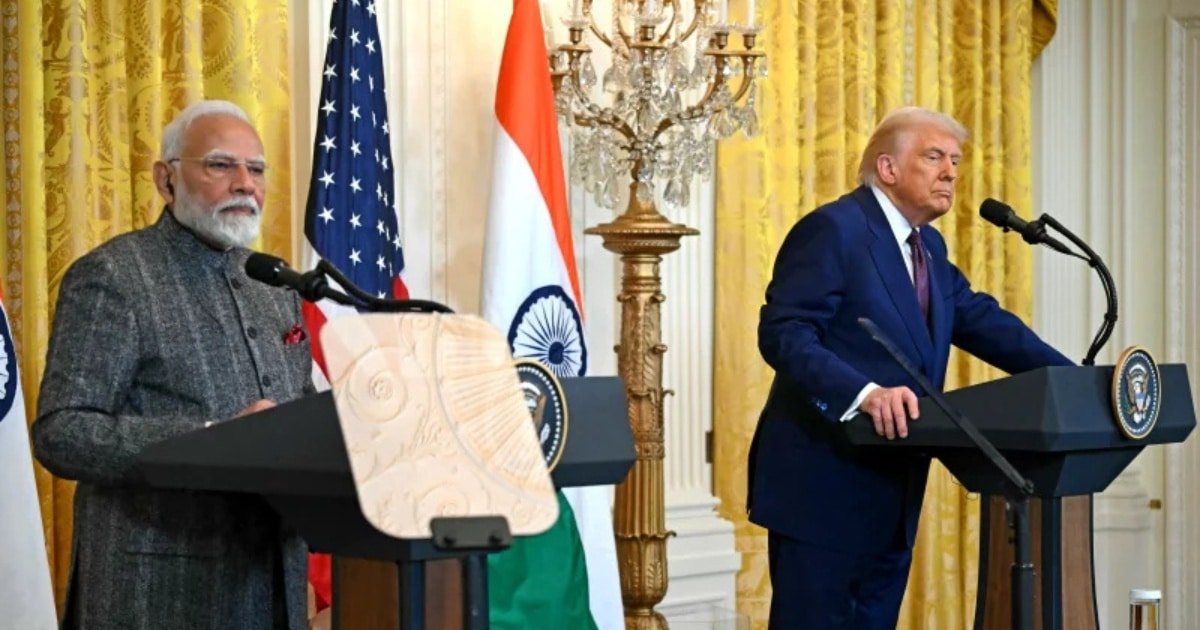





In a move that could strain the economic partnership between Washington and New Delhi, U.S. President Donald Trump announced a sweeping 25% tariff on Indian imports on July 30, 2025. The decision, which comes into effect on August 1, targets goods across multiple sectors and includes additional penalties for India’s continued purchases of Russian oil and military equipment. Trump’s decision marks a sharp escalation in economic pressure, aimed at forcing India to realign its foreign policy and trade posture to match U.S. expectations.
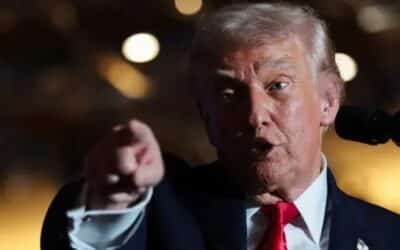
Trump, during a press conference in Washington, accused India of being a “tariff king,” claiming that New Delhi has long imposed unfair trade barriers on U.S. exports. He emphasized that while the U.S. considers India a friend, “friendship must be reciprocal,” referencing India’s high average tariff rates and continued participation in BRICS as evidence of anti-American alignment. Moreover, Trump cited India’s deals with Russia as a direct breach of international solidarity against the Kremlin’s ongoing war in Ukraine, framing the tariffs as punishment for “funding the enemy.”
This tariff hike is part of Trump’s broader “reciprocal tariffs” campaign, announced earlier this year, which aims to realign global trade relations based on perceived fairness rather than multilateral trade norms. As part of this framework, India joins a list of countries—including China, Mexico, and Turkey—facing heightened duties. The additional, unspecified penalty linked to India’s Russian oil imports underscores a growing U.S. strategy to use trade as leverage in global geopolitical disputes. The policy shift signals a stark departure from traditional diplomacy, with Trump favoring coercive economic tools over negotiation and consensus.
The immediate impact on India’s economy could be substantial. The United States is India’s largest export destination, accounting for over $66 billion in annual trade. The new tariffs cover roughly 87% of Indian exports to the U.S., including key sectors like textiles, pharmaceuticals, auto components, and chemicals. According to economists, the tariffs are expected to compress profit margins by up to 50% for exporters and shave off at least 0.3% from India’s projected GDP growth this fiscal year. This comes at a time when India is already grappling with sluggish private investment and a challenging global trade environment.
You May Like To Read: Operation Mahadev: A Fake Encounter to Cover up Operation Sindoor Failures
The announcement sent shockwaves through Indian markets. On the day of Trump’s declaration, the Sensex dropped nearly 600 points, erasing over ₹5 lakh crore in market value in a matter of minutes. Sectoral stocks linked to U.S. exports—particularly in auto, shrimp processing, and information technology—saw sharp selloffs. Gift Nifty futures also plummeted by over 170 points, reflecting investor panic over a potential trade war. However, by the following day, some market analysts suggested that much of the fear had been “priced in,” leading to a modest recovery on the indices.
Despite the partial rebound, the underlying concerns remain. According to analysts, the real challenge lies in the sustained pressure on earnings for companies with large U.S. exposure. Firms such as Bharat Forge and Sona BLW Precision, both heavily dependent on exports to the American automotive sector, saw their stock values decline by 2–3%. Meanwhile, the rupee weakened further, exacerbating concerns of capital outflows amid growing global uncertainty.
Politically, the tariffs have sparked intense domestic criticism. Opposition parties lashed out at Prime Minister Narendra Modi for what they described as a diplomatic blunder, accusing the government of failing to anticipate Trump’s aggressive economic posture. Members of Parliament demanded urgent answers and convened emergency sessions to discuss the unfolding crisis. Congress leader Shashi Tharoor warned that if the U.S. continues to impose “unreasonable demands,” India may need to reconsider the trajectory of its bilateral trade engagement altogether. “We may have to walk away,” Tharoor stated, “India is not out of options.”
The timing of the tariff is particularly sensitive as India heads into its budget cycle and continues its bid to double bilateral trade with the U.S. to $500 billion by 2030. The punitive measures now cast a long shadow over those ambitions. Not only does it threaten to derail current trade negotiations, but it also sends a chilling message to global investors about the stability of India-U.S. economic relations. Some observers fear that this could push India further into alternative alliances, particularly with BRICS nations and the Global South, complicating America’s strategic calculus in the Indo-Pacific.
You May Like To Read: Pakistan-Kyrgyzstan Trade Forum
Beyond the bilateral tensions, the tariff also raises questions about the global trading system. Trump’s aggressive use of tariffs reflects a broader retreat from the World Trade Organization (WTO) and its multilateral rules-based framework. According to trade experts, such unilateral moves risk eroding the legitimacy of global institutions and could encourage other nations to adopt retaliatory or protectionist measures of their own. Analysts warn that the continued use of tariffs as a foreign policy cudgel may destabilize global supply chains, increase costs for consumers, and set back post-pandemic recovery.
While both Washington and New Delhi claim that trade talks are ongoing, the prospects of an immediate resolution appear slim. Trump’s political calculus, centered on projecting toughness in an election year, leaves little room for compromise. On the Indian side, the Modi government must balance domestic pressures with international diplomacy—a tightrope walk that may become more precarious if additional sanctions are introduced.
For now, the 25% tariff on Indian goods, alongside penalties over Russian energy ties, marks a turning point in U.S.-India relations. As both countries brace for a protracted standoff, the fallout will likely be felt not just in economic figures, but in the shifting architecture of global power itself.