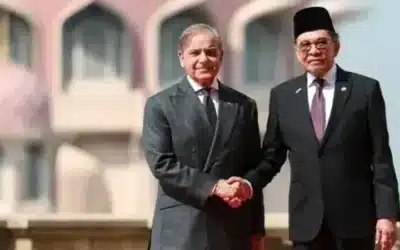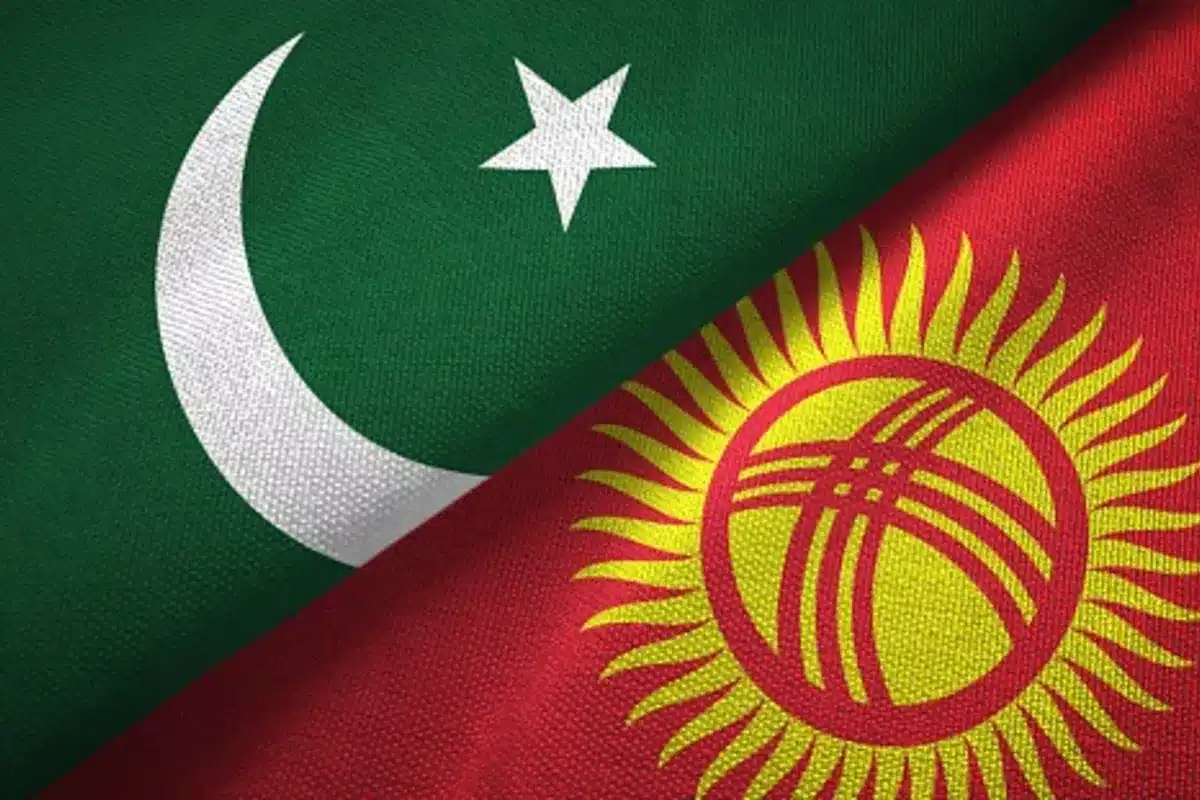





Recently at the FPCCI Head office in Karachi the Pakistan Kyrgyzstan Trade investment Forum was organized and business leaders as well as officials and diplomats of both countries attended this event. The idea behind such a forum was to strengthen trade and economic collaboration more especially following the recent 5th Pakistani and Kyrgyzstan Inter-Governmental Commission, held in Islamabad. The Kyrgyz delegation who visited included parliamentarians and investors, who showed much interest in working with the Pakistani businesses.
The discussive areas identified at the forum included energy, agriculture, transport, halal trade, and digital connectivity, where the two countries were keen to enhance relations and growing bilateral trade, which went down to a low of only $5.18 million in the 2024-25 year. The current goal of Pakistan and Kyrgyzstan is to increase this trade level to the level of $100 million by combined efforts and improved cooperation.

Source: Tribune
Historical Context
Kyrgyzstan and Pakistan have enjoyed diplomatic relations since the year 1992 but over the years their economic association has not been developed. The volume of trade between the two nations in the 2022-23 varying to about 11.2 million US dollars, a number that nosedived to 5.18 million US dollars in the 2024-25. These governments realized the decline thus in recent years the two governments have renewed efforts to increase economic relations. These efforts were started by the 5th Pakistan Kyrgyzstan Inter-Governmental Commission (IGC) that took place in Islamabad in July 2025 and helped to establish a basis. At the IGC, the two countries talked of trade, investment, connectivity, energy collaboration and opted to establish a new trade goal of 100 million.

Source: Dawn
Such shift is also experienced when Pakistan is struggling to reinstate its relationship with states of the Central Asia, with the help of regional ventures, such as China-Pakistan Economic Corridor (CPEC), Quadrilateral Traffic in Transit Agreement (QTTA), Khyber Pass Economic Corridor (KPEC). Such projects can be used to integrate landlocked country Kyrgyzstan to Pakistani ports such as Gwadar and Karachi, which allows it access to the South Asian and international markets. Kyrgyzstan, on the other hand, is trying to develop alternative trade routes and economic relations with the countries outside of the traditional regional allies, and Pakistan becomes a central point in their strategy regarding the connection to the region.
The Forum Main Points
The Karachi meeting as part of the Pakistan Kyrgyzstan Trade and Investment Forum has enabled businessmen, policy makers and diplomats to interact directly with each other to exchange ideas. FPCCI President Atif Ikram Sheikh began by giving a brief overview of the significance of enhancing trade links with the Central Asia region and urged steps to be implemented on the ground to eliminate obstacles. He emphasized that Pakistan and Kyrgyzstan have unexplored resources in energy, transport, halal food, agriculture and technology.
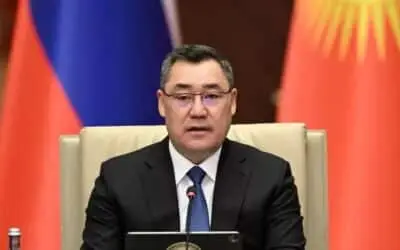
The visiting delegation was headed by Deputy Prime Minister of Kyrgyz Edil Baisalov who was also keen on industrial collaboration with Pakistani investors. He has invited and motivated Pakistani businessmen to consider venture in Kyrgyzstan in the mining, tourism, textile and renewable energy markets. He also invited joint venture and promised the total support of Kyrgyz institutions to the foreign investor.
You May Like To Read: A Fake Encounter to Cover up Operation Sindoor Failures
FPCCI Senior Vice president Saquib Fayyaz Magoon put a lot of emphasis on the strategic nature of regional connectivity. He called upon the two nations to utilize to the maximum the routes such as CPEC and Torugart and Irkeshtam passages to connect Kyrgyzstan and Pakistani ports. He also said there is a need to move the dependency on air cargo to longer term and sustainable means of rail and road connections through existing arrangements such as QTTA. He wanted to see the restoration of direct air routes and Brussels to eliminate non-tariff barriers making the trade to flow freely.
Having increased institutional collaboration between FPCCI and its Kyrgyz counterpart was also encouraged by the forum that suggested the establishment of a Pakistan Kyrgyz Joint Business Council. It was on the agreement of the two to ensure regular B2B interaction, particularly exchange of trade delegation, and common exhibitions had the capacity to enhance economic links.
MoUs and Area of Cooperation
In the course of the meeting and the previous Inter-Governmental Commission, a number of Memorandums of Understanding (MoUs) were inked to official cooperation in various sectors. Among them was a MoU between the Pakistan Halal Authority and a Kyrgyz industry body to facilitate exchange of trade in halal with booming demand in the domestic or international market. In the same light, Pakistan Board of Investment (BOI) and Kyrgyz National Investment Agency came to agreement to collaborate in their efforts to attract each other investments, to promote joint venture.
MoU has been signed between Pakistan Standards and Quality Control Authority (PSQCA) and the Center of Standardization and Metrology of Kyrgyzstan with regard to the area of standardization and quality assurance. This will foster trade in that standards of products shall be uniform and less hurdles of inspection at the borders. The two sides also talked on energy cooperation including import of electricity on the CASA-1000 project in addition to potential cooperation in renewable energy and exploration of Minerals.
You May Like To Read: South Asian Muslim Identity and Progressive Power in NYC Politics
Agreement were also done concerning transport and logistics including the enhancement of cargo services, the development of rail and postal services all the way up to reviving direct flights between the two countries. There was a discussion held by officials on the possibility of having scheduled commercial flights, rather than using the irregular chartered flights. They also discussed the implementation of fiber-optic connectivity projects, which would ensure that not only there is enhanced digital trade, but also better communication infrastructure is created in the area.
Finally, both countries settled to increase the collaboration in Islamic banking, fintech, and the staff training in the financial sector. Pakistan State Bank and central financial officials Of Kyrgyz Republic will collaborate in establishing a knowledge sharing platform with the National Institute of Banking And Finance (NIBAF).
Other than economics, there was also attention on education, health and agriculture. There was also an agreement that both countries would enhance academic exchanges, training programs, and scholarships to happen under the Pakistan Technical Assistance Program (PTAP). During the health sector, discussions about Pakistani medicine registration in Kyrgyzstan, cooperation in developing vaccines, and cooperation in the area of medical goods public procurements were discussed.
An agriculture MoU wasl also signed, aimed at easing the trade in legumes, grains, and Basmati rice and both sides agreed to collaborate in phytosanitary and veterinary standards to ease trade in food. The exchange of media content, cultural events, or togetherness in tours, and activities among the youth, in bilateral sports were all proposed.
Strategic Implications and the Significance
The Pakistan Kyrgyzstan Trade and Investment Forum was a milestone to the restitution of the bilateral relations at a time when bilateral trade levels had drastically reduced. With a target amount of $100 million which was high, the two nations sent out a strong message that they are ready to revive the economic relations. The event gave a platform that hardly ever exists where it gives the public and private stakeholders an opportunity to interact directly and see in priority areas where there is urgent need of action. It also served to create impetus after the Inter-Governmental Commission (IGC) meeting and demonstrated that the two sides are willing to transition out of the dialogue into practical implementation.
The location of the forum is strategically aligned with Pakistan as a whole ensuring greater connectivity with Central Asia by implementing such projects as CPEC, QTTA and CASA-1000. Such corridors are able to provide both landlocked state of Kyrgyzstan and Pakistan access to Arabian Sea, the former gaining the opportunity of diversifying trade routes and the latter benefitting by gaining regional influence.
You May Like To Read: Arab States Escalate Diplomatic Pressure
To Kyrgyzstan, partnering with Pakistan will not only open its business to the markets of South Asia, but also help it ease its over reliability to the traditional markets. The same interest in engaging further in regional integration, nurturing economic diversification in the region, and creating sustained political goodwill is therefore embodied in the forum.
Way Forward
In the future, it is important that Pakistan and Kyrgyzstan should not only sign agreements and then put them aside. The creation of task forces on such topics as the facilitation of trade, energy, agriculture and digital connectivity will prove essential to implementation. Spearheading the proposed Pakistan Kyrgyz Joint Business Council to meet on regular basis, better B2B connection and attending trade fairs in each other are some ways that can keep the momentum going.
Also, acceleration of infrastructure projects, and signing of transport corridors within such initiatives as QTTA and CASA-1000 will boost the links in the region. With the emphasis on functional cooperation, minimization of non-tariff barriers, and as much as the people-to-people contact, the two states can transition the goodwill to tangible growth and convert the resurging friendship into an economic success story.