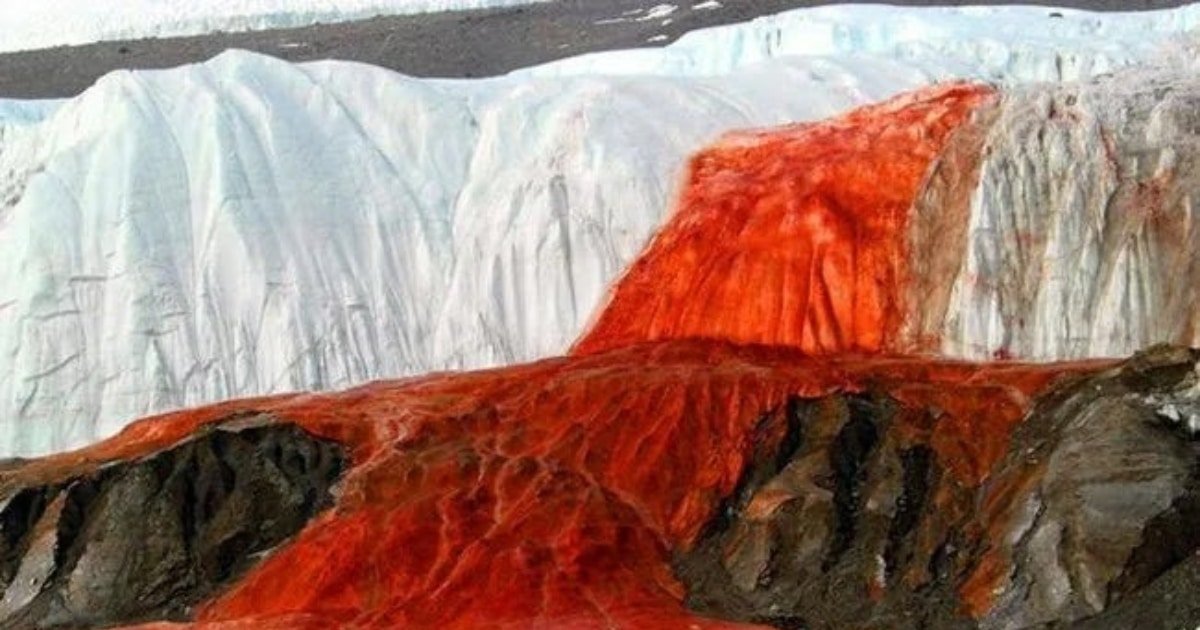





New reports have once again brought global attention to Blood Falls, the eerie, rust-colored waterfall seeping from the Taylor Glacier in Antarctica’s McMurdo Dry Valleys. First spotted in 1911 by Australian explorer Thomas Griffith Taylor, the falls were long thought to be colored by red algae. However, modern research has confirmed the phenomenon is actually a unique chemical reaction involving an ancient, subglacial “time capsule” trapped beneath 400 meters of ice.
Antarctica’s famous Blood Falls looks like a glacier is pouring out blood, but the deep red color comes from iron-rich salty water trapped beneath the ice for millions of years. When the water seeps out and hits oxygen, the iron oxidizes, essentially rusting, turning the flow a… pic.twitter.com/aVGdFDBF9C
— Interesting Engineering (@IntEngineering) February 7, 2026
The source is a hypersaline lake, roughly three times saltier than seawater, which prevents it from freezing despite the extreme cold. For over two million years, this water has been isolated from sunlight and oxygen. As the glacier moves, it grinds the bedrock, infusing the water with high concentrations of ferrous iron. When this brine finally seeps through cracks and meets the air, the iron oxidizes essentially creating “liquid rust” to produce the striking crimson hue.
You May Like To Read: UN Security Council Unanimously Extends Taliban Sanctions Monitoring Mandate Through 2027
Scientists have discovered a thriving ecosystem of extremophile microbes within this dark, anoxic reservoir. These organisms survive by “breathing” iron and sulfate, a process rarely seen in nature. This discovery has major implications for astrobiology, suggesting that similar life forms could exist in the subsurface oceans of icy moons like Europa or beneath the polar caps of Mars.
Check out our latest video: