



A Cautious Truce, Not a Reset
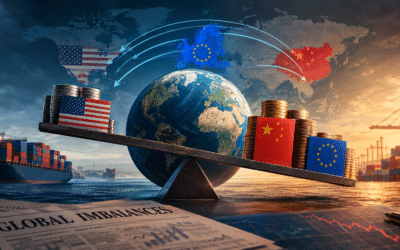
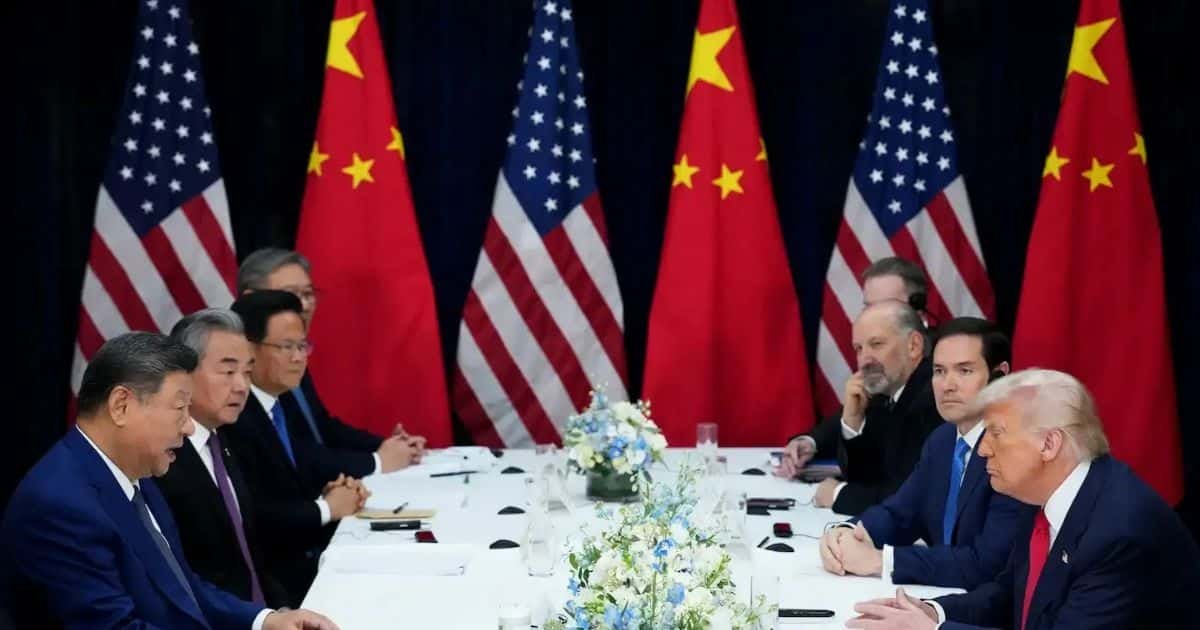
The meeting between Presidents Donald Trump and Xi Jinping on October 30 in Busan was sold by both sides as a diplomatic success, a face-to-face thaw after months of sharp commerce and technology confrontation. What emerged publicly was not a sweeping new agreement but a tactical pause: Washington announced it would dial back certain tariff moves while Beijing pledged limited trade and enforcement steps. Markets and capitals welcomed relief, but analysts warned the deal is narrowly drawn and temporary.
You May Like to Read: The U.S.-China First Trade War: Roots, Evolution, and Global Impacts
Trade Measures Trimmed, Details Matter
President Trump said U.S. tariffs on Chinese goods would be reduced from a peak level to roughly the mid-40s percentage range and that a new 10-point cut would take effect immediately, while China agreed to resume large-scale U.S. agricultural purchases and to hold off on some export controls. Those headline moves bought breathing room for exporters and eased pressure on global supply chains, yet they left intact the broader U.S. framework of tariffs and export restrictions that have driven firms to reorganise supply chains. The practical impact therefore depends on technical implementation, scope, and which product lines are covered.
Technology, and Rare Earths: a one-year pause
One of the more consequential outcomes was an understanding to delay the immediate imposition of further export controls on critical materials and technology, including rare earths, for about a year. That pause reduces the immediate risk of supply shocks for industries dependent on these inputs, from electronics to defence contractors. But the concession is time-limited: sources describe it as a temporary “freeze” rather than the abandonment of industrial policies both sides see as essential to long-term advantage. The underlying strategic competition over semiconductors, AI chips and dual-use technologies therefore remains unresolved.
Security Issues Left to Future Pages
Notably absent from the Busan readout were binding commitments on flashpoint political topics such as Taiwan and certain high-end export bans like restrictions on Nvidia-class chips. Both capitals framed the meeting as stabilising, but they also circumscribed its scope: tactical economic fixes and cooperation on problems such as illegal fentanyl trafficking were attainable; deep political disputes were not. This selective engagement fits a pattern in which summits are used to manage rather than to solve core strategic rivalry.
Implications for Indo-Pacific Alliances
For Pakistan and other countries in the region, a short-term US-China thaw has mixed consequences. On one hand, reduced tariff volatility and clearer trade channels are welcome for export markets and investment planning. On the other hand, allies and partners who have relied on American deterrence and shared security guarantees may worry that bilateral detente could weaken coordinated responses to coercive behaviour. Washington will have to reassure partners through sustained diplomatic and military ties; Beijing will use any opening to deepen economic influence. Neither power can single-handedly rewrite regional alignments overnight, but pauses like Busan make alliance management more complex.
Taiwan: The Unspoken Fault Line of the Busan Summit
Despite the smiles and handshake in Busan, Taiwan remained the most volatile issue left untouched. Both Washington and Beijing deliberately avoided public references to it, yet military activity around the Taiwan Strait has quietly intensified. According to Reuters, China’s Eastern Theatre Command carried out live-fire drills along its east coast days before the summit, while U.S. naval patrols continued “freedom of navigation” exercises through contested waters. This choreography highlights that political restraint in statements does not equal de-escalation on the ground.
Trump’s team reiterated afterward that America’s “One China” policy is unchanged but confirmed continued arms support to Taipei. For Beijing, that signalled tactical patience, not acceptance. Analysts from the Lowy Institute note that as long as no military communication hotline exists, a single misread maneuver could derail this entire thaw.
Why this is a pause more than a pivot
Experts at think tanks and policy centres quickly described the Busan meeting as tactical rather than strategic. The truce reduces immediate incentives to escalate but does not remove the structural drivers of competition: industrial policy ambitions, national security screening of technology, and domestic political incentives that reward toughness on the rival. In short, leaders have traded short-term relief for breathing room, a valuable space, but not a durable end to rivalry.
You May Like to Read: Trump–Xi Summit Expected to Be Tepid Amid Cold War II Tensions
The Year Ahead: Between Pause and Pressure
Economists describe the Busan truce as a “managed cooldown” rather than a breakthrough. Tariff relief and agricultural purchases may stabilise trade in the short run, but the same fundamentals, industrial subsidies, AI rivalry and ideological mistrust,remain unresolved. The one-year pause on rare-earth export curbs expires in 2026, meaning both capitals must either negotiate an extension or risk renewed confrontation.
For Pakistan and other developing economies, this narrow window should be used to reinforce resilience, diversifying exports, improving logistics, and preparing for new supply-chain realignments. The Busan handshake has bought time, not peace; what nations do with that time will determine how they weather the next turn in the U.S.–China rivalry.
You May Like to Read: South Korea to Cut Tariffs Under New US Trade Deal
Risks, and Opportunities for Pakistan
For Pakistan, the Busan outcome underscores the need for pragmatic hedging. Economic opportunities may arise if trade normalisation steadies markets for commodities and manufactured goods, and Pakistan could benefit from clearer investment signals if Chinese and American companies expand regional supply chains. At the same time, Islamabad must preserve strategic autonomy: deeper entanglement with either capital carries diplomatic costs. Pakistan should press both powers for stable trade terms, greater transparency in sanctions and export policies that affect regional industries, and protections for Pakistani firms caught between changing rules. Clear, consistent engagement will be more valuable than rhetorical alignment.
Bottom line: Manage Expectations, use the Pause
The Trump-Xi encounter in Busan provided a useful reprieve from headline risk, a carefully negotiated pause that eases immediate economic pain. But it is not a diplomatic breakthrough that resolves the systemic contest between Washington and Beijing. The coming year will test whether the truce becomes a stepping stone toward negotiated rules, or simply a gap between renewed competition. For Pakistan and other middle powers, the right approach is cautious optimism: welcome stability where it appears, but plan for renewed rivalry by diversifying trade, strengthening domestic industries, and insisting on predictable rules from both great powers.
Check out our latest video: