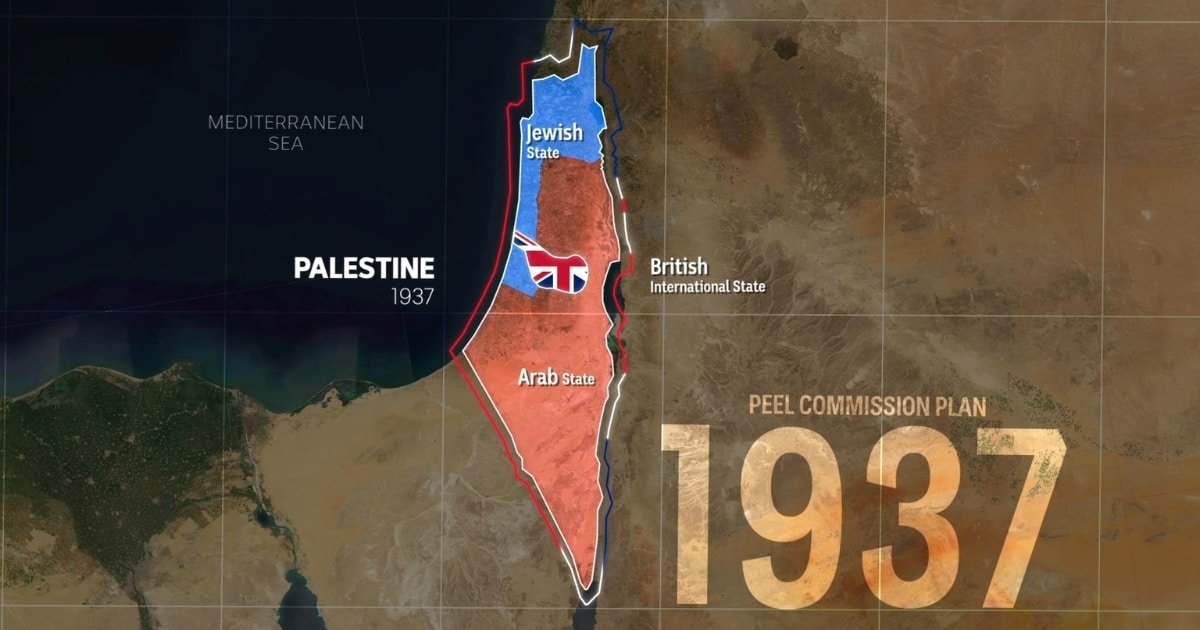





The decades-old Two-State Solution has reemerged as a central focus of international diplomacy in 2025, gaining unprecedented momentum as the catastrophic humanitarian situation in Gaza and escalating violence in the West Bank make clear the unsustainable nature of the status quo. With over 40,000 Palestinians killed in Israel’s military campaign and nearly 2 million displaced, the international community is increasingly recognizing that Palestinian statehood is not just a moral imperative but a strategic necessity for regional stability.
This renewed push comes after years of stalled negotiations and the near-collapse of the peace process, with key global players – including the United Nations, Arab states, European powers, and even traditionally neutral Asian nations – now coalescing around the framework of two sovereign states living side-by-side in peace and security. However, significant obstacles remain, particularly Israel’s entrenched opposition and the fragmented nature of Palestinian leadership.
Source: Al Jazeera
The UN’s Renewed Leadership on the Issue
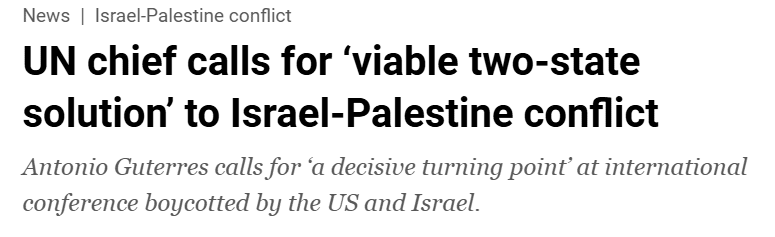
UN Secretary-General António Guterres has emerged as perhaps the most vocal proponent of the Two-State Solution, issuing some of his strongest statements to date declaring that:
“The Two-State Solution remains the only viable path to a just and lasting peace.”
In a dramatic address to the Security Council in July 2025, Guterres warned that the continued expansion of Israeli settlements in the West Bank and the systemic discrimination against Palestinians are making the prospect of peace increasingly remote.
You May Like To Read: U.S. Imposes New Sanctions on Entities Trading in Iranian Oil
The Secretary-General’s position aligns with a draft UN Security Council resolution currently under consideration that would formally recognize Palestinian statehood and set a timeline for negotiations. While the United States has historically vetoed such measures, there are signs that the Biden administration’s position may be softening under intense international pressure and growing dissent within the Democratic Party.
Regional Actors Take Center Stage
The Arab Peace Initiative 2.0
A coalition of Arab states led by Saudi Arabia and Egypt has revived and updated the 2002 Arab Peace Initiative, offering Israel full normalization of relations in exchange for a complete withdrawal to 1967 borders and the establishment of a Palestinian state with East Jerusalem as its capital. This proposal has gained particular significance following the Abraham Accords, demonstrating that Arab states are willing to engage with Israel while maintaining their commitment to Palestinian rights.
Japan’s Strategic Pivot
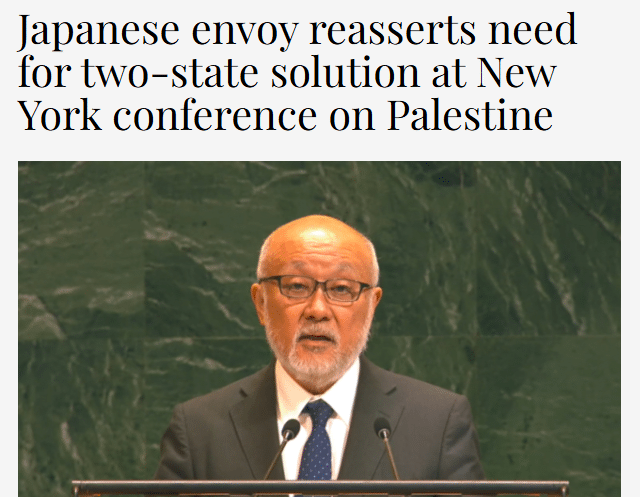
Perhaps most surprisingly, Japan, which has traditionally maintained a neutral stance on the conflict, has now openly endorsed the Two-State Solution. Prime Minister Fumio Kishida stated unequivocally that “Palestinian self-determination is not just a moral obligation but a strategic necessity for regional stability,” marking a significant shift in Tokyo’s foreign policy approach.
Source: Arab News
Vietnam’s Moral Authority
Drawing on its own history of anti-colonial struggle, Vietnam has emerged as an unexpected but important voice in the debate. Hanoi has pledged to “actively contribute” to implementing the Two-State framework, offering both diplomatic support and practical lessons from its own experience of national reconciliation.

Source: Asia News
Western Powers at a Crossroads
While the United States and European Union continue to officially support the Two-State Solution in principle, their unconditional military aid to Israel has severely undermined their credibility as honest brokers. The Biden administration finds itself increasingly isolated as global opinion shifts dramatically following Israel’s conduct in Gaza, with even staunch allies like Germany beginning to question their longstanding policies.
You May Like To Read: Trump Announces Tariff Deal, Boosting Pakistan’s Trade Prospects
However, there are signs of change. In the U.S. Congress, a growing bloc of progressive Democrats has introduced legislation conditioning military aid to Israel on human rights considerations. Similarly, several European parliaments have passed non-binding resolutions calling for immediate recognition of Palestinian statehood, reflecting a broader shift in public opinion across the West.
Obstacles to Implementation
Israeli Intransigence
The most significant obstacle remains the position of Israel’s government. Prime Minister Benjamin Netanyahu has repeatedly dismissed the Two-State Solution as “a threat to Israel’s security,” while his coalition partners have gone even further, with some openly advocating for the complete annexation of the West Bank. The continued expansion of illegal settlements – with over 700,000 settlers now living in the occupied territories – has created facts on the ground that make territorial contiguity for a future Palestinian state increasingly difficult to achieve.
The Hamas Question
While Hamas remains a major obstacle due to its refusal to recognize Israel and its commitment to armed resistance, some analysts argue that its influence could diminish if a credible peace process begins. The group’s popularity in Gaza has declined significantly following the devastation of the recent war, creating potential space for the more moderate Palestinian Authority to reassert its leadership.
Palestinian Political Divisions
The Palestinian political landscape remains deeply fractured, with the Fatah-controlled Palestinian Authority losing legitimacy due to corruption allegations and security coordination with Israel. Any viable peace process will require Palestinian political reunification and the establishment of a truly representative government that can speak for all Palestinians.
The Legal Framework for Statehood
The UN Membership Question
You May Like To Read: Trump Slaps India With 25% Tariff Over Russian Oil Ties and Trade Imbalance
A historic vote on Palestinian membership is expected at the upcoming UN General Assembly session. While full membership requires Security Council approval (which the U.S. would likely veto), an upgraded observer state status would give Palestine access to important international bodies and legal mechanisms. Over 140 countries already recognize Palestine, and this number is likely to grow.
International Courts Take Action
The International Criminal Court is currently investigating alleged war crimes committed by both Israeli forces and Palestinian armed groups, while the International Court of Justice has issued an advisory opinion declaring Israel’s occupation illegal under international law. These legal processes add significant weight to diplomatic efforts and create potential leverage for Palestinian negotiators.
Conclusion: From Rhetoric to Reality
The current moment represents perhaps the most significant opportunity for progress toward a Two-State Solution in over a decade. However, transforming this diplomatic momentum into concrete results will require:
- Sustained international pressure on Israel to halt settlement expansion and engage in good faith negotiations
- Palestinian political reunification under a leadership committed to both resistance and diplomacy
- Concrete steps by the international community, including recognition of statehood and economic incentives for both parties
- A rethinking of U.S. and EU policy to align rhetoric with action through conditionality on aid and trade
Without these elements, the current diplomatic flurry may prove to be just another chapter in the long history of failed peace initiatives. The alternative – a continuation of the status quo of occupation and periodic violence – promises only more bloodshed and instability for both peoples. As UN chief Guterres has warned:
“The Two-State Solution may be on life support, but it remains the only viable option. The time to act is now, before it’s too late.”