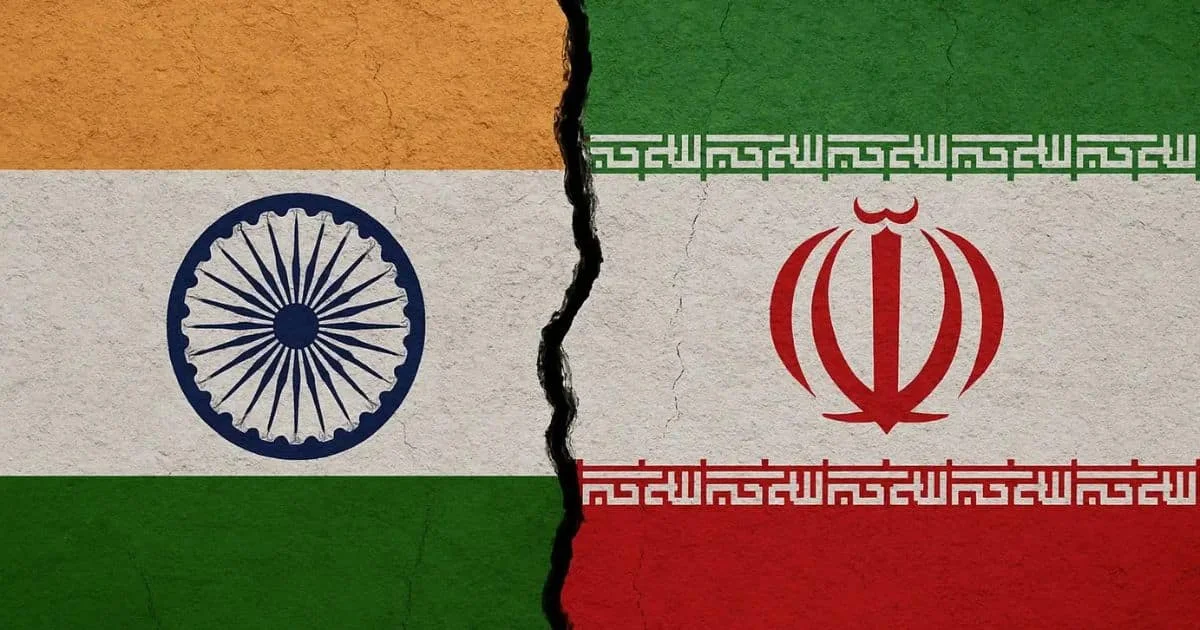




Chabahar was meant to be more than a port. For years Tehran and New Delhi framed the Shahid Beheshti terminal as a practical gateway for trade to landlocked Afghanistan and Central Asia, and as a symbol of India’s independent strategic reach in the Arabian Sea. That promise has unraveled not because of engineering or logistics alone, but because shifting regional politics, sanctions, great-power alignments, and competing corridor strategies, steadily narrowed the space for meaningful India–Iran partnership. The thaw that briefly allowed cooperation has frozen again under pressure from actors with stronger leverage.
U.S. Sanctions: Revocation of the Waiver
The most immediate blow came from Washington. In September 2025 the U.S. State Department made public a decision to revoke the limited exemption that had previously shielded Chabahar-related activity from secondary sanctions under the Iran Freedom and Counter-Proliferation Act (IFCA). Once the revocation takes effect, entities operating at Chabahar or engaging in certain related activities risk exposure to U.S. penalties. That legal shift transformed what had been a politically risky but manageable project into one with immediate commercial and banking hazards for any internationally active firm. For a project that relied on foreign capital, insurance and banking channels, that change was fatal for deepening Indian operational involvement.
You May Like to Read: U.S. Revokes Sanctions Waiver for India’s Chabahar Port
Iran’s Broader Foreign Policy Shifts
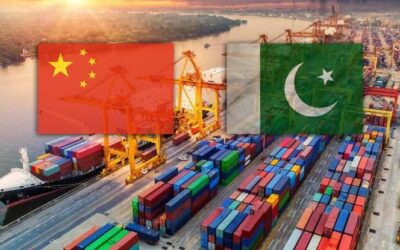
At the same time China and Pakistan moved decisively to consolidate an alternative. Gwadar, already central to the China–Pakistan Economic Corridor (CPEC), has attracted fresh investments and a maritime action plan that positions the port as a regional logistics hub. Islamabad and Beijing have announced measures to expand port facilities, bonded zones and feeder routes, and to integrate Gwadar in broader trade lanes that aim at Africa and Central Asia. As Gwadar’s physical capacity and diplomatic backing grew, the political advantage of Chabahar as a counterweight diminished. The corridor competition hardened into a contest of who could offer quicker, larger and more secure deliveries of capital and security guarantees.
You May Like to Read: Pakistan and Iran Chart a New Course: An Ambitious $10 Billion Trade Target
Gwadar, Pakistan and China: A Competing Corridor
Iran’s own foreign policy tilt complicated the picture further. Tehran has pursued relationships that reduce its economic isolation: deeper engagement with Beijing, outreach to regional partners and opportunistic agreements with any party willing to invest. A 25-year strategic understanding with China and greater Chinese involvement in Iranian infrastructure have given Tehran alternative sources of money and logistics. When a choice had to be made between a long, insurance-heavy Indian development model and faster capital infusion from China, Iran often chose the latter, a pragmatic calculus fed by sanctions pressure and domestic political priorities. That realignment restricted how far Iran could go in accommodating Indian operational control without risking friction with Beijing.
You May Like to Read: The CPEC Constitutional Mandate: A Debate on the Legal Protection of National Development Projects
Security and Political Risks
Security dynamics in Afghanistan and the wider region also undercut the Chabahar proposition. New Delhi’s rationale for Chabahar was partly to provide trade and humanitarian access to Afghanistan without routing through Pakistan. But intermittent instability in Afghanistan, the collapse of the post-2014 order and continuing threats to overland corridors weakened the economic logic. Investors, whether Indian, Iranian or third-party financiers, require predictability. When that predictability evaporated, the commercial case for heavy investment by distant partners faded. In short, the land bridge component of Chabahar’s promise never enjoyed the political continuity it needed.
The Role of Legal, Financial and Commercial Incentives
The information environment around the project made matters worse. Competing narratives about intent and influence circulated across media and diplomatic channels, stirring mistrust. In Pakistan, policymakers framed Gwadar’s expansion as vindication of a national strategy to anchor the western seaboard inside a China-backed connectivity architecture. The U.S. will revoke India’s 2018 sanctions waiver for Chabahar Port on September 29, 2025, tightening pressure on Tehran and complicating Delhi’s $120 million investment in the terminal. The move coincides with Donald Trump hinting at restoring a U.S. foothold at Afghanistan’s Bagram Air Base to counter China’s regional influence.
Islamabad presented Gwadar and Chabahar as complementary in technical terms, but the strategic signalling was unmistakable: whoever sustained investment and security would shape the maritime order. Tehran’s sensitivity to appearing overly aligned with any single external power further limited transparent, long-term commitments to partners whose alliances could shift.
Consequences and Reflections
What lessons follow for policymakers across the region? First, connectivity projects that cross contested geographies cannot rely on bilateral goodwill alone; they need multilateral guarantees and finance structures that insulate participants from sudden diplomatic shifts. Second, legal and banking risks matter as much as bricks and cranes, sanction policy can negate years of negotiation in a single policy statement. Third, infrastructure without accompanying security arrangements and political assurances is fragile; the hard power that protects ports and corridors is as important as the soft power that sells them.
For Pakistan, the outcome has played into a narrative of strategic vindication: Gwadar’s growth is portrayed as the successful realisation of a connectivity vision supported by Beijing. For Iran, the pivot toward partners who provide immediate capital is a rational response to long running sanctions. For India, Chabahar’s stalling is a reminder that strategic projects need robust risk buffers, especially when they intersect with great-power rivalries.
Conclusion
Two ports, separated by less than two hundred kilometres of coast, now tell a larger story. Chabahar’s halting progress is not simply the result of failed diplomacy; it is the predictable outcome when local ambitions hit the hard limits imposed by sanctions, alternative patrons and competing corridor politics. If the region is to convert coastlines into corridors rather than fault lines, policymakers will need to deliver political architectures as resilient as the infrastructure they plan to build. Only then can commerce outlast confrontation.
You May Like to Read: