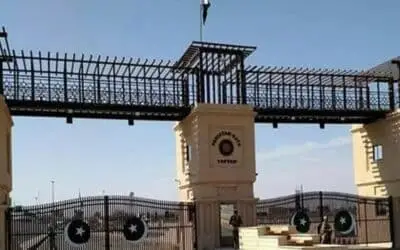
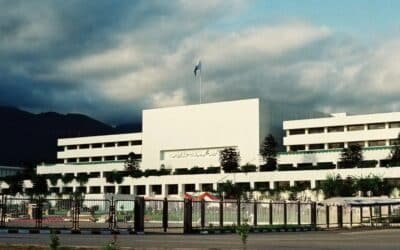
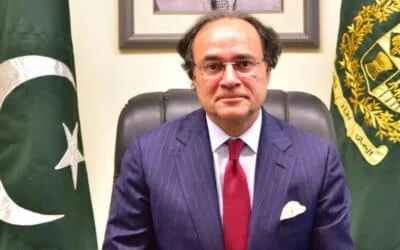
A horrific footage surfaced, and went viral, recently from Pakistan’s Balochistan province, showing the brutal “honor killing” of a young married couple. The couple was murdered for the grave transgression of marrying out of choice. The disturbing footage, showing armed men executing the couple on the orders of a tribal council, known as a Jirga, has ignited nationwide outrage.
This horrific incident, confirmed by Balochistan Government Spokesman Shahid Rind occurred during the Eid Al-Adha holiday. This incident illuminates the enduring power of customary law in certain tribal areas, raising profound questions about the nature of sovereignty and justice within a modern state.
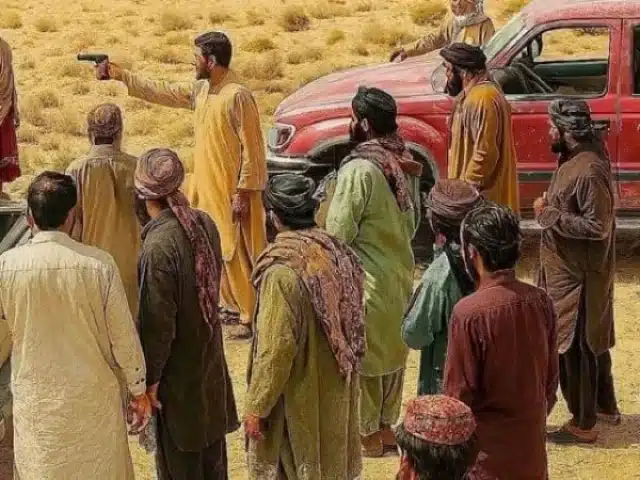
Source: Tribune
The subsequent arrest of a suspect and the Balochistan government’s pledge to register a case, with the state as complainant, signifies a critical confrontation between formal legal systems and entrenched traditional practices.
The Deadly Price of Honor in Pakistan
Honor killings are a pervasive and deeply entrenched social problem in Pakistan, where women and men are murdered by family members or relatives who believe their actions have brought dishonor upon the family. These brutal acts are often triggered by perceived violations of cultural norms, such as: marrying without familial consent; seeking divorce; or engaging in relationships.
The very notion of “honor” in this context is a tragically warped construct, prioritizing a rigid social code over the fundamental human right to life and bodily autonomy. The Human Rights Commission of Pakistan has consistently documented hundreds of such killings annually, highlighting the systemic failure to eradicate these crimes and protect victims.
In response to the viral video and the widespread condemnation, the Pakistan Ulema Council (PUC), a prominent group of clerics and religious scholars, issued a powerful statement unequivocally denouncing honor killing as, “un-Islamic, anti-Sharia and terrorism.”
The PUC demanded that perpetrators be tried in Anti Terrorism Courts and prosecuted publicly, reflecting a growing religious and societal consensus against these practices—that clash with local, and informal justice mechanisms. This strong condemnation from religious authorities is a vital step in dismantling the false moral justifications often invoked for such heinous acts.
Customary Laws: The Jirga and its Contested Authority
The Balochistan incident underscores the enduring, contentious, role of customary laws in Pakistan’s tribal and rural areas. Jirga’s—traditional councils of tribal elders—have historically served as informal dispute resolution mechanisms, drawing their authority from local customs, traditions, and sometimes religious sentiments.
In regions like Balochistan and Khyber Pakhtunkhwa, where state administrative and judicial structures have historically had a weaker presence, Jirga’s have filled a vacuum, addressing everything from land disputes and blood feuds to family matters. Their [Jirgas’] appeal lies in their perceived accessibility, affordability, better speed compared to the formal legal system, and traditional roots.
However, the authority of Jirga is deeply contested, particularly when their verdicts violate fundamental human rights and state laws. While some advocate for their role in local conflict resolution, human rights organizations and the formal justice system increasingly challenge their legitimacy, particularly concerning women’s rights, child marriage, and “honor killings.”
The Supreme Court of Pakistan has on several occasions declared Jirga’s illegal when they assume judicial powers and issue verdicts that infringe upon constitutional rights. Despite such rulings, their influence persists, operating in a parallel legal universe.
State within a State: Navigating Multiple Legal Realities
The persistence of Jirga’s and prevalence of customary laws, particularly in areas like Balochistan, is a fascinating and problematic concept—that people living in a single social contract, the modern state, can simultaneously adhere to and be governed by multiple, sometimes conflicting, legal frameworks.
This effectively creates a state within a state, where the writ of the formal legal system is challenged by powerful, localized systems of justice. Max Weber, in his seminal essay Politics as a Vocation, defines the state as,
human community that (successfully) claims the monopoly of the legitimate use of physical force within a given territory.
The incident in Balochistan, where a couple was executed on the orders of a Jirga, directly challenges the foundational tenet of the modern state. When customary bodies rather than state institutions hold power over life and death, the state’s monopoly on legitimate violence is undeniably eroded. This dual authority reveals a struggle for ultimate control, as the state’s inability or unwillingness to enforce its legal writ empowers informal systems.
Moreover, Declan Walsh’s “The Nine Lives of Pakistan: Dispatches from a Divided Nation” offers poignant insights into this very fragmentation. While not solely about tribal justice, Walsh’s work reveals the varying extent of state authority across Pakistan. He illustrates how weak state control, especially in the tribal belt, allows non-state actors and traditional systems to thrive.
Walsh herein, argues that Pakistan, despite being a unified nation-state, operates as a collection of distinct power centers administering different forms of justice, sometimes leading to tragic outcomes like honor killings. The central challenge, as Walsh portrays, is for Pakistan to consolidate its authority, ensuring constitutional principles of justice and human rights apply equally to all citizens, regardless of location or tribal ties.
Asserting State Authority and Upholding Rights
The Balochistan government’s swift action in identifying and arresting suspects, and registering of a state-initiated case, is a crucial step towards asserting the state’s monopoly on justice.

Source: Radio Free Europe
This direct intervention challenges the impunity often enjoyed by those who hide behind customary laws, and ironically violent dispute resolution systems, to commit heinous crimes. For the state to truly be sovereign, its laws must apply universally and its institutions must be the ultimate arbiters of justice.
Eradicating “honor killings” and similar practices requires more than just reactive arrests. It demands a sustained effort to strengthen the formal legal system, making it more accessible, efficient, and trustworthy for citizens in remote areas.
Ultimately, this menace of honour killings, necessitates robust public awareness campaigns to challenge harmful cultural norms and amplify the voices of religious scholars like the PUC, who unequivocally condemn such acts. Only by consistently upholding constitutional rights and ensuring accountability for all, irrespective of tribal custom, can Pakistan forge a truly unified legal framework and secure justice for every citizen.