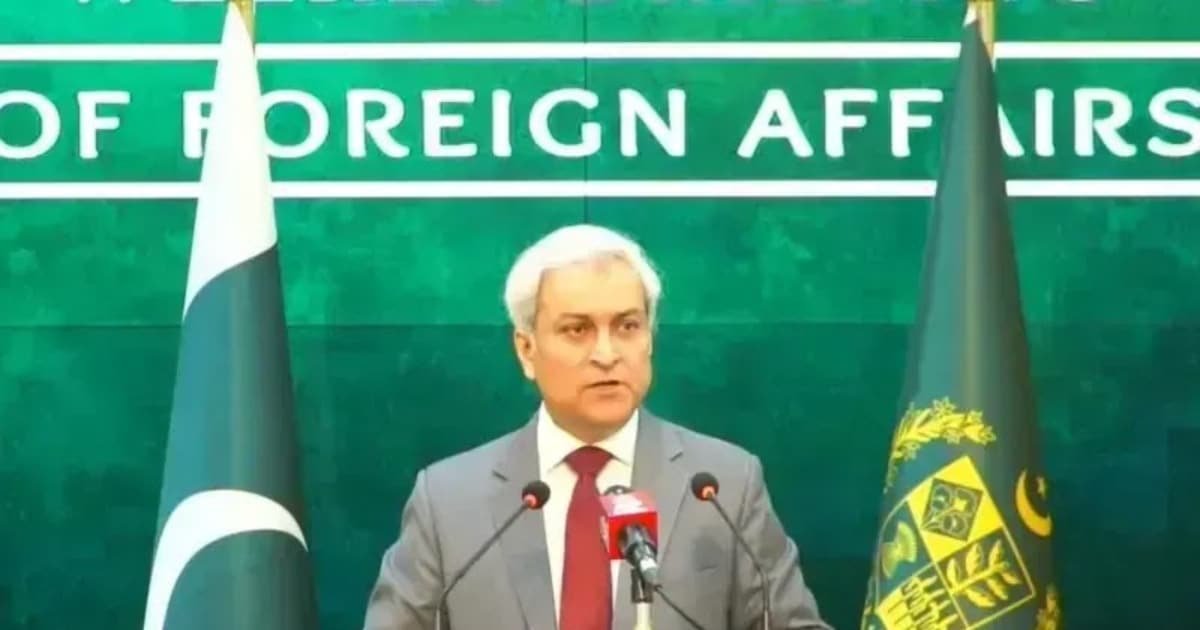





During the weekly media briefing held today at the Foreign Office, Spokesperson Tahir Andrabi outlined Pakistan’s ongoing diplomatic efforts regarding regional stability in the Gulf, bilateral protocols with India, and concerns regarding the Indus Waters Treaty.
🔊PR No.0️⃣4️⃣/2️⃣0️⃣2️⃣5️⃣
Joint Statement by the Foreign Ministers of Pakistan,Egypt, Indonesia, Jordan,Qatar,Saudi Arabia,Turkiye, and the United Arab Emirates https://t.co/xaUMMjjGxW
🔗⬇️ pic.twitter.com/XrrIX3E6KM
— Ministry of Foreign Affairs – Pakistan (@ForeignOfficePk) January 2, 2026
Mediation in Gulf Tensions
Spokesperson Andrabi reaffirmed Pakistan’s commitment to fostering peace between Saudi Arabia and the United Arab Emirates. Following recent regional developments, Pakistan is actively engaging the leadership in both Riyadh and Abu Dhabi to encourage a diplomatic resolution to the dispute over Yemen.
“Our leadership remains in close contact with our brotherly partners in the Gulf to advocate for restraint and a Yemeni-led political process,” the Spokesperson stated. This follows high-level engagements by Prime Minister Shehbaz Sharif, emphasizing Pakistan’s role as a facilitator for regional prosperity.
Annual Exchange of Strategic Lists with India
In accordance with long-standing bilateral agreements, Pakistan and India successfully conducted the annual exchange of nuclear and consular information:
- Nuclear Installations: Both nations exchanged lists of nuclear facilities and installations under the Agreement on Prohibition of Attacks against Nuclear Installations and Facilities. This protocol serves as a critical confidence-building measure (CBM) to prevent escalation.
- Consular Access: Pursuant to the 2008 Consular Access Agreement, lists of prisoners were exchanged. Pakistan handed over a list of 257 Indian prisoners (58 civilians and 199 fishermen) currently in its custody. India reported 391 civilian prisoners and 33 fishermen believed to be of Pakistani origin.
Concerns Over the Dulhasti-II Hydropower Project
The Foreign Office expressed serious concern regarding India’s approval of the 260MW Dulhasti Stage-II hydropower project on the Chenab River. The Spokesperson highlighted that India failed to provide prior notification or technical details, as mandated by the Indus Waters Treaty (IWT) of 1960.
You May Like To Read: President Mohamud Denounces Israel’s Recognition of Somaliland, Warns of Plot to Displace Palestinians
“This omission constitutes a disregard for international law and treaty obligations,” Mr. Andrabi noted. Pakistan’s Indus Waters Commissioner has formally sought an immediate response from New Delhi to ensure compliance with the legal framework governing shared water resources.
Check out our latest video: