




A New Lens on Displacement
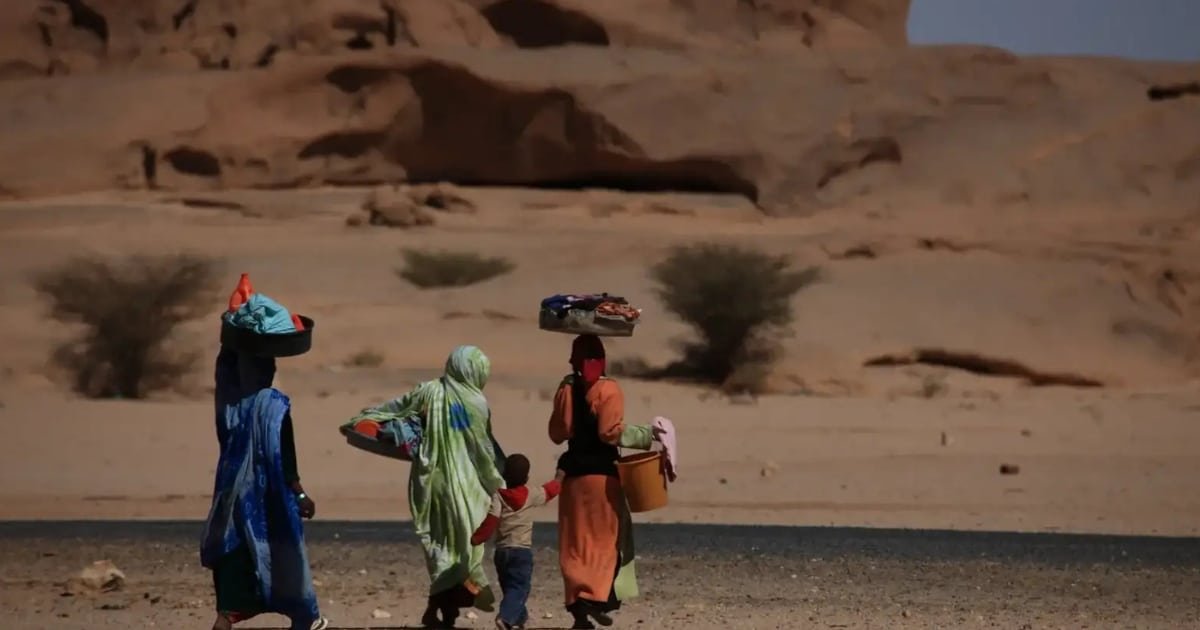
When floods and storms sweep through a country, the first images are of mud, broken homes and long lines for aid. But the political reverberations travel far beyond ruined fields. In 2022, Pakistan’s monsoon catastrophe affected roughly 33 million people and left nearly eight million displaced; the humanitarian toll and economic shock exposed governance gaps and fed public anger that still shapes politics today. These are not isolated statistics; they are evidence that climate events can rapidly translate into political crises when state capacity, trust and relief systems are weak.
You May Like to Read: The New Colonialism? How Climate Change is Deepening North–South Divides
When Floods become rapid accelerants of Instability
Climate-driven displacement is often pictured as a slow-moving tide. Yet sudden-onset events, massive floods, storm surges, river avulsions, can collapse local administrations, cut supply chains and quickly overwhelm national budgets. In countries already juggling debt, corruption, or political fragmentation, those shocks become amplifiers: protests over delayed relief turn into wider anti-government movements; militia and local power-brokers step into the vacuum; and the social contract frays. The example from South Sudan in 2025, where nearly nine hundred thousand people were reported affected by catastrophic floods, shows how quickly humanitarian need can spike and deepen an already fragile political landscape.
You May Like to Read: Pakistan’s “Debt-for-Climate Swap:” Real Relief or Cosmetic Diplomacy?
Migration as Geopolitical Fuel, not just Humanitarian need
Calling displaced people “refugees” often frames the problem as compassion and resettlement. But migration is also a strategic variable. Large, sustained movements change labour markets, shift electoral balances, strain urban services and can be framed by political actors as security problems. When migrants cross borders or pour into coastal cities, neighbouring states judge their capacity to absorb newcomers and may recast the flow as a national security threat. That shift transforms humanitarian need into a geopolitical issue, and that’s the hinge on which the scenario I model turns.
You May Like to Read: Climate Lawfare: Could Pakistan Join the Push to Criminalize Ecocide Internationally?
Why Bangladesh matters to South Asia’s strategic balance
Bangladesh sits at the frontline of sea-level rise and river flooding. Low-lying deltas, dense population, and recurring cyclones make large-scale internal displacement and cross-border pressures a realistic outlook in coming decades. Studies of sea-level-driven migration and basin hydrology regularly rank Bangladesh among the countries with the highest exposure to flooding, and the science indicates that by mid-to-late century, millions may be displaced from coastal areas unless massive adaptation occurs. Those human movements would not be confined by administrative boundaries; they would pressure regional supply chains, labour markets and politics across South Asia.
The Dam Politics Fault line
Water has long been politicised in South Asia. The Farakka barrage, the Teesta negotiations and routine strains over river sharing show that rivers are diplomatic fault lines as much as sources of life. In a stress scenario where Bangladesh faces large coastal outmigration, the strategic value of upstream storage, dams and barrages, increases dramatically. Control over flow regimes can be framed as control over livelihoods downstream. That creates incentives for riparian states to invest in hard infrastructure, securitise river basins, and build military capabilities to protect those projects. Historical grievance and mistrust mean such projects rarely remain purely developmental.
Modeling the 2070 Bangladesh Exodus Scenario
Imagine, as a scenario, not a prediction, that by 2070 accelerating sea-level rise and repeated storm surges force multi-million movement from Bangladesh’s coast into interior Bangladesh and across borders. The sudden, large-scale internal displacement triggers demands for dry-season irrigation, emergency water storage, and regional grain shipments. India, as the upper-riparian power and a regional hegemon, accelerates dam-building in the Brahmaputra and other basins to secure water for agriculture and power. Upstream dams reduce dry-season flow and intensify flooding risk downstream when releases are mismanaged. Dhaka reacts by seeking guarantees, external financing and regional alliances. The situation becomes securitised as populations swell in border districts and domestic politics in both capitals harden.
From Infrastructure race to Militarised choices
In this scenario, states face two ugly options. One is to treat migrants as security problems; erect checkpoints, intern large camps inland, or engineer stringent registration regimes that deny basic rights in the name of order. The other is to lean on conventional and non-conventional deterrents, accelerating militarisation of disputed water catchments, deploying paramilitary units to protect dams and threatening cross-border strikes to secure upstream control. Neither option solves the underlying climate drivers; both deepen humanitarian suffering and raise the risk of miscalculation. Historical water disputes and recent dam projects in the region suggest that water infrastructure can become a proxy for strategic competition when stress thresholds are crossed.
You May Like to Read: The Global Migration Bargain: Are Wealthy States Outsourcing Borders to the Global South?
Why Nuclear Deterrence is a False Refuge
Some analysts will say nuclear-armed states are deterred from conventional escalation. But nuclear deterrence does not prevent political collapse caused by economic breakdown or social fragmentation. Moreover, using nuclear rhetoric to justify heavy-handed domestic measures, mass internment or emergency laws, substitutes repression for governance. In democracies or hybrid regimes, these measures can delegitimise governments faster than external threats. The real defence is institutional resilience: robust disaster management, transparent water-sharing agreements, and adaptive livelihoods, not more weapons.
A Pakistani Perspective: Lessons and Responsibilities
For Pakistan, the lesson is twofold. First, recent floods showed how quickly governance can be tested; recovery is not only about rebuilding roads but rebuilding trust. Second, Pakistan must engage regionally on water governance and climate diplomacy. South Asia’s rivers link our fates; unilateral securitisation benefits none of us. Islamabad’s role can be constructive, pushing for joint data systems, transboundary disaster response, and regional mechanisms that prioritize people’s movements as rights-based issues, not strategic liabilities. Pakistan’s own experience with displacement gives it credibility to advocate for pro-people regional approaches.
Policy choices that matter now
The politics of tomorrow are seeded today. Investing in early-warning systems, resilient housing, inland livelihood programs and legal protections for migrants reduces the political ammunition that opportunistic actors exploit. Equally important is diplomatic work: modernising river commissions, binding agreements on emergency releases, and shared storage plans reduce the temptation to weaponise water. International finance must tie reconstruction to social protection and transparent governance so that recovery does not become a source of grievance.
Concluding: Final warning
Climate-driven migration will strain states, but it need not become an engine of interstate arms races or domestic repression. The Bangladesh-2070 scenario is a warning, not a prophecy. Policymakers across South Asia, from Islamabad to Dhaka to New Delhi, can choose to treat human movement as a shared responsibility, not a strategic threat. That requires political courage to invest in people, to cooperate on rivers, and to reject the short-term securitisation that turns displacement into a weapon. If they fail, it will not be sea levels that decide the region’s fate first, it will be political collapse sown by fear.