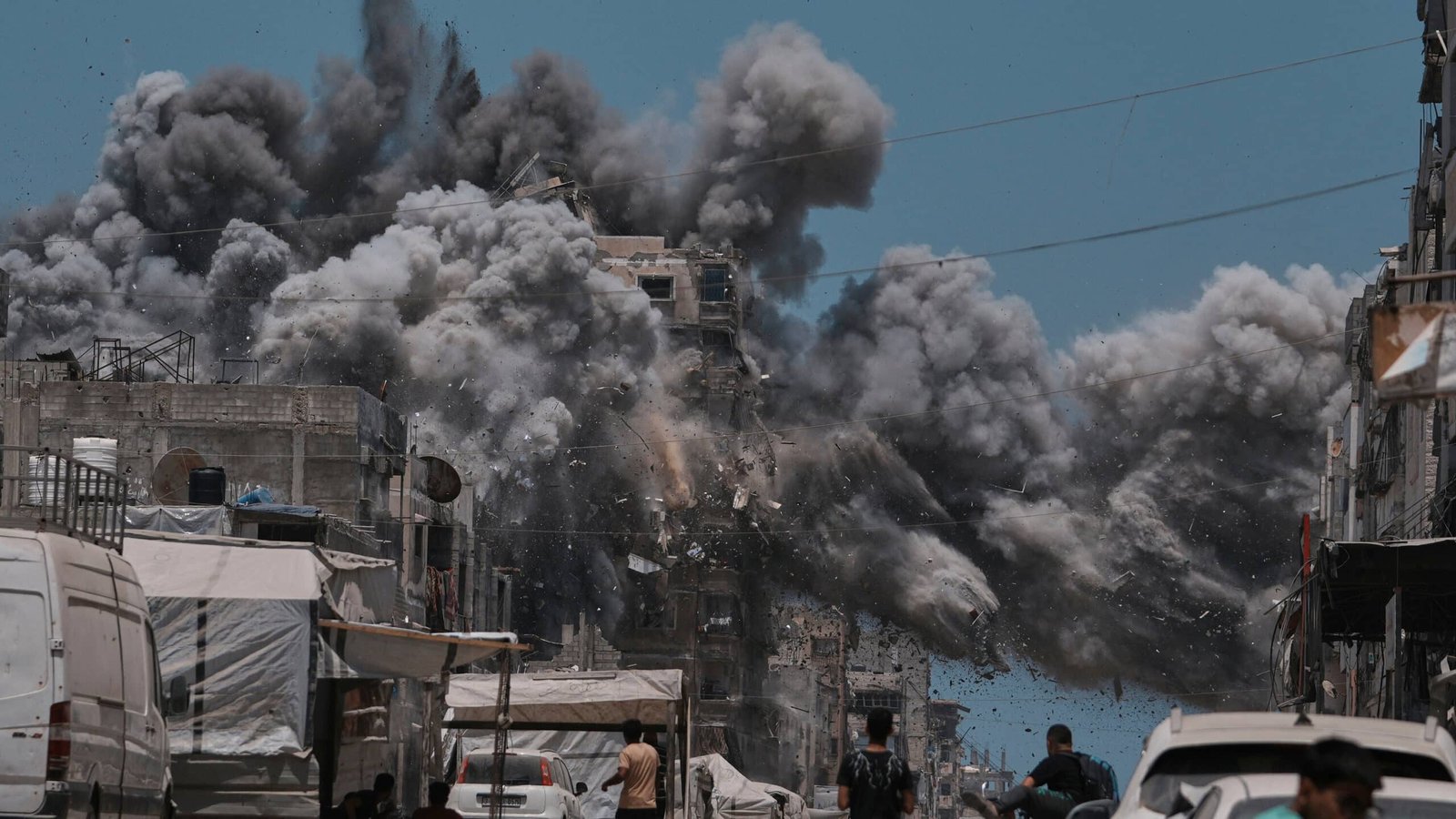





The nearly two-month-old ceasefire in the Gaza Strip, brokered by Qatar, the United States, and Egypt, has entered a critical phase, with key mediators emphasizing that a lasting truce requires far more than a halt in fighting. The core sticking point remains the full withdrawal of Israeli troops and the challenging creation of a multinational stabilization force.
Qatar’s PM Sheikh Mohammed bin Abdulrahman bin Jassim Al Thani has warned at the Doha Forum that the Gaza ceasefire is at a “critical moment” and could unravel without rapid progress toward a permanent peace deal https://t.co/oOeqIvHtxZ pic.twitter.com/nxp34TsR42
— Al Jazeera English (@AJEnglish) December 6, 2025
Ceasefire Contingent on Full Israeli Withdrawal
Speaking at the Doha Forum, Qatar’s Prime Minister Sheikh Mohammed bin Abdulrahman Al Thani asserted that the current truce, which began on October 10, cannot be considered complete until Israeli forces execute a full withdrawal from the Palestinian territory.
“Now we are at the critical moment… A ceasefire cannot be completed unless there is a full withdrawal of the Israeli forces, [and] there is stability back in Gaza,” Sheikh Mohammed stated. He stressed the need to look beyond the immediate cessation of hostilities and seek a “lasting solution that provides justice for both people.”
Obstacles to the International Stabilization Force (ISF)
The two-year peace plan, backed by Washington and the UN, outlines a second phase that includes the establishment of an interim authority for governance and the deployment of an International Stabilization Force (ISF). However, progress on the ISF is hampered by complex political and logistical questions:
- Participation Hesitancy: Arab and Muslim nations have expressed significant reluctance to contribute troops to the ISF, primarily due to concerns that their forces could end up in direct conflict with Palestinians.
- Command Structure and Objectives: Turkish Foreign Minister Hakan Fidan, also at the forum, confirmed that talks are ongoing, but crucial questions regarding the ISF’s command structure and specific troop contributions remain unresolved. Fidan argued that the ISF’s first and main objective should be to physically “separate Palestinians from the Israelis.”
- Hamas Disarmament: The 20-point peace plan also requires Hamas to disarm, with members who decommission their weapons being allowed to leave Gaza. The group has repeatedly and explicitly rejected this disarmament proposition.
Turkiye has indicated a willingness to join the ISF, viewing engagement in peace talks as the only viable way to conclude the war. However, Israel views Turkiye’s participation unfavorably due to Ankara’s close diplomatic ties with Hamas.
Mediator Momentum and Regional Training
Despite the obstacles, the primary truce guarantors—Qatar, Turkiye, Egypt, and the US—are intensifying collaboration “in order to force the way forward for the next phase” of the deal.
Meanwhile, Egypt is moving ahead with concrete preparations for the stabilization effort, announcing plans to train 5,000 police officers for Gaza. Cairo’s foreign ministry confirmed that Egyptian Foreign Minister Badr Abdelatty met with the Qatari prime minister to discuss the implementation of the Sharm El-Sheikh peace agreement, where the original ceasefire deal was finalized.