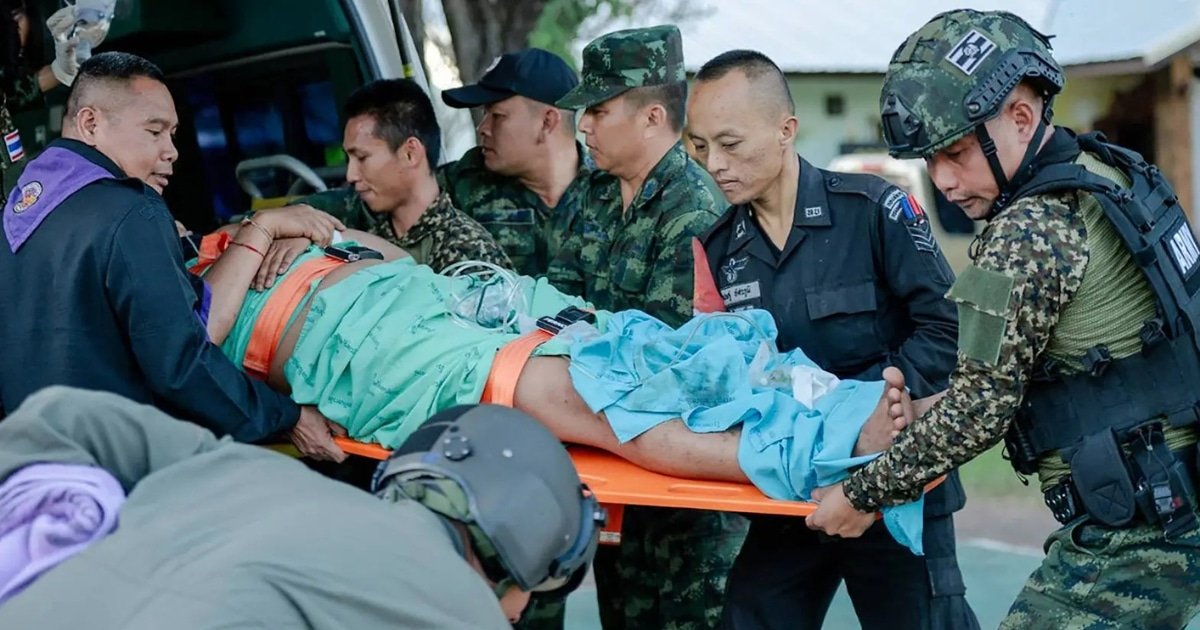





Renewed hostilities between the Kingdom of Thailand and the Kingdom of Cambodia along their disputed 817km border have resulted in a rising death toll and the massive displacement of civilians, shattering a ceasefire that had been in place since July. Both nations have traded blame for initiating the latest violence and have publicly committed to continuing military operations.
The fighting, which broke out on Sunday night, has involved the exchange of artillery, rocket, and drone fire, fueled by long-standing, competing territorial claims.
Cambodia-Thailand border clashes send half a million into shelters — in pictures https://t.co/fkNtwx3zDG pic.twitter.com/uDN3IbTQRO
— Al Jazeera English (@AJEnglish) December 10, 2025
Casualties and Civilian Impact:
- Cambodia reported that since Monday, nine civilians have been killed and 20 injured.
- Thailand reported that since clashes resumed, four soldiers have been killed and 68 wounded.
- The violence has forced an estimated 400,000 people on the Thai side and 55,000 people on the Cambodian side to flee their homes and relocate to temporary shelters.
Official Stances and Diplomatic Deadlock:
Both Bangkok and Phnom Penh have issued uncompromising statements, laying the blame squarely on the opposing side.
- Thai Prime Minister Anutin Charnvirakul stated that no contact had been made for negotiations and affirmed the government’s support for continued military operations, declaring, “We’ve got to do what we’ve got to do.” The Thai navy confirmed operations were underway to expel Cambodian forces from Thai territory in the coastal province of Trat, citing the deployment of heavy weapons and trenches as a “direct and serious threat to Thailand’s sovereignty.”
- Cambodian Senate President Hun Sen asserted that Cambodia was “forced to fight back to defend its territory,” claiming the military had been refraining from firing initially but was now engaging in counterattacks to “weaken and destroy enemy forces.”
Ceasefire Breakdown and International Calls for Peace:
The renewed fighting shatters an uneasy peace brokered following five days of clashes in July that resulted in at least 48 deaths. Thailand had suspended the implementation of the expanded ceasefire pact last month following a landmine blast that maimed one of its soldiers.
- Diplomatic Space: Thai Foreign Minister Sihasak Phuangketkeow indicated there was “no space for diplomacy” until Cambodia demonstrated readiness to stop its actions on the ground.
- Cambodian Offer: Suos Yara, senior adviser to Cambodian Prime Minister Hun Manet, stated that Cambodia was open to “immediate bilateral talks” but would not initiate the process itself.
- U.S. Intervention: The U.S. State Department, through Secretary of State Marco Rubio, urged “the immediate cessation of hostilities, the protection of civilians, and for both sides to return to the de-escalatory measures outlined in the October 26 Kuala Lumpur Peace Accords.”
Analysts suggest the previous ceasefire, brokered under threat of U.S. trade tariffs, was “fragile” and “forced,” contributing to the predictable breakdown of stability.
Background: The border dispute dates back to the mapping of the region by France in 1907. It includes unresolved issues around the Preah Vihear temple, where a 2013 International Court of Justice ruling awarded the surrounding land to Cambodia—a ruling Thailand has consistently refused to acknowledge.
You May Like To Read: Trump’s Second Term and the Erosion of the Post-War Liberal Order