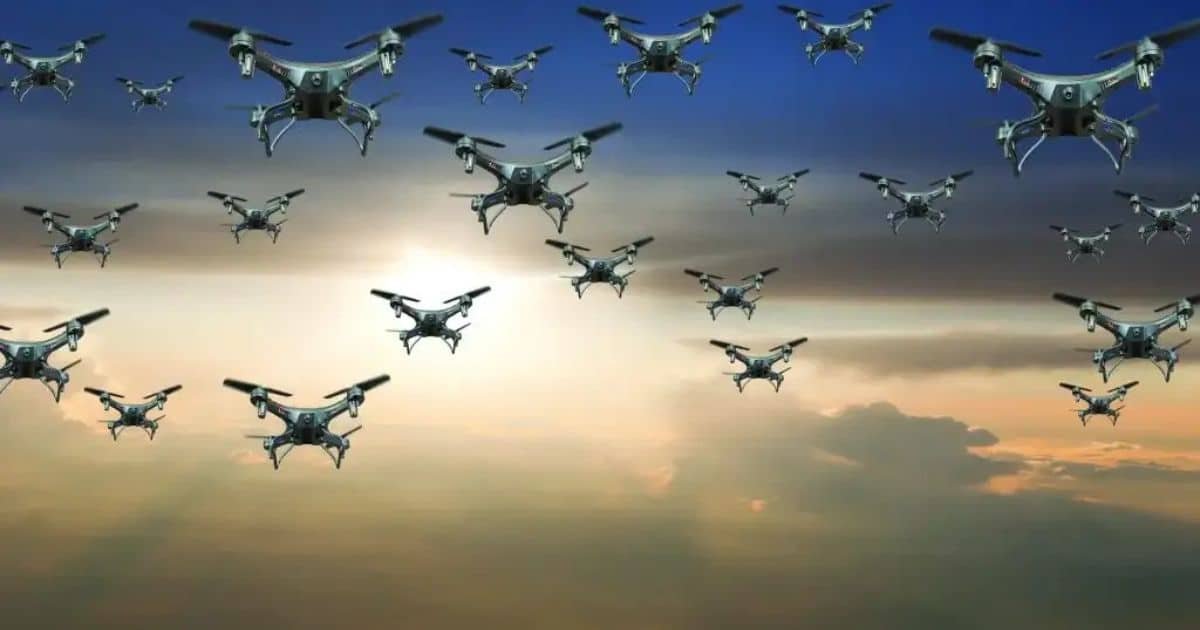





For most of the modern era, air superiority has been the cornerstone of military doctrine. From World War II through the Gulf War, the assumption was clear: the side with advanced fighter jets, long-range bombers, and integrated air defense systems could dominate the skies and therefore shape the outcome on the ground. Yet recent conflicts—from the battlefields of Ukraine and the skies over the Red Sea to the 2020 Nagorno-Karabakh war—are challenging that orthodoxy. Cheap, mass-produced drones, or unmanned aerial vehicles (UAVs), are demonstrating that air dominance is no longer the exclusive preserve of wealthy militaries. Instead, swarms of drones are flattening the technological playing field, threatening to upend decades of carefully cultivated strategic advantage.
Lessons from Ukraine: Attrition by the Thousand
The ongoing war in Ukraine has been the most vivid laboratory for drone warfare to date. Both Kyiv and Moscow have turned to drones not only as intelligence-gathering tools but as expendable strike platforms. While Western-supplied systems like the Turkish Bayraktar TB2 initially drew headlines, it is the proliferation of small, inexpensive quadcopters and modified commercial drones that has defined the conflict.
Ukrainian forces have relied on “first-person view” (FPV) drones costing a few hundred dollars to destroy Russian tanks worth millions. Russia, in turn, has imported Iranian-made Shahed-136 drones, used en masse to attack Ukrainian energy infrastructure. The economics are stark: defending against swarms of $20,000 drones with multimillion-dollar surface-to-air missile interceptors is neither sustainable nor strategically rational.
This inversion of cost-benefit logic represents the most serious challenge to traditional air superiority doctrine. Where once air power was about platforms costing tens or hundreds of millions, now victory can hinge on supply chains of 3D-printed parts, lithium batteries, and consumer electronics.
The Red Sea Disruptions: Strategic Chokepoints Under Drone Siege
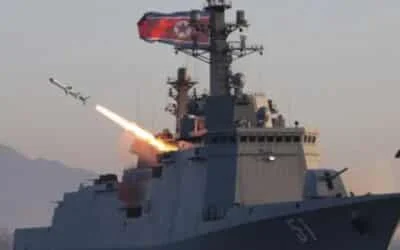
Beyond Ukraine, the Red Sea crisis has highlighted the global reach of drone proliferation. The Yemeni Houthis, armed with Iranian technology, have repeatedly used drones to target commercial shipping and even U.S. naval vessels. These attacks underscore how relatively unsophisticated actors can threaten vital international trade routes using UAVs at a fraction of the cost of deploying traditional weaponry.
The symbolism is important. For decades, U.S. carrier strike groups represented unmatched maritime power projection. Yet today, even billion-dollar destroyers find themselves on constant alert, intercepting drones costing a fraction of the missiles used to shoot them down. The Houthis’ campaign illustrates how drones empower non-state groups to operate at a scale once thought impossible, directly threatening global commerce and highlighting vulnerabilities in international supply chains.
Nagorno-Karabakh: The Proof of Concept
The 2020 war between Azerbaijan and Armenia marked one of the first modern conflicts where drones decisively tipped the balance. Azerbaijan employed Turkish Bayraktar TB2s and Israeli loitering munitions to devastating effect, neutralizing Armenian armor and artillery in days. The psychological and strategic shock was profound: here was a mid-sized state, without the traditional hallmarks of air superiority—no advanced fighter fleet, no massive air force budget—yet capable of establishing dominance from above through drones.
For military planners worldwide, the Nagorno-Karabakh war was a wake-up call. If UAVs could enable a country like Azerbaijan to punch far above its weight, what did that mean for regional balance in other theaters?
You May Like To Read: Pakistan and Afghanistan Agree to Immediate Ceasefire Following Doha Talks
Doctrinal Disruption: The End of Air Supremacy as We Knew It
The cumulative lesson from these conflicts is clear: the monopoly on air superiority has been broken. Cheap drones challenge the assumption that advanced fighter jets and integrated air defense systems can ensure aerial dominance.
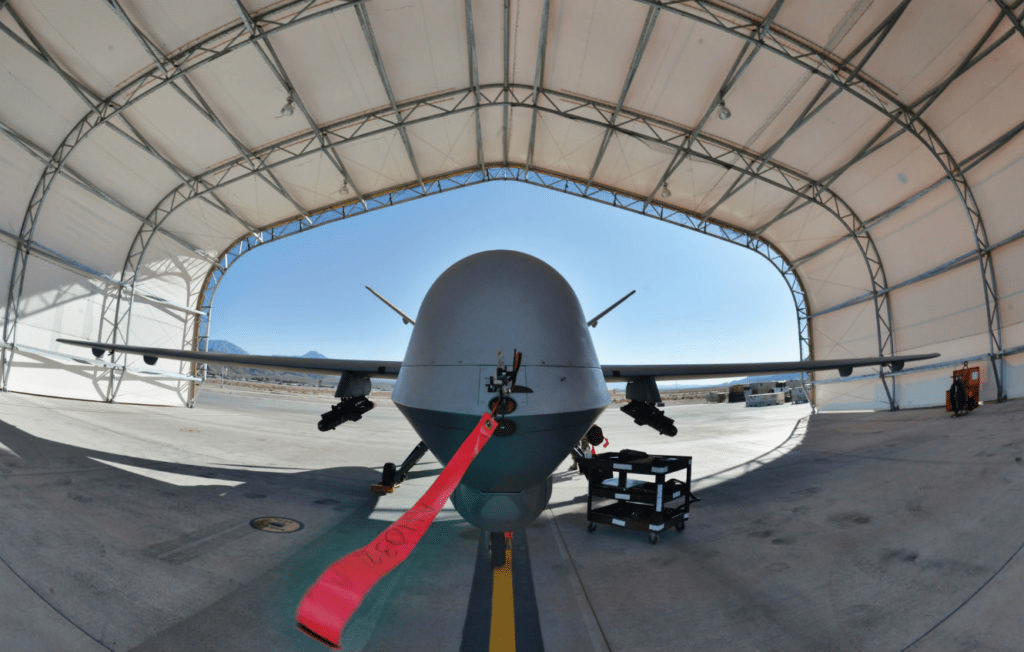
This does not mean manned aircraft are obsolete; stealth fighters and advanced bombers retain unique capabilities. But it does suggest that their role will increasingly shift toward specialized missions, while the day-to-day battle for the skies becomes a contest of attrition between low-cost UAVs and increasingly stressed air defense systems.
For states like the United States, Russia, or China, this requires rethinking not only procurement but doctrine. How many F-35s or J-20s are needed when swarms of drones can saturate defenses at minimal cost? For smaller states, the implications are even more disruptive: investing in drone technology may now provide a credible deterrent at a fraction of the cost of traditional air forces.
Strategic Risks: Escalation, Proliferation, and Attribution
The ubiquity of drones also raises new risks. Unlike nuclear weapons or advanced fighter jets, UAVs are relatively easy to manufacture, modify, and distribute. Non-state actors can acquire them with alarming ease, blurring the line between state and non-state warfare.
Attribution also becomes more difficult. Was a drone strike launched by a state military, or by a proxy armed with commercially modified technology? This ambiguity complicates deterrence and heightens the risk of escalation. In the Red Sea, for example, U.S. officials must weigh whether strikes are directly Iranian-controlled or merely Iran-enabled, with major implications for any retaliatory action.
A New Era of Air Power
Drone proliferation is not just a tactical evolution—it is a strategic revolution. By democratizing access to the skies, UAVs are eroding decades of doctrine built on the assumption of costly, exclusive air superiority. From Ukraine’s trench warfare to Red Sea shipping lanes and the mountains of the South Caucasus, drones have proven their disruptive power.
For the Global South, drones offer an asymmetric tool to level the playing field. For great powers, they pose the challenge of adapting doctrines, budgets, and strategies to a reality where dominance in the air is contested not only by rival states but by groups armed with little more than modified consumer electronics.
The age of uncontested air supremacy is over. The future belongs to those who can innovate rapidly, integrate drone technology at scale, and reimagine military doctrine for a world where the skies are accessible to all.
You May Like To Read: Pakistan and Afghanistan Agree to Immediate Ceasefire Following Doha Talks