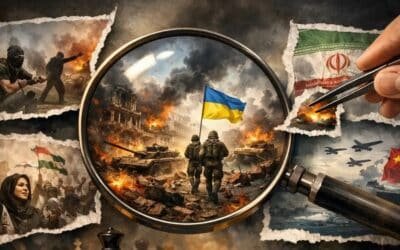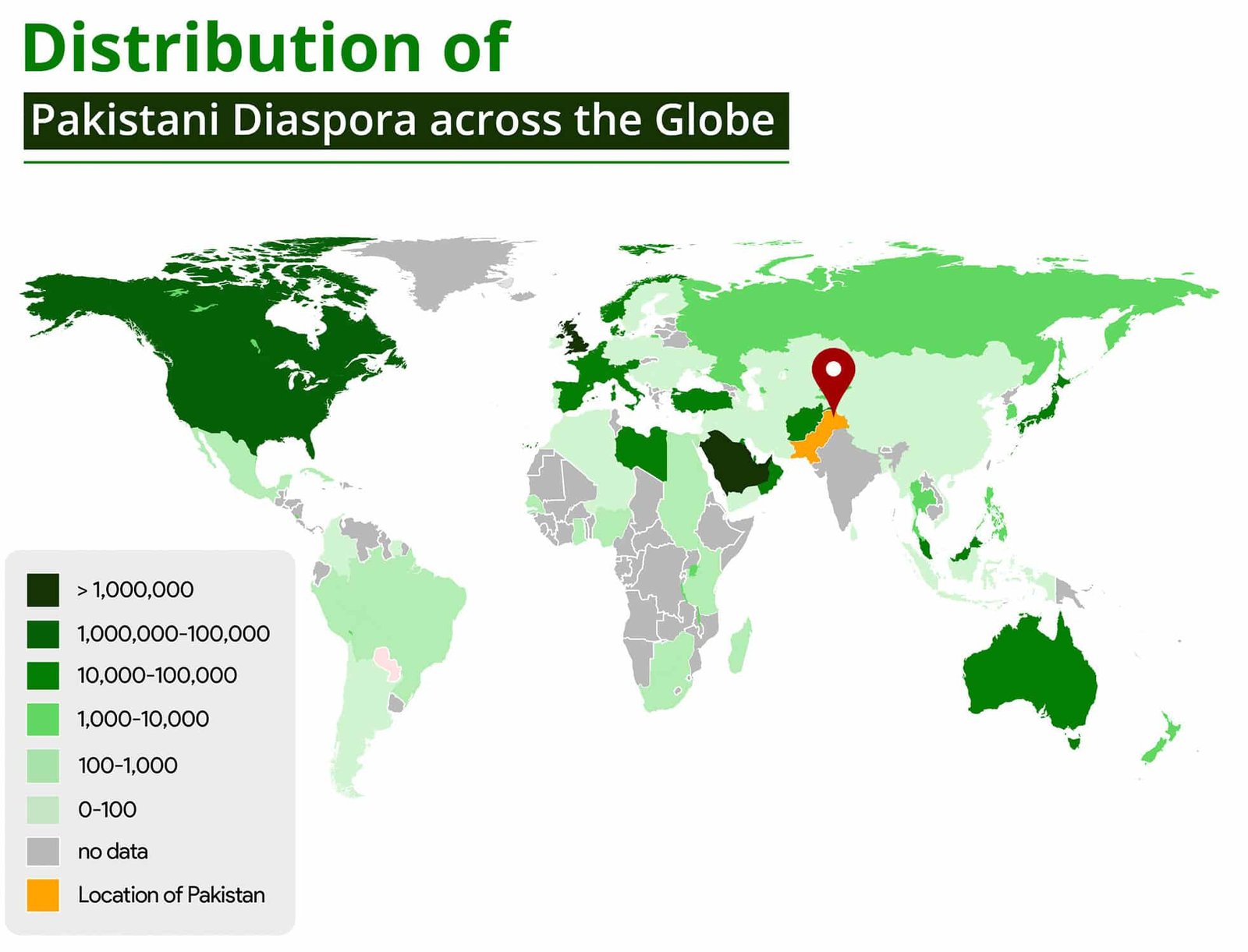





Diasporic communities, with their deep emotional and ancestral ties to their homeland, often find themselves on the frontlines of contemporary information warfare. Overseas Pakistanis, or the Pakistani Diaspora, are no exception, as they face a tricky situation, they’re both victims of foreign disinformation and sometimes spread it themselves by accident or on purpose. This makes them key players in global information battles.
Why Foreign Actors Target Overseas Pakistanis
Foreign information operations often strategically target diasporic communities due to their unique vulnerabilities and significant potential for influence. Overseas Pakistanis, maintaining strong cultural, familial, and economic links with their homeland, are highly attuned to political developments in Pakistan.
This inherent connection makes them receptive audiences for content related to their country of origin. Moreover, their access to global information networks, their political freedoms in host countries, and their financial resources make them valuable assets in shaping perceptions and influencing policy debates abroad.
Foreign state and non-state actors exploit several key vulnerabilities within these communities. Firstly, the emotional connection and identity politics are powerful tools. Diasporas often construct their identity in relation to their homeland, making them susceptible to narratives that resonate with their sense of patriotism, perceived injustices, or historical grievances.
Propaganda can leverage this to create a shared, often polarized, narrative that rallies support or incites anger against perceived adversaries, whether internal or external to Pakistan.
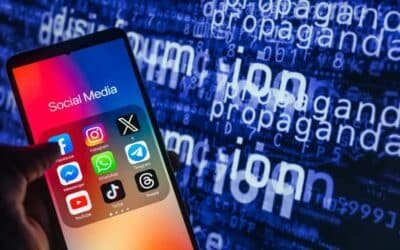
Secondly, information voids and echo chambers within diaspora communities can be exploited. Many overseas Pakistanis rely heavily on social media, messaging apps like WhatsApp, and specific diaspora-focused media outlets for news and information about Pakistan. These platforms, while connecting communities, can inadvertently become echo chambers where unverified or biased information spreads rapidly. This insular information environment makes them prime targets for malicious actors seeking to inject disinformation.
Thirdly, political grievances and a sense of disenfranchisement, whether real or perceived, can be leveraged. Some segments of the diaspora may feel frustrated by political developments, human rights issues, or economic challenges in Pakistan. Foreign actors can tap into these existing discontents, amplifying them through fabricated stories, manipulated images, or selective reporting to sow distrust in the Pakistani state or its institutions.
From Targets to Vectors: How Narratives Spread
Once targeted, elements within the Pakistani diaspora can inadvertently or deliberately become vectors for spreading certain narratives. This transformation happens through various mechanisms:
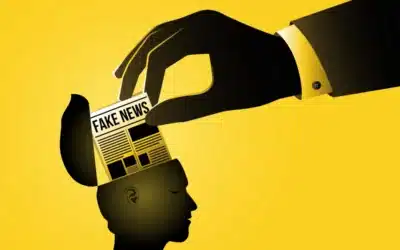
- Inadvertent Amplification: Many individuals, unaware of the origins or true nature of the content, share emotionally charged or sensationalized information received through social media or private messaging groups. The desire to inform or warn their community, coupled with a lack of critical media literacy, leads to the rapid dissemination of disinformation. This “unintentional misinformation” can be as damaging as deliberate disinformation in polluting the information environment.
- Ideological Alignment and Confirmation Bias: Some diaspora members, driven by strong political affiliations or ideological leanings (e.g., hyper-nationalist sentiments, support for specific political parties, religious conservatism), actively seek out and disseminate content that confirms their existing biases. This creates an echo chamber where alternative viewpoints are rejected, and even demonstrably false information is accepted as truth if it aligns with their worldview.
- Deliberate Propagation by Influence Agents: In more sophisticated operations, foreign actors may cultivate specific individuals or groups within the diaspora to act as overt or covert influence agents. These individuals might receive funding, guidance, or preferential access to information, becoming key nodes in the disinformation network. They can leverage their credibility within the community to amplify narratives, launch smear campaigns, or mobilize public opinion for specific political outcomes in the homeland or host country.
Source: United States Institute of Peace
- Financing and Lobbying: Beyond direct content propagation, elements within the diaspora can become vectors through financial contributions to political movements, media outlets, or lobbying efforts that align with specific narratives, potentially those amplified by foreign information operations. This indirect support lends legitimacy and resources to campaigns that might be part of a broader influence strategy.
The Information Battlefield in Practice
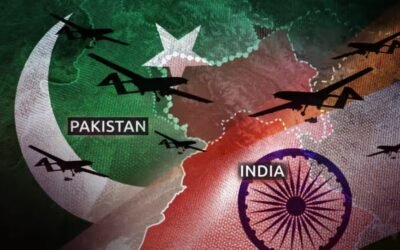
Recent years have shown numerous instances of the Pakistani diaspora being caught in this information crossfire. For example, during periods of heightened India-Pakistan tensions, both sides engaged in extensive information operations. Some Pakistani diaspora accounts and groups have been observed amplifying narratives challenging India’s stance on Kashmir or highlighting alleged human rights abuses, sometimes using content from questionable sources.
Conversely, reports from various sources, including Indian state media, accuse Pakistan of running “disinformation factories” that attempt to manipulate global perception through fake videos and morphed images. While these claims are part of a bilateral information war, they underscore the environment where diaspora members can be influenced or utilized.
The politicization of events within Pakistan, such as general elections or periods of political instability, also sees significant disinformation targeting and spread within the diaspora. False attribution of statements, doctored images, and manipulated content have been widely circulated, influencing opinions and deepening political divides. These tactics are designed to sow confusion and erode trust.
Implications and Countermeasures
The involvement of Overseas Pakistanis in information warfare carries significant implications. Internally, it can exacerbate political polarization within Pakistan, deepen societal divisions, and undermine public trust in institutions. Externally, manipulated narratives can damage Pakistan’s international image, complicate its diplomatic relations, and influence policy decisions in host countries, especially concerning aid, trade, and security cooperation. Addressing this challenge requires a multi-pronged approach:
- Firstly, fostering media literacy and critical thinking skills within diaspora communities is paramount. Educating individuals on how to identify disinformation, fact-check sources, and recognize manipulation tactics can significantly reduce their vulnerability.
- Secondly, the Pakistani government and civil society organizations need to engage transparently and consistently with their diaspora, providing accurate information and addressing their concerns. Creating credible, accessible channels for information can counter the appeal of alternative, potentially malign, narratives. Organizations like IOM Pakistan have initiatives for diaspora engagement to leverage skills and expertise for national development, which can indirectly help build resilience against disinformation by fostering positive ties and reliable information flow.
- Thirdly, host countries must also acknowledge and investigate foreign interference operations targeting their diasporic populations, ensuring that their citizens are not unknowingly exploited for geopolitical agendas.
Hence, in an increasingly interconnected world, diasporic communities are vital bridges between nations. However, their unique position also makes them fertile ground for information warfare. For Overseas Pakistanis, recognizing this reality and actively discerning fact from fiction is not just about personal responsibility; it’s about safeguarding their community’s well-being and contributing constructively to a more informed global discourse about their homeland.