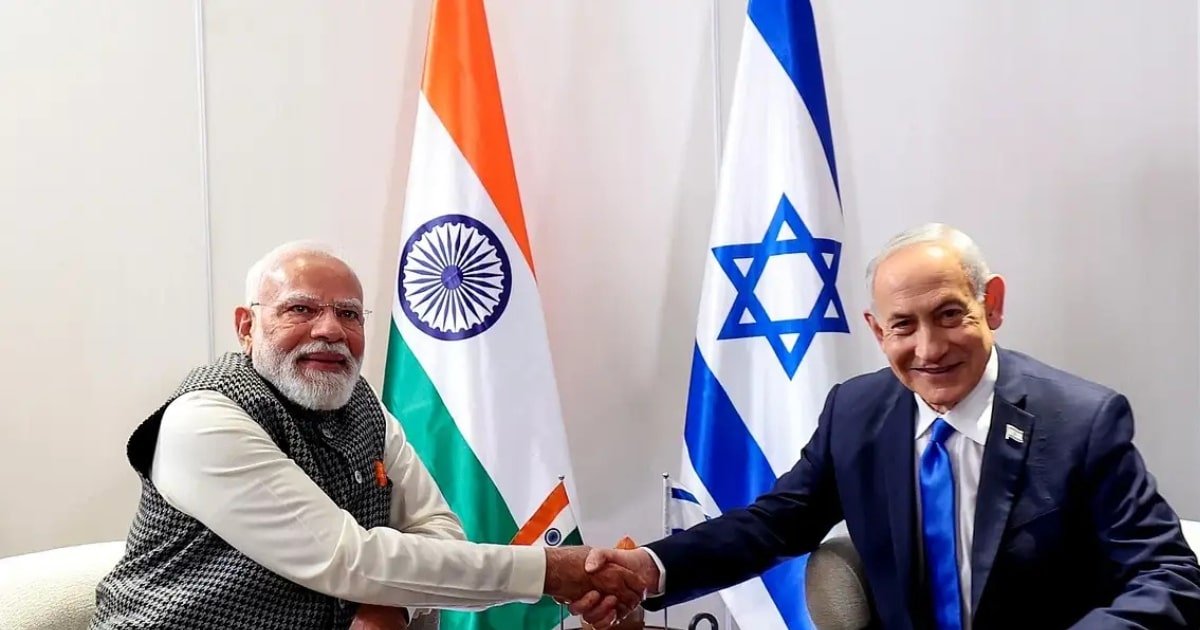




Prime Minister Narendra Modi concluded a landmark two-day visit to Israel yesterday, marking a decisive shift in the geopolitical landscape of the Middle East and South Asia. In a joint declaration with Israeli Prime Minister Benjamin Netanyahu, the two leaders announced the elevation of their bilateral ties to a “Special Strategic Partnership,” underpinned by a sweep of over a dozen agreements spanning defense, artificial intelligence, and digital finance.
United Against Terror: India and Israel announce Special Strategic Partnership during PM Modi’s landmark visithttps://t.co/y1NBNCrbHE
— OpIndia.com (@OpIndia_com) February 27, 2026
Strategic Consolidation: Defense and The “Gaza Peace Plan”
The visit, Prime Minister Modi’s first since 2017, centered on a shared vision for regional stability and high-tech defense cooperation.
-
The “Hexagon” Context: While the leaders focused on bilateralism, the joint statement “unequivocally condemned” cross-border terrorism.
-
Support for U.S. Peace Efforts: Prime Minister Modi formally lauded U.S. President Donald Trump’s peace plan for Gaza, stating it has “opened a path to peace” that India fully supports.
-
Defense & AI: The two nations agreed to deepen cooperation in cybersecurity and artificial intelligence, with specific focus on co-developing next-generation defense platforms.
Economic Pillars: Free Trade, Labor, and UPI
The visit translated political warmth into tangible economic milestones aimed at integrating the two economies:
-
Labor Mobility: In a major boost for the Indian workforce, Israel pledged to allow 50,000 Indian workers into the country over the next five years.
-
Digital Finance: India announced the extension of its Unified Payments Interface (UPI) to Israel, a move expected to revolutionize fintech cooperation and ease transactions for Indian professionals and tourists in Tel Aviv.
-
Free Trade Agreement (FTA): Both Prime Ministers committed to fast-tracking a Free Trade Agreement to expand a trade relationship that already spans space exploration, agriculture, and investment.
A Balancing Act: Diplomacy and Human Sentiments
Prime Minister Modi’s itinerary included a visit to the Yad Vashem Holocaust memorial and a historic address to the Knesset.
-
Solidarity with Israel: Addressing the Israeli parliament, Modi condemned the October 2023 attacks, stating, “India stands with Israel, firmly, with full conviction.”
-
The Palestinian Question: Despite the strong alignment with Tel Aviv, New Delhi reiterated its concern over civilian casualties in Gaza and reaffirmed its long-standing support for a two-state solution, attempting to balance ties with other Middle Eastern partners.
You May Like To Read: IMF Mission Signals Gradual Tax Relief in High-Stakes Meeting with Pakistan’s Industrial Leaders
Domestic and Global Analysis
While the visit has been hailed as a success by the Observer Research Foundation (ORF) for serving India’s “long-term strategic interests,” it has met with pushback from India’s domestic opposition. Congress spokesperson Jairam Ramesh accused the government of abandoning the Palestinian cause, highlighting the internal political friction surrounding India’s shift toward a pro-Israel posture.
The visit concludes at a time when the Middle East is undergoing rapid recalibration, with India positioning itself as a central pillar in a new network of regional alliances.
Check out our latest video: