




A tentative thaw: What Busan’s Trump-Xi meeting actually changed
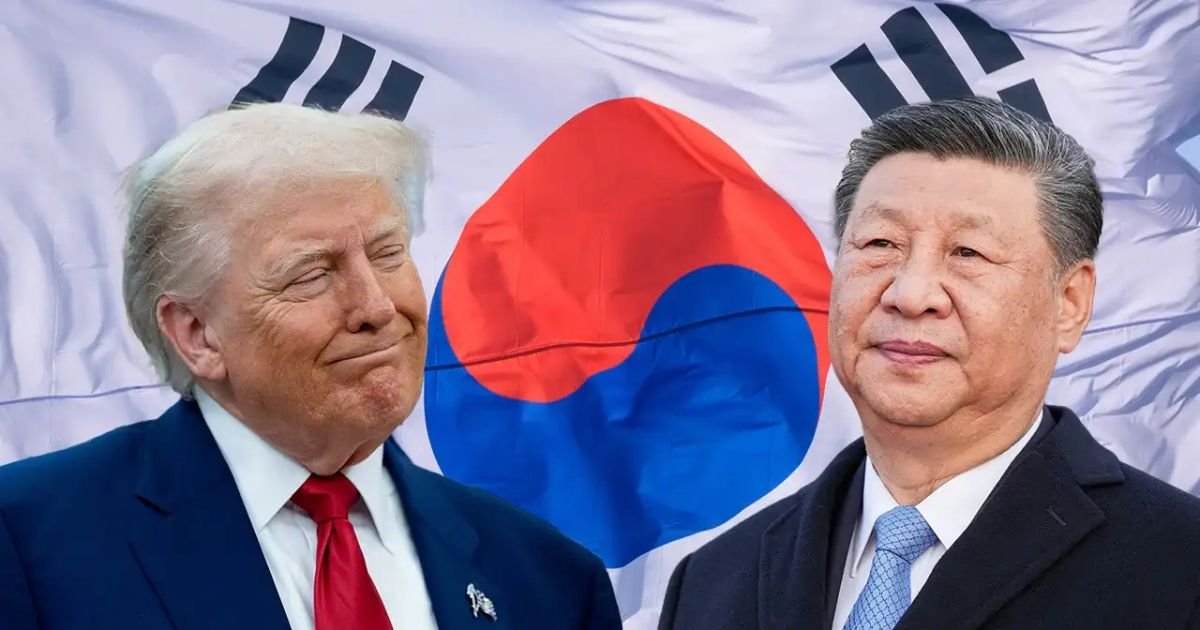
The brief meeting between U.S. President Donald Trump and Chinese President Xi Jinping in late October produced a headline-grabbing trade truce and promises to reopen military lines of communication. The leaders agreed on a limited set of measures. The United States signalled tariff reductions and Beijing pledged to ease some export controls, notably on rare earths, while promising to restart large purchases of U.S. agricultural goods. That deal was sold to markets and media as a one-year pause in escalating measures rather than a full strategic reset.
A pragmatic pause, not peace
What unfolded in Busan looks like pragmatic damage control. Both capitals faced short-term domestic pressures, U.S. farmers and manufacturers worried about tariffs and China’s slowing exports worried Beijing. Rather than tackle deep structural rivalry, negotiators carved out mutual, reversible steps: tariff cuts in exchange for agricultural purchases and a temporary suspension or delay of rare-earth restrictions. These moves lower the immediate cost of confrontation but leave the bigger contest over supply chains, markets and technology intact.
Military channels re-opened: An important but limited step
One concrete operational change was a commitment to re-establish military-to-military communication channels designed to de-conflict incidents at sea and in the air. That is important; direct lines reduce the risk of accidents spiralling into crises and provide a basic mechanism for crisis management. But experts stress that agreeing to talk is not the same as rebuilding trust; past breaks in military dialogue took years to repair, and operational confidence will need steady follow-through.
Taiwan and technology: the big subjects left off the table
Crucially, the summit carefully avoided explicit commitments on the most contentious issues: Taiwan’s security status and the technology war over semiconductors, AI and export controls. These are core elements of strategic competition and were sidelined in favour of easier economic swaps. That omission matters because it means the summit reduced near-term heat without addressing the long-term drivers of rivalry, leaving the door open for renewed confrontation when political calculations change.
Economic leverage and asymmetry: can Beijing compel concessions?
Beijing has tangible levers. China’s control over parts of critical supply chains, particularly rare earth minerals and magnets, gives it bargaining power in trade disputes. The Busan truce, which includes a delay in certain export curbs, showed how Beijing can trade supply-side relief for softer U.S. measures. But leverage cuts both ways: the U.S. still commands dominant technology platforms, capital markets and restrictions that can hobble Chinese firms. The result is a strategic asymmetry where each side can impose pain but neither can reliably force lasting political concessions without paying costs of their own.
Tactical détente or strategic deception?
Observers are split between seeing Busan as a sensible tactical détente and warning that it could be a tactical deception. Those who welcome it point to the immediate benefits, like calmer markets, fewer trade shocks for exporters, and a reduced chance of accidental military clashes. Skeptics argue that by compartmentalising issues, both capitals preserve room to use economic tools as pressure-points later, while political leaders gain breathing space to prepare for the next contest. In short, a truce bought today might simply be a pause that permits both sides to rearm economically and technologically for tomorrow’s fights.
Consequences for smaller states and Pakistan’s vantage
For countries like Pakistan, a U.S.-China detente has mixed effects. Reduced friction between Washington and Beijing can stabilise global trade and energy markets, which benefits export-dependent and import-reliant economies. At the same time, a superficial thaw could channel competition into subtler domains, technology standards, infrastructure finance, and geopolitical influence, where middle powers face new pressures to choose sides. Pakistan will need to protect its economic interests while pushing for predictable, transparent engagement from all major partners. The Busan outcomes do not remove choices for Islamabad; they only change the timing and texture of those choices.
What to watch next: Implementation and Ripples
The real test will be implementation. Will tariff cuts be durable? Will rare-earth and export controls stay paused beyond the year? Will military channels become routine, with clear rules of engagement? Markets have reacted with cautious optimism, pricing in a temporary reprieve, while analysts warn that without structural agreements on technology, supply chains and security norms, tensions could re-ignite fast. In short, Busan provided a breathing space, not a blueprint for long-term stability.
Conclusion: Cautious Welcome, Guarded Expectations
The Busan encounter between Trump and Xi is best seen as a tactical détente with practical benefits and strategic limits. It shows that even amid deep rivalry, crises can be managed and short-term bargains struck. But it also reflects the weakness of current diplomacy: leaders opted for quick, reversible fixes rather than hard bargains on the structural questions that will determine whether the 21st century is governed by managed competition or dangerous binary decoupling. For Pakistan and others, the message is simple: welcome any reduction in volatility, prepare for renewed competition, and press both powers for transparency and predictability in their dealings.
You May Also Like to Read:
- The U.S.-China First Trade War: Roots, Evolution, and Global Impacts
- Trump-Xi Summit Truce: US-China Rapprochement or Temporary Pause?
- China Rebuts US Demands to Halt Rare Earth Export Controls Amid Trade Rhetoric Escalation
- President Trump Threatens Tariff Hike, Cancels Meeting with Xi Amid Rising Trade Tensions
- What If Taiwan Falls? The Global Economic Earthquake of a Blockaded Indo-Pacific
- China Expands Rare Earth Export Restrictions Ahead of Trump–Xi Meeting