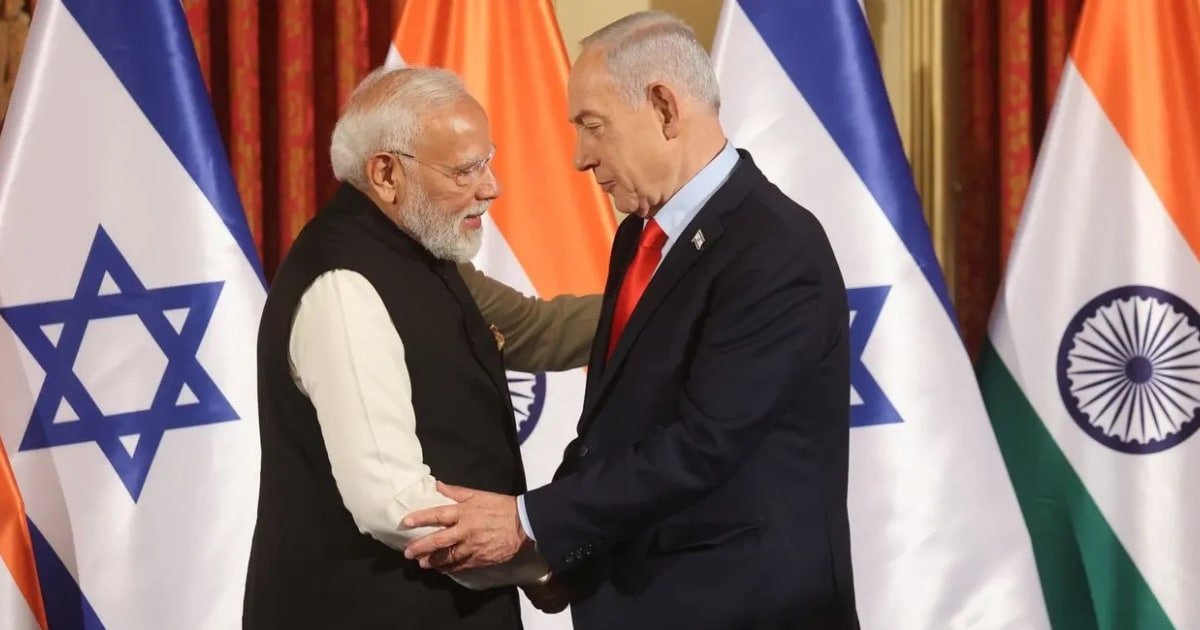



Indian Prime Minister Narendra Modi and Israeli Prime Minister Benjamin Netanyahu officially elevated their ties to a “special strategic partnership.” While the leaders signed 16 agreements covering artificial intelligence, defense, and energy, the visit has drawn sharp criticism for a major new pillar of cooperation. i.e. a massive labor mobility pact. Under the deal, India will provide a quota of 50,000 workers over the next five years, primarily for Israel’s manufacturing, construction, and restaurant sectors, replacing Palestinian workers.
You May Like To Read: International Mediators Call for De-escalation as Pakistan-Afghanistan Border Conflict Intensifies
The partnership, described as a “symbiotic” relationship by some analysts, has raised alarms in Pakistan and the wider region. Pakistan’s Foreign Office expressed grave concerns, noting that the transfer of advanced Israeli military technology, such as the Iron Beam laser system, directly threatens the regional strategic balance. Moreover, on a domestic level Modi faces criticism too. Indian opposition parties have condemned the visit, suggesting that the “special relationship” legitimizes wartime policies and mirrors a shift toward a right-wing, securitized governance model that ignores human rights.
During PM Modi’s visit, India and Is*ael signed 16 agreements, including visas for 50,000 Indian workers over 5 years, mainly in manufacturing and construction. After Oct 2023, Is*ael barred most Pale*tinian workers, and Indian laborers filled the gap, supporting Is*ael’s… pic.twitter.com/0Iq45Py0Hj
— Startup Pakistan (@PakStartup) February 27, 2026
Furthermore, the deepening of these ties complicates India’s balancing act with Iran and Arab nations. As the U.S. and Israel ramp up pressure on Tehran, India’s “de-hyphenated” policy is being tested. While Modi insists that peace in West Asia is vital for India’s security, the material alignment with Israel suggests a move away from its role as a leader of the Global South. This shift risks alienating key energy partners and signaling that strategic gains now take precedence over international justice and diplomatic neutrality.
Check out our latest video: