


When Climate Becomes Economics: Monsoon or Nightmare?
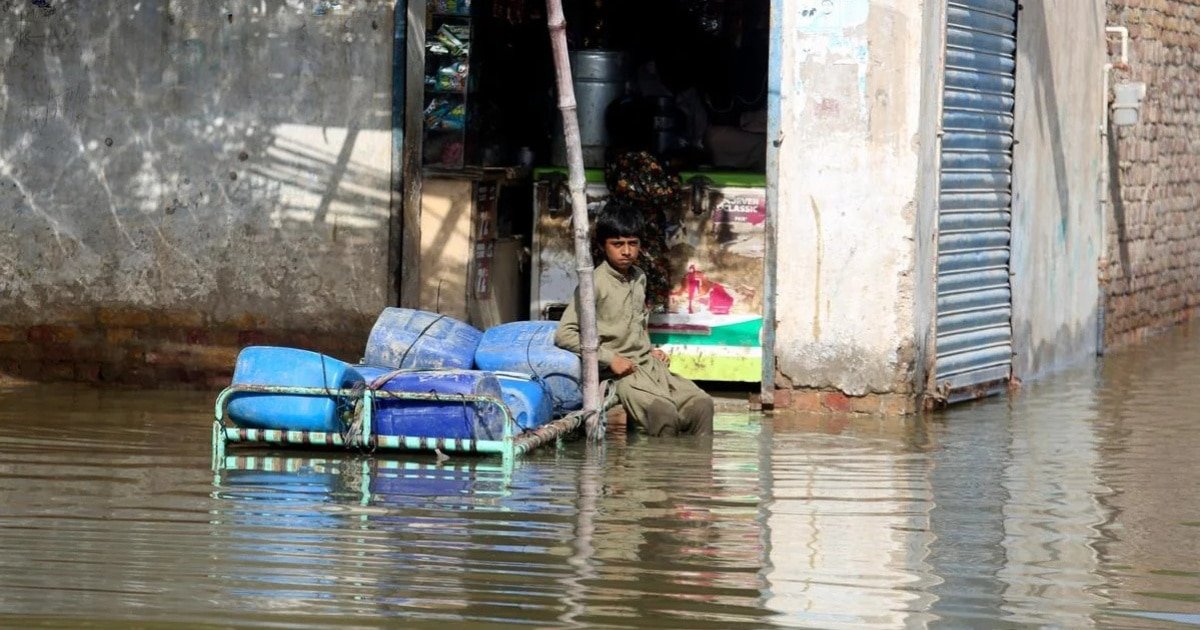
A summer of extremes has reminded Pakistan that climate change is an economic crisis, not just an environmental one. The 2025 monsoon again brought lethal flooding, and a new World Weather Attribution analysis links the heavier-than-normal rains to human-driven warming. Every inundation destroys assets, raises food prices and deters investment, costs that fall hardest on low-income households and small firms. Pakistan’s share of global emissions remains below 1%, yet its exposure is among the world’s highest, which is exactly why resilience and decarbonisation now sit at the centre of growth policy.
You May Like to Read: The Monsoon Nightmare: Climate Change and South Asia’s Unstoppable Floods
Climate Action as Competitiveness, Not Charity
The macro picture underlines why a green-industrial pivot is not optional. The World Bank’s April 2025 Pakistan Development Update names climate vulnerability as a binding constraint on growth and investment, even as stabilisation improves fiscal balances. The government’s Economic Survey 2024–25 reports a historic primary surplus, useful fiscal breathing room that should be leveraged to crowd in climate-smart infrastructure rather than repeatedly paying to rebuild after disasters. Put plainly, climate action must be framed as competitiveness, not charity.
Pakistan’s Solar Boom Needs Stable Rules
There are credible tailwinds to build on. Pakistan’s solar adoption has moved from talk to trend. Reuters reports that in the first four months of 2025 alone, the country imported just over 10,000 MW of solar components from China, extending a fivefold surge since 2022. If harnessed well, this momentum can cut fuel imports, reduce circular-debt pressures over time, and seed local assembly of modules, inverters and other balance-of-system parts. The task is to convert today’s consumer-led diffusion into tomorrow’s export-capable ecosystem.
Policy consistency will determine whether this boom becomes an industry. The government’s push to “correct” net metering to protect distribution company finances is understandable, but abrupt changes rattle consumers and freeze bank pipelines. A predictable glide path, grandfathering existing contracts, publishing multi-year tariffs and an interconnection code, and sequencing storage and grid upgrades, would retain rooftop momentum while strengthening system stability. Clear, timely communication from the energy team is essential to avoid stop-start cycles that raise the cost of capital.
From Coastlines to Carbon Cashflow
Green industrialisation also means new export stories. Sindh’s Delta Blue Carbon project has already issued around 3.1 million voluntary credits and raised roughly $40 million, while federal officials now estimate a $20–50 million annual market as mangrove restoration scales. Properly governed, these revenues can finance coastal protection, fisheries and jobs while boosting Pakistan’s climate credentials with buyers who screen suppliers for emissions and nature risk. The policy lesson is that credible MRV standards and transparent revenue-sharing unlock climate finance at scale.
You May Like to Read: A Man-Made Monsoon Crisis
Copper, and the Green Transition: Reko Diq’s New Chapter
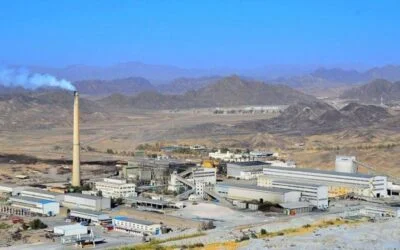
Critical minerals offer another lever. In August 2025, the Asian Development Bank approved a $300 million loan and a credit guarantee for the Reko Diq copper project, its first mining investment in decades. Copper sits at the heart of the energy transition, from solar and wind to EVs. If Pakistan embeds high environmental and social standards, transparent royalties and local-content commitments, the project can anchor downstream manufacturing and stable export earnings tied directly to global decarbonisation.
IMF Targets, SIFC Deals
On the policy spine, international commitments and investment facilitation are converging. Pakistan’s IMF program documents a pledge to reduce emissions by 15% below business-as-usual by 2030. In parallel, the Special Investment Facilitation Council has prioritised renewable energy, resilient infrastructure and industrial development to crowd in capital, with officials pitching a $100 billion energy transition to partners. The next step is execution: bankable pipelines for utility-scale solar and wind with storage, energy-efficiency upgrades for textiles and cement, and pilot projects in green hydrogen and ammonia aligned with export demand.
Indus at Risk
Water is the hinge between adaptation and growth. Climate change is reshaping Indus River seasonality, and regional tensions add planning risk. Efficient irrigation, crop switching to heat- and water-smart varieties, cold-chain logistics, and industrial water recycling are not side projects; they are productivity tools for agriculture and export processing zones. Without them, alternating cycles of flood and drought will keep wiping out gains and discouraging capital.
You May Like to Read: Climate Change as a National Security Multiplier in Pakistan
Pakistan’s Path: From Climate Risk to Climate Opportunity
Readiness, then, is practical and near-term. First, lock in regulatory certainty with a five-year roadmap for distributed solar, competitive auctions and grid-connected storage, using standardised PPAs and clear grid-code rules, to keep finance flowing at scale. Second, mobilise climate finance more aggressively: blend concessional windows with commercial credit so SMEs can decarbonise; channel a portion of carbon-credit proceeds into resilient infrastructure in coastal and riverine districts; and align taxes to encourage local manufacture of inverters, mounting structures and batteries.
Third, connect climate policy to trade policy by meeting buyer-side standards on emissions and traceability, so Pakistani textiles, leather and engineered goods remain eligible in markets that are tightening carbon rules.
This is not a choice between growth and the environment. It is a strategy to reduce macro risk, lower import dependence and win in markets where low-carbon performance is increasingly the price of entry. With solar installations surging, nature-based carbon revenues materialising, multilateral finance flowing into transition-linked minerals, and a facilitation platform aimed at clearing bottlenecks, Pakistan has the building blocks.
The test for 2025–27 is disciplined execution: predictable rules that don’t wobble, institutions that deliver permits and grids on time, and a financing stack that rewards firms for investing in efficiency and resilience. If Pakistan treats green industrialisation as a competitiveness agenda, not a compliance burden, it can link environmental survival to new trade and investment, on its own terms.
Concluding
Pakistan’s climate challenge is no longer distant, it is economic, immediate, and defining. Green industrialisation offers the only path that secures resilience, attracts investment, and keeps exports competitive in a carbon-conscious world. With solar momentum, carbon finance, and critical minerals in play, the task is disciplined execution. The coming years will decide whether Pakistan turns vulnerability into lasting opportunity.