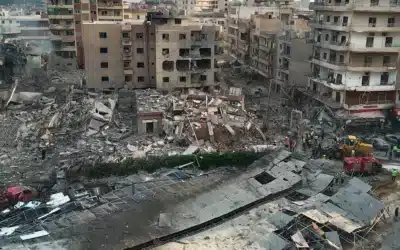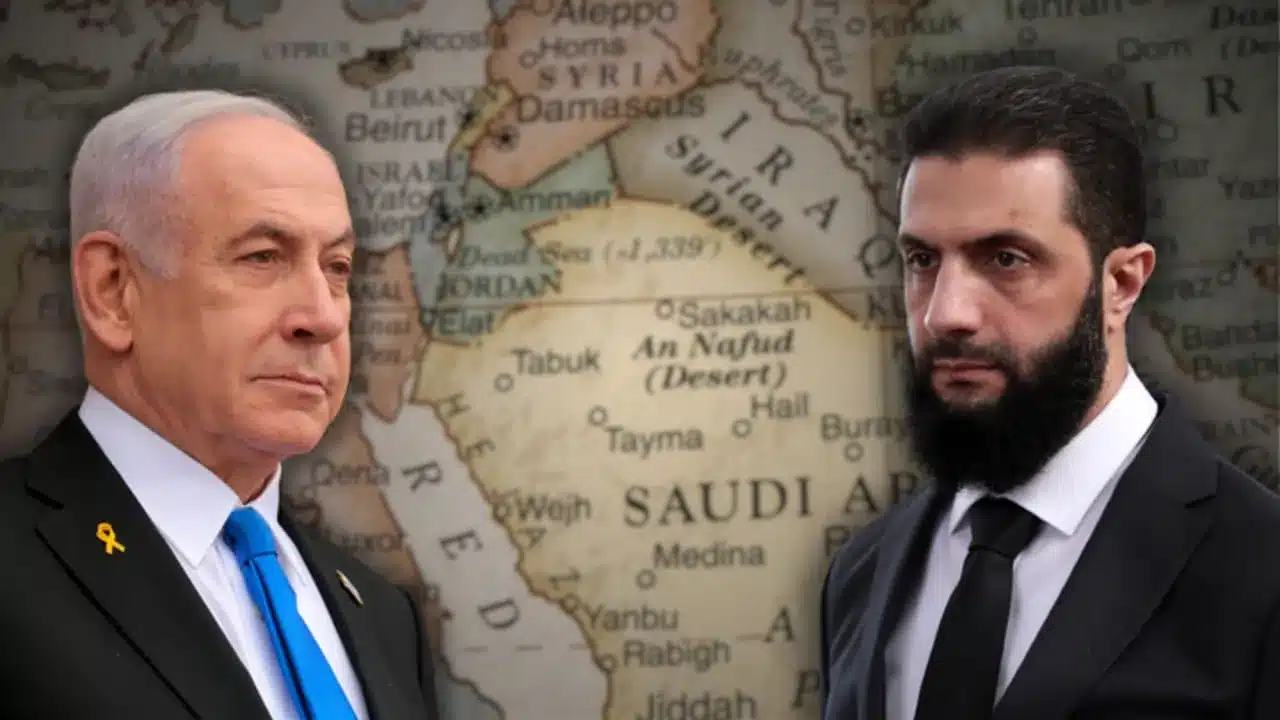





U.S. envoy Tom Barrack announced on July 18 that Israel and Syria have agreed to a ceasefire, following intense airstrikes by Israel in southern Syria and around Damascus. The truce, brokered with support from Turkey, Jordan, and other regional actors, seeks to end a week of sectarian violence between Druze militias and Bedouin clans in Sweida province, which left hundreds dead and displaced tens of thousands.
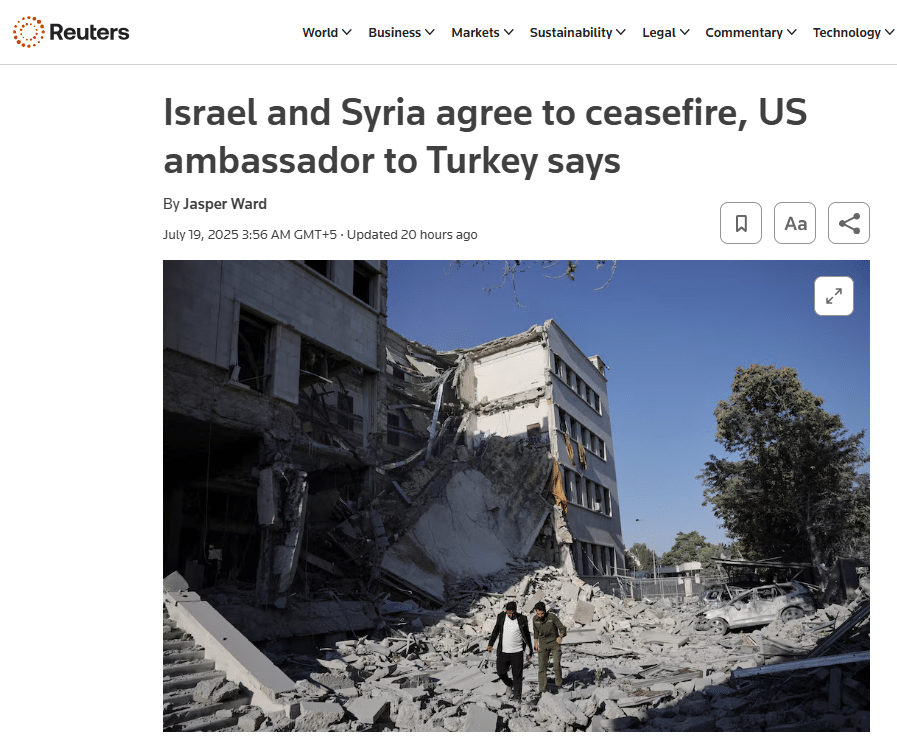
Source: Reuters
What Sparked the Ceasefire
- Clusters of armed confrontations erupted in southwestern Syria’s Sweida, as Druze communities clashed with nomadic Bedouin tribes over resource access and long-standing grievances.
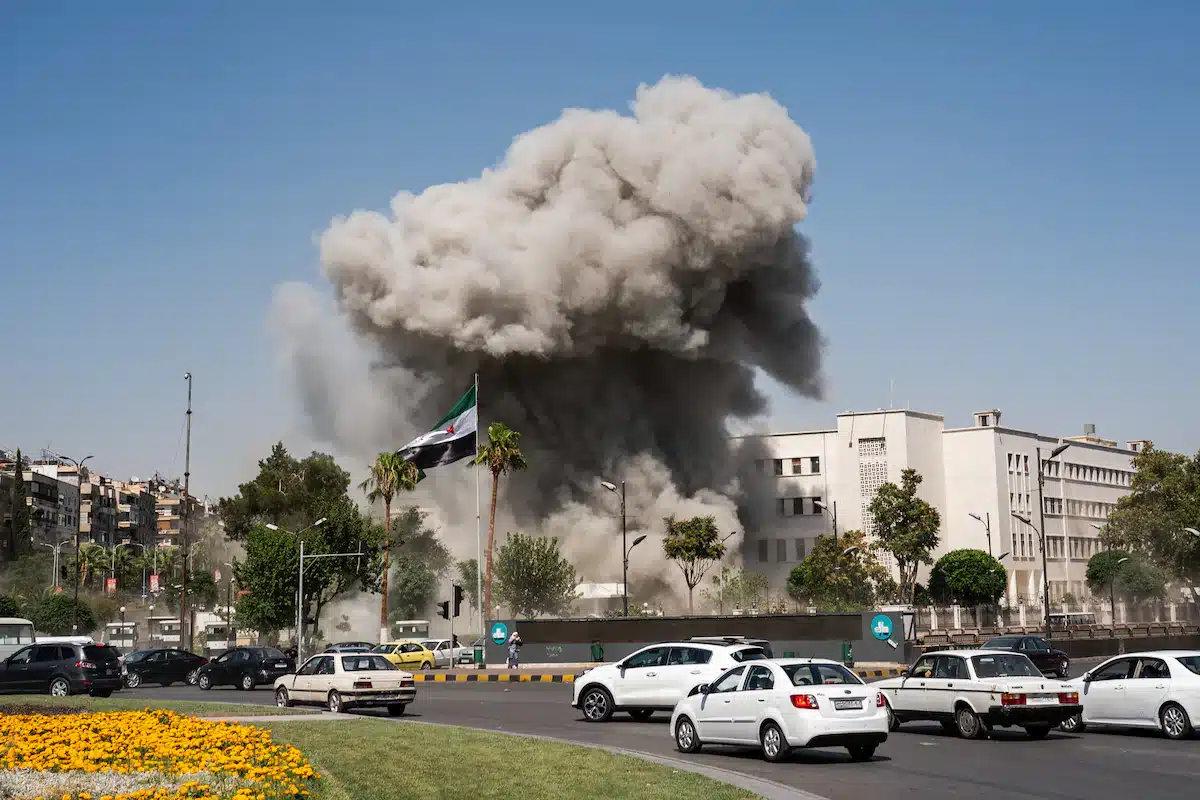
- The Druze, sharing religious ties with Israel and Lebanon, appealed to Israel for protection. Consequently, Israel launched airstrikes on Syrian military targets in Damascus and southern regions, citing concerns for Druze safety.
- Over 300 fatalities, significant displacement, and infrastructure damage escalated the situation into a broader regional confrontation.
Source: Washington Post
Terms of the Ceasefire
- Israel and Syria, through U.S. mediation, agreed to an immediate cessation of hostilities, supported by regional powers.
- Syrian President Ahmed al-Sharaa announced civilian protection efforts and confirmed deployment of national security forces into Sweida as part of the deal.
- Israel reportedly consented to a 48-hour entry window for Syrian troops to re-establish control in the Druze-majority region.
- Barrack urged reconciliation among Druze, Bedouins, and Sunnis, envisioning a shared Syrian identity moving forward.
Why It Matters Regionally
- The ceasefire reflects an unusual cooperation among Israel, Syria, the U.S., Turkey, and Jordan, signaling a possible shift toward reducing regional sectarian tensions.
- For Israel, military action was presented as a protective intervention, raising complex questions about sovereignty, precedent, and their evolving role in Syria’s post-Assad landscape.
- The deal may revive prospects for diplomatic progress, including discussions of demilitarized zones, Abraham Accords-type normalization, and broader U.S.-backed regional frameworks.
Challenges Ahead
- Fragile truce: Renewed Druze–Bedouin clashes erupted shortly after the agreement, prompting further government troop deployments and hinting at volatile conditions.
- Humanitarian crisis: Over 80,000 people displaced, with essential services disrupted and rights abuses ongoing.
- Sovereignty vs sectarian security: Israel’s intervention and temporary concessions for troop returns highlight the tension between state authority and minority protection.
The Israel–Syria ceasefire, mediated by the U.S. and backed regionally, marks a breakthrough in ending last week’s deadly Druze–Bedouin conflict. However, the resurgence of clashes, humanitarian strains, and diplomatic sensitivities around military roles underscore the fragility of peace in southwestern Syria.
For lasting stability, international actors must build on this truce through humanitarian relief, intercommunal dialogue, and a long-term roadmap for Sweida’s security and governance, moving beyond episodic ceasefires toward structural reconciliation.