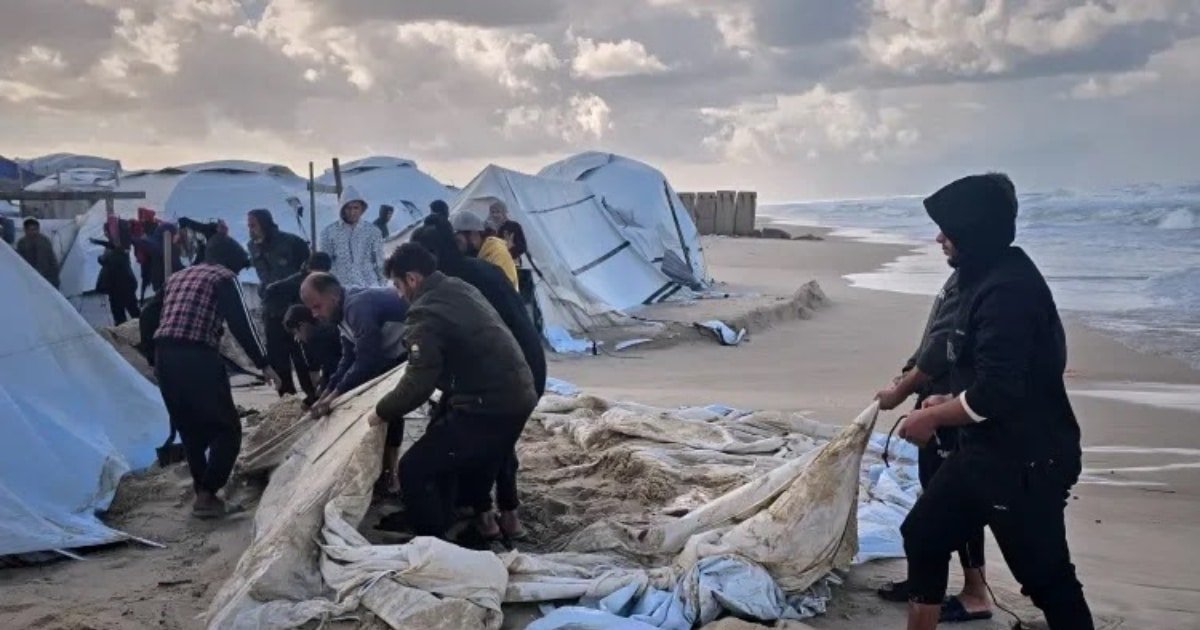




Heavy winter rains have lashed the Gaza Strip, flooding makeshift displacement camps and exacerbating a humanitarian crisis for millions already suffering from over two years of war. In areas like Khan Younis, torrential downpours have left families struggling in ankle-deep water, with flimsy, worn-out tents offering little protection. Displaced residents reported waking up to soaked mattresses and destroyed shelters, with many forced to use shovels and tin cans to bail out mud and sewage. The lack of adequate cover has become a matter of life and death; Gazan authorities reported that at least 15 people, including three infants, have died from hypothermia this month alone.
“Where are the mediators? We don’t want food. We don’t want anything. We are exhausted. We just want mattresses and covers.”
Winter rains lash the Gaza Strip, flooding displacement camps as Israel blocks aid — in pictures https://t.co/xJURCI7kWq pic.twitter.com/dpQdp9hLn4
— Al Jazeera English (@AJEnglish) December 29, 2025
The crisis is intensified by a severe shortage of winter supplies. While a ceasefire is technically in place, international aid organizations, including the UN, warn that Israel is blocking aid from entering at the necessary scale. Although some trucks have delivered tarps and tents, the Shelter Cluster coalition reports that the supplies remain woefully insufficient for the nearly 1.9 million displaced people.
You May Like To Read: YouTuber Rajab Butt Assaulted During Court Hearing in Karachi
UNRWA Commissioner-General Philippe Lazzarini emphasized that the suffering is not inevitable but a result of restricted aid flow. With roughly 80% of Gaza’s buildings damaged or destroyed, emergency workers have warned civilians against seeking shelter in unstable ruins, yet few alternatives exist. Since the October ceasefire began, over 400 Palestinians have been killed amid ongoing instability and deteriorating environmental conditions.
Check out our latest video: