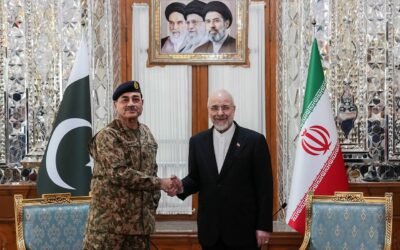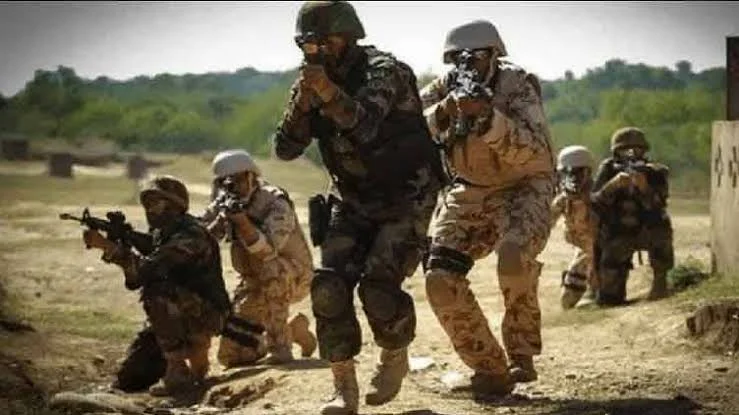
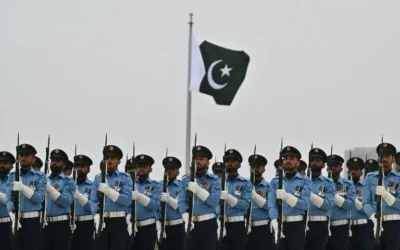




Chief of Army Staff (COAS) and Chief of Defence Forces (CDF) Field Marshal Syed Asim Munir reaffirmed Pakistan’s firm resolve to eradicate terrorism, declaring that targeted operations against Fitna al-Khawarij and Fitna al-Hindustan will continue unabated until all militant networks and their facilitators are eliminated.
Addressing participants of the 20th National Workshop Balochistan at General Headquarters (GHQ) in Rawalpindi, the Field Marshal emphasized that the persistent security efforts of law enforcement agencies, bolstered by the unwavering support of the public, remain the cornerstone for establishing lasting peace across the province.
Chief of Army Staff and Chief of Defence Forces, Field Marshal Syed Asim Munir has reiterated Pakistan’s firm resolve to dismantle terrorist infrastructure wherever it poses a threat to the country and its people.@OfficialDGISPR #News #RadioPakistan https://t.co/Jl1jf3pmNW pic.twitter.com/ikirmfw2GB
— Radio Pakistan (@RadioPakistan) July 23, 2026
Firm Counter to Foreign Proxies and Militant Infrastructure
The military leadership highlighted the ongoing security challenges facing Balochistan, directly attributing local insurgent activity and violence to external state sponsorship.
-
Neutralizing Foreign Proxies: Field Marshal Munir underscored that foreign-backed proxy entities have continuously attempted to trigger instability, fuel violence, and sabotage economic progress in Balochistan. He asserted that these hostile designs will be comprehensively defeated through a firm, decisive response from the armed forces alongside the national resilience of the Pakistani public.
-
Targeting Parallel Threat Vectors: The Army Chief explicitly reiterated that Kinetic and intelligence-led operations will focus relentlessly on both Fitna al-Khawarij (referring to cross-border militant factions like the TTP) and Fitna al-Hindustan (subversive regional insurgent networks).
-
Dismantling Support Networks: Operations will proceed with full institutional resolve to strip away the physical infrastructure, financial pipelines, and local facilitators that sustain insurgent cells across the country.
Inclusive Development and National Cohesion
Describing Balochistan as the “pride of Pakistan,” Field Marshal Munir praised the province’s vast natural resource potential and identified its vibrant, patriotic population as its single greatest asset.
-
Socio-Economic Transformation: The address emphasized that federal and provincial development frameworks are designed to uplift the socio-economic landscape of Balochistan through a people-centric, inclusive model, ensuring local communities directly benefit from infrastructure and resource projects.
-
Role of Civil Society and Youth: The Field Marshal praised academia, civil society organizations, local media, and the youth for their constructive role in fostering national integration and driving long-term socio-economic prosperity.
-
National Unity: Concluding the session, the military chief called for collective perseverance and unity to guide the nation’s future trajectory amidst complex security and geopolitical headwinds.
Strategic Analysis: The Counter-Subversion Calculus in Balochistan
Field Marshal Munir’s address at the 20th National Workshop Balochistan signals a coordinated shift in how the state handles internal security alongside regional development:
Synchronizing Kinetic Interdictions with Institutional Outreach
The timing of the address—coming on the heels of major intelligence-based operations in Mastung and Khad Kocha—reflects an operational doctrine that pairs active tactical clearance with civil-military dialogue. By bringing civilian stakeholders, academics, and youth from Balochistan into GHQ for the National Workshop, the military leadership is seeking to bridge historical administrative divides and build societal immunity against militant recruitment messaging.
Explicit Framing of Foreign Hybrid Warfare
The explicit classification of hostile actors as Fitna al-Hindustan alongside Fitna al-Khawarij reinforces Islamabad’s stance that regional militancy is not merely a localized grievance, but an engineered asymmetric war. By framing these groups as foreign-sponsored proxies, the security establishment justifies a zero-tolerance operational stance aimed at severing external funding lines, intelligence support, and safe havens.
Securing Economic Corridors and Development Assets
Balochistan forms the geographical anchor of major regional infrastructure networks and natural resource extraction initiatives, including deep-sea port assets and mineral projects. Ensuring permanent stability in the province is a non-negotiable economic imperative. The military’s dual approach—combining intelligence-led security sweeps to neutralize suicide cells with people-centric development frameworks—is aimed at creating a stable environment capable of attracting long-term foreign direct investment.