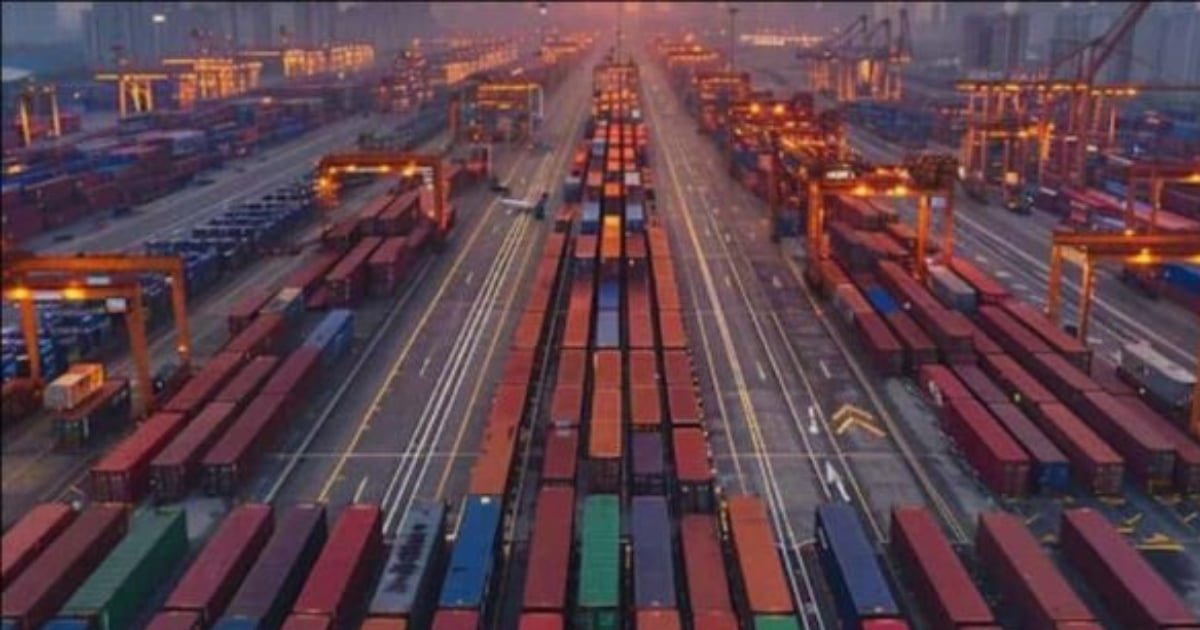





In a strategic move to bypass the ongoing naval blockade of the Strait of Hormuz, the federal government has officially notified six land routes for the transit of goods to Iran. The Ministry of Commerce issued the “Transit of Goods through Territory of Pakistan Order 2026” late Sunday, aimed at clearing a massive backlog of over 3,000 shipping containers currently stranded at Karachi and Port Qasim. With Iranian ports functionally inaccessible due to the maritime standoff with the U.S., these designated “transit corridors” transform Pakistan into a vital overland bridge for regional trade. The order, which took effect on April 25, allows for the “cross-stuffing” of cargo and requires an encashable bank guarantee to secure transit operations.
Pakistan has notified six official transit routes for moving goods into Iran. Beyond trade facilitation, the shift signals a bigger strategic move, linking Pakistan’s ports to Central Asia through Iran, while gradually reducing reliance on the traditional Afghan transit route. pic.twitter.com/s7F1FIgI9R
— HUM News English (@humnews_english) April 27, 2026
Highlights
- Six land routes have been designated to facilitate Iran-bound trade via Pakistani territory.
- Over 3,000 containers destined for Iran are currently stuck at Karachi port due to the Hormuz closure.
- The order gives Gwadar Port formal status as a primary transit hub, offering an 87% reduction in transit time to the border compared to Karachi.
- Cargo will be regulated under the Customs Act, 1969, with mandatory financial guarantees equivalent to import levies.
- The arrangement specifically applies to goods consigned from third countries and destined for Iran through Pakistan.
The Designated Transit Corridors
The Ministry has outlined a network of coastal and inland routes to ensure logistics flexibility:
Gwadar-Gabd: The shortest route (89km), allowing goods to reach the Iranian border in just 2-3 hours.
Karachi/Port Qasim-Lyari-Ormara-Pasni-Gabd: A coastal bypass for southern shipments.
Karachi/Port Qasim-Khuzdar-Dalbandin-Taftan: The traditional inland artery to the main border crossing.
Gwadar-Hoshab-Panjgur-Quetta-Taftan: A central corridor linking the deep-sea port to Balochistan’s northern border.
Gwadar-Lyari-Khuzdar-Quetta-Taftan: An alternative inland route for diversified cargo flow.
Karachi/Port Qasim-Gwadar-Gabd: A link connecting the two major seaports for cross-regional transit.
Economic & Regional Impact
For the first time in modern history, both the Red Sea and the Strait of Hormuz are simultaneously facing severe disruptions, making Pakistan’s land-based connectivity a “game changer” for regional logistics.
Gwadar as a Hub: Experts estimate that Gwadar could capture 25% of Iran’s transit market in the initial phase, potentially generating $24–$32 million annually.
Job Creation: The activation of these routes is expected to attract investment in logistics parks, cold storage, and warehousing, creating thousands of jobs for local youth in Balochistan.
Logistics Efficiency: By shifting from sea to land, the “Islamabad Channel” not only facilitates diplomacy but also keeps the regional economy breathing during one of the most disruptive maritime crises of the decade.
You May Like To Read: Israeli Strikes in Southern Lebanon Kill 6, Amidst Ceasefire Extension
Check out our latest video: