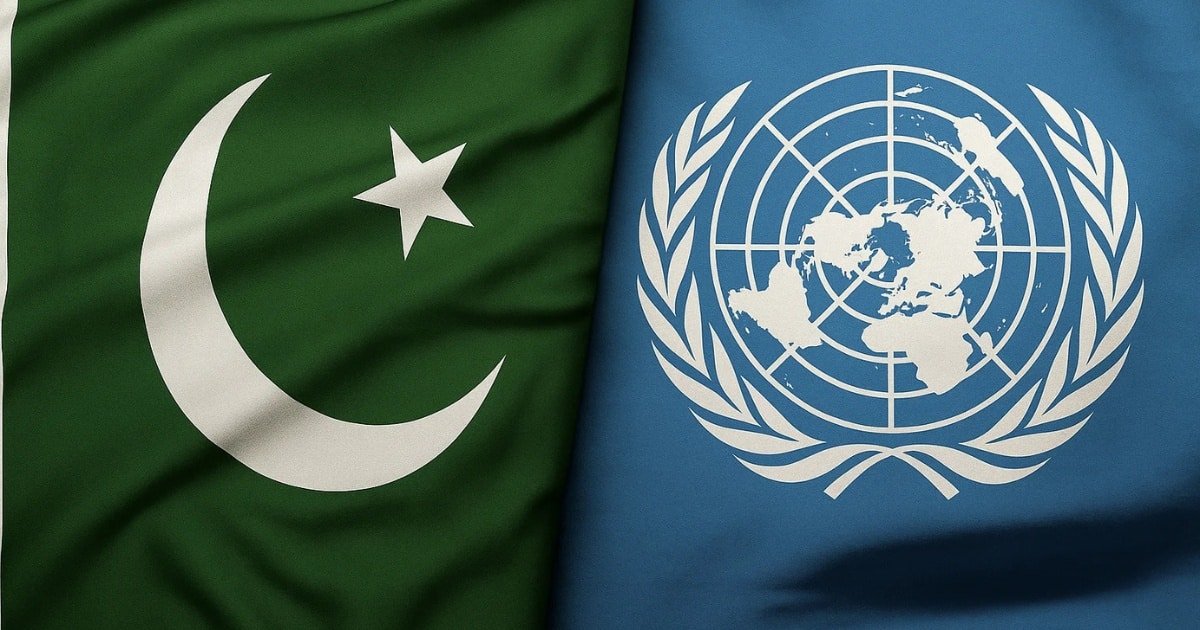





The Paradox in Plain Sight
For three decades, Pakistan has been one of the UN’s most reliable suppliers of blue helmets. As of 31 January 2025, Pakistan ranked seventh among all troop- and police-contributing countries, with 2,605 uniformed personnel deployed across UN missions. That is a bigger field presence than many richer states, and it continues a long tradition of service.
The cost has been real. By this year’s International Day of UN Peacekeepers, at least 181 Pakistani peacekeepers had sacrificed their lives in the line of duty. Pakistani officials also note that more than 235,000 personnel have served in 48 UN missions over time, numbers that speak to scale, experience and commitment.
You May Like to Read: Pakistan and the United Nations’ Peacekeeping Legacy
From Boots to Briefings: A Bigger Seat at the Table in 2025
If there was ever a moment to convert deployments into diplomacy, it is now. Pakistan was elected to a two-year non-permanent seat on the UN Security Council, beginning 1 January 2025, winning 182 of 193 votes in the General Assembly, its eighth term on the Council. In July 2025, Islamabad held the Council presidency, steering discussions and showcasing priorities.
Under Pakistan’s gavel that month, the Council adopted a presidential statement to deepen cooperation between the UN and the Organization of Islamic Cooperation, an agenda that aligns with Islamabad’s broader multilateral positioning. Pakistan also convened a debate on “triangular cooperation” among the Council, the UN Secretariat and troop- and police-contributing countries, precisely the forum where contributors seek more say over mandates and mission design. These are not symbolic steps; they are the channels through which policy influence is built.
Why Influence Has Lagged, Historically
The structural problem is older than Pakistan’s current term. Peacekeeping mandates are written and renewed by the Security Council, where the five permanent members, China, France, Russia, the UK and the United States, hold veto power. Elected members do meaningful work, but they do not have a veto and rotate off after two years.
Academic research and UN policy history show that influence over peacekeeping has tended to cluster around three hierarchies. Security Council membership (especially the P5), major financial contributors, and major troop contributors. TCCs like Pakistan dominate one hierarchy but not the others, limiting leverage when mandates are negotiated in New York.
You May Like to Read: ASEAN’s Quiet Power: Lessons for Pakistan and South Asia on Regional Cooperation
The Field is Changing, and Getting Harder
Even as Pakistan seeks more voice, the peacekeeping landscape is shrinking and politicizing. Missions have closed or are drawing down, and host-state consent is increasingly fragile. UN officials warn that great-power divisions have hamstrung the Council’s ability to manage crises, and recent decisions reflect that turbulence.
On Thursday 28th August 2025, the Council voted to end the longtime UNIFIL mission in Lebanon by 31 December 2026 after contentious negotiations, underscoring how geopolitics, not TCC preferences, often drive outcomes. In this climate, converting troop contributions into policy wins requires coalition-building and smart agenda-setting, not just moral claims.
Where Pakistan has Real Levers
Islamabad has more tools than it sometimes uses. First, it can keep using the Council to institutionalize stronger consultation with TCCs before mandates are finalized, “triangular cooperation” in UN jargon. July’s debate, led by Pakistan, put that on paper and on record, and should be followed up in every mandate renewal where Pakistani troops deploy. Second,
Pakistan can leverage its Centre for International Peace and Stability (CIPS) in Islamabad, which runs UN-certified pre-deployment courses and has trained thousands, to shape standards on protection of civilians, counter-IED measures and medical evacuation, areas where field lessons can be codified into policy. Third, Islamabad can align with African and Asian Council members to secure predictable financing for African Union-led peace support operations, building on Resolution 2719, and thereby influence burden-sharing models that affect force generation.
You May Like to Read: Pakistan Urges UN Security Council to Reject Naval Militarization, Asserting Oceans as Zones of Peace
Measuring Progress without Hubris
To avoid the “policy lightweight” label, Pakistan will have to show outcomes, not only speeches. Success would look like language in mandate renewals that reflects TCC field advice; improved casualty mitigation and performance metrics adopted Council-wide; and sustained roles in penholding or co-penholding files touching on peacekeeping practice. July’s presidential statement on UN–OIC cooperation was a diplomatic win and a signal of thematic leadership. But the coming months, when the Council reviews mandates in South Sudan, Central African Republic and Abyei, where Pakistani contingents have historically rotated, will test whether Islamabad can translate its operational credibility into concrete text and budget lines.
The Bottom Line
Pakistan is no longer just a “boots on the ground” story at the UN. In 2025, it sits inside the room where mandates are written and, in July, at the head of the table. The structural constraints are real: the veto, short two-year terms, and a fractious geopolitical environment that often sidelines TCC views.
But the path to influence is also clear: persistent triangular consultations, coalition-building with elected members, thought leadership through training and standards, and pragmatic deals on financing and protection priorities. If Islamabad stays focused on these levers, it can narrow the gap between the scale of its sacrifice in the field and its weight in UN policy, turning a long-standing peacekeeping giant into a more influential policymaker as well.