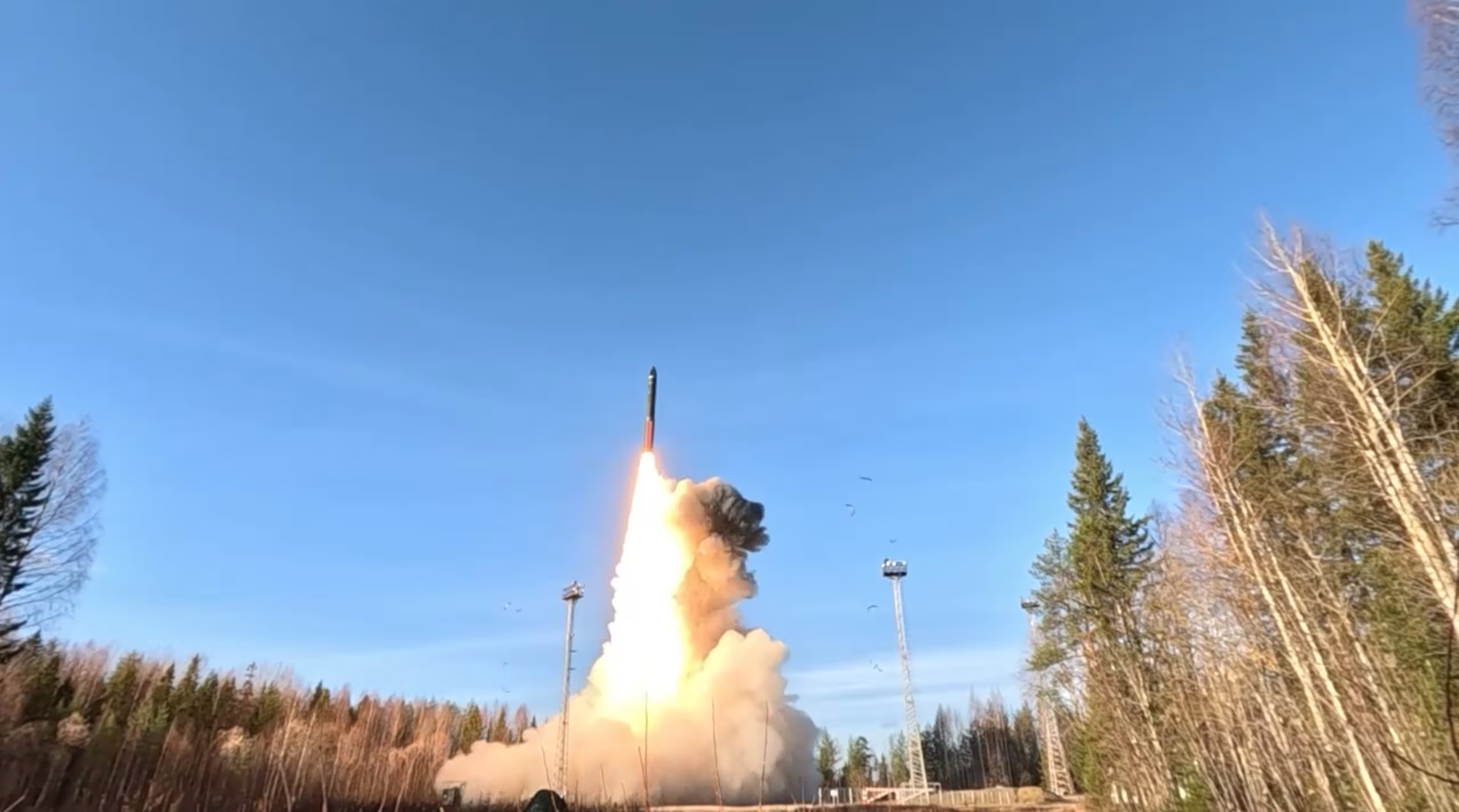


In a move that has heightened international tensions, Russia has conducted large-scale nuclear exercises involving 64,000 personnel, including test-firing intercontinental and hypersonic missiles and issuing nuclear munitions to select units. The drills, overseen by President Vladimir Putin, come amidst escalating tensions with NATO over the conflict in Ukraine and accusations of Baltic states enabling Ukrainian drone attacks on Russian territory.
🇷🇺🇧🇾 Russia holds large-scale nuclear forces drills with Belarus
The Russian armed forces held major joint nuclear forces exercises with Belarus, practicing the rapid mobilization of nuclear weapons units units to maximum combat readiness.
The drills involved:
🟠More than… pic.twitter.com/c0FpITF7pj
— Sputnik (@SputnikInt) May 21, 2026
Key Highlights
- Military Drills: Russia conducted extensive drills simulating the preparation and use of nuclear forces, involving a significant number of personnel and advanced weaponry.
- Missile Tests: Test launches included a Yars intercontinental ballistic missile and a Zircon hypersonic missile, demonstrating Russia’s nuclear capabilities.
- Nuclear Munitions Issued: Nuclear munitions were issued to units in both Russia and Belarus, a move that analysts view as a deliberate signal of Russia’s readiness to escalate.
- Putin’s Statement: President Putin emphasized that the use of nuclear weapons would be an “extreme measure of last resort,” while also asserting Russia’s commitment to developing its nuclear forces.
- Criticism of US Missile Defense: Russia reiterated its concerns about the US missile-defense shield, claiming it threatens strategic stability.
Critical Analysis
The timing and scale of these exercises are particularly noteworthy. Russia’s actions can be interpreted as a multi-layered message:
- Deterrence: Russia aims to deter further Western involvement in Ukraine by showcasing its nuclear capabilities and resolve. This serves as a stark reminder to NATO of the potential consequences of direct intervention.
- Escalation Signal: The issuance of nuclear munitions, even if dummy warheads are used, is an escalatory step. It signals Russia’s willingness to raise the stakes and underscores the gravity of the situation.
- Internal Messaging: The exercises may also serve to bolster domestic support for Putin’s regime and project an image of strength amid ongoing challenges in Ukraine.
- Geopolitical Posturing: Russia is strategically positioning itself as a major nuclear power, challenging the existing global order and emphasizing its role as a key player in international security.
Tensions with Baltic States
Accusations against the Baltic countries further complicate the situation. Russia alleges that these nations are allowing Ukraine to use their airspace to attack Russian territory, a claim vehemently denied by NATO. The Kremlin’s sharp criticism of Lithuania’s foreign minister underscores the heightened tensions in the Baltic region, where the Russian exclave of Kaliningrad adds another layer of strategic complexity.
Conclusion
Russia’s nuclear exercises represent a significant escalation in its ongoing confrontation with the West. While the exercises may be intended as a deterrent, they also carry the risk of miscalculation and unintended consequences. The international community must carefully monitor the situation and pursue diplomatic solutions to de-escalate tensions and prevent further escalation.