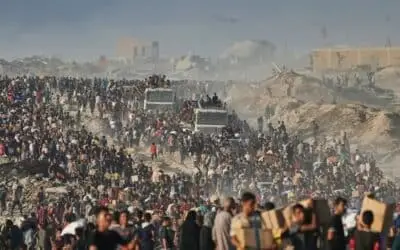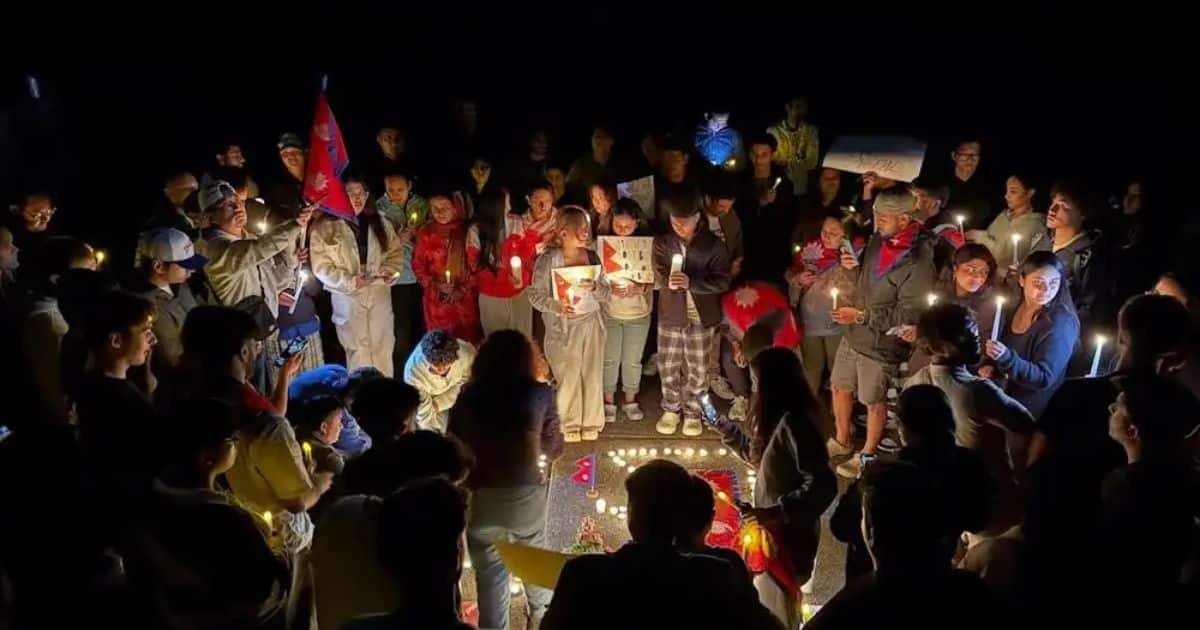





Nepal’s 2025 unrest showed how social networks have moved from amplifiers of opinion to the very engines of political mobilisation. The protests were shaped, organised and broadcast by a generation that lives much of its public life on phones and apps. Rather than following the playbook of older political formations, young organisers used short videos, private chats and community servers to set the rhythm of events, and to force rapid political consequences.
Online Sparks, Real-World Flames
The immediate spark was a government decision in early September to restrict access to a number of major social platforms. Many young Nepalis read that move as an attempt to curb digital organising and curb freedoms of expression; within hours hashtags and short livestreams had turned online outrage into mass street gatherings across Kathmandu and other cities. The speed and scale of turnout made clear that, for many Gen-Z activists, social networks are not an adjunct to politics but the primary arena where civic life is organised and contested.
A New Generation on the Streets
What set these protests apart was leadership and energy coming from outside traditional party structures. Students, gig-workers, online creators and small-group organisers coordinated marches, sit-ins and protests through ephemeral posts, private message groups and viral clips. Their demands were not narrow party slogans but everyday grievances: lack of decent jobs, visible nepotism, and the sense that the system itself favoured a small, well-connected elite. First-person videos from market streets, boarding hostels and small towns turned distant statistics into personal stories, and gave the movement a human face that drew public sympathy.
Networks and Tactics
Digital tools shaped both tactics and identity. Encrypted chats and invite-only servers allowed quick decisions without exposing formal hierarchies. Live video not only broadcast events in real time but also served as a check against official narratives; when state accounts described events one way, citizen footage often offered a different view. Activists used QR codes, small trusted messaging cells and VPNs to share meeting points and legal/medical help. Visual culture played a role too. cross-regional pop-culture symbols, including a manga/anime-inspired flag, provided a compact, repeatable identity that moved easily from phone screen to placard. Symbols such as the Straw Hat Pirates’ flag, first seen in Indonesia, gained traction online and became a unifying emblem of resistance on the ground.
Twitter and Instagram pages criticizing Nepal’s leadership became rallying hubs for Gen Z, spreading protest calls and exposing corruption in real time. Livestreams and digital organizing not only drew international attention but also sustained morale during violent crackdowns that left 74 dead and over 2,100 injured, showing how online networks can transform digital dissent into real-world political change.
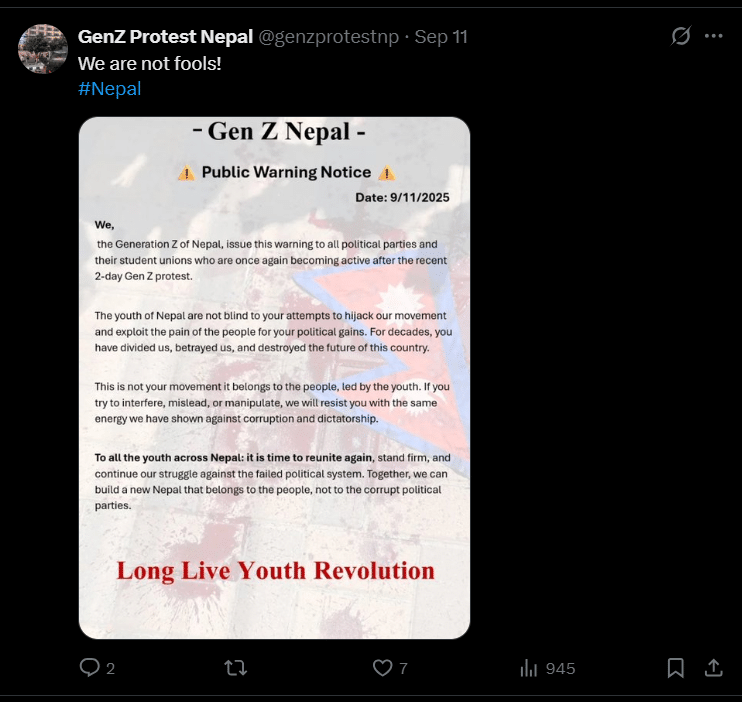
Misinformation, Escalation and a Heavy Price
The same speed and decentralisation that made rapid mobilisation possible also carried danger. Closed groups and fast-spreading rumours sometimes circulated violent calls or tactical talk that moved beyond peaceful protest; that in turn complicated efforts by peaceful organisers to keep demonstrations non-violent. The unrest carried a heavy human cost. Reporting and official notices documented 74 deaths and injuries, prompting outrage and the setting up of an independent probe to investigate the clashes and alleged abuses. Those events underscored how quickly digital mobilisation can escalate into real-world harm when misinformation mixes with combustible grievances.
Youth Agency and Political Consequences
For many young participants the protests were a matter of reclaiming agency. Short, authentic videos and first-hand testimony allowed ordinary people to set the agenda and to push issues into national debate. That pressure had immediate political consequences: senior leaders faced resignations and an interim administration took office pledging reforms and an inquiry into the violence. The rapid institutional response showed that digital pressure can force political change in compressed timeframes when online narratives resonate with large swathes of the public.
Lessons for Pakistan and the Region
Nepal’s experience holds several lessons for Pakistan and neighbouring countries. First, digitally literate youth can convert local grievances into national movements very quickly. Second, blunt attempts to shut down or strictly control platforms often push organisers into alternative channels that are harder to track and manage. Third, digital mobilisation comes with responsibilities: governments, platforms and civil society need to invest in media literacy, support fast independent fact-checking, and ensure impartial mechanisms to investigate claims of excessive force, so that protest energy can be channelled into peaceful, accountable change.
Looking Ahead
The Gen-Z protests in Nepal underline a durable reality: online networks are now political infrastructure. For Pakistan, where social media already fuels much public debate, the Nepal episode is a timely reminder that engagement and institutional responsiveness are better tools than reflexive shutdowns. Protecting peaceful assembly, strengthening digital literacy, and creating transparent youth engagement channels will reduce the risk of escalation and build legitimacy across generations.
Conclusion
Nepal’s 2025 uprising showed that social media is far more than a megaphone, it is an organising ecology that changes how politics happens on the ground. The test for South Asian states will be whether they can adapt: to protect citizens’ right to protest, to prevent misinformation and violence, and to respond to legitimate youth demands with openness and accountability. How governments answer that test will shape politics across the region for years to come.
You May Like to Read:
- The Debate Over Cybercrime Laws in 2025 | Cybercrime and Digital Rights
- The Global Rise of Surveillance States: Implications for Pakistan’s Civil Liberties
- The ‘Digital Colonization’ Threat: The Geopolitical Implications of Foreign Tech Giants Controlling Pakistan’s Digital
- Youth Radicalization in the Digital Age: From Online Propaganda to Real-World Threats in Pakistan
- The Rise of Narrative Laundering: Sanitization and Resharing of Disinformation Campaigns via Credible