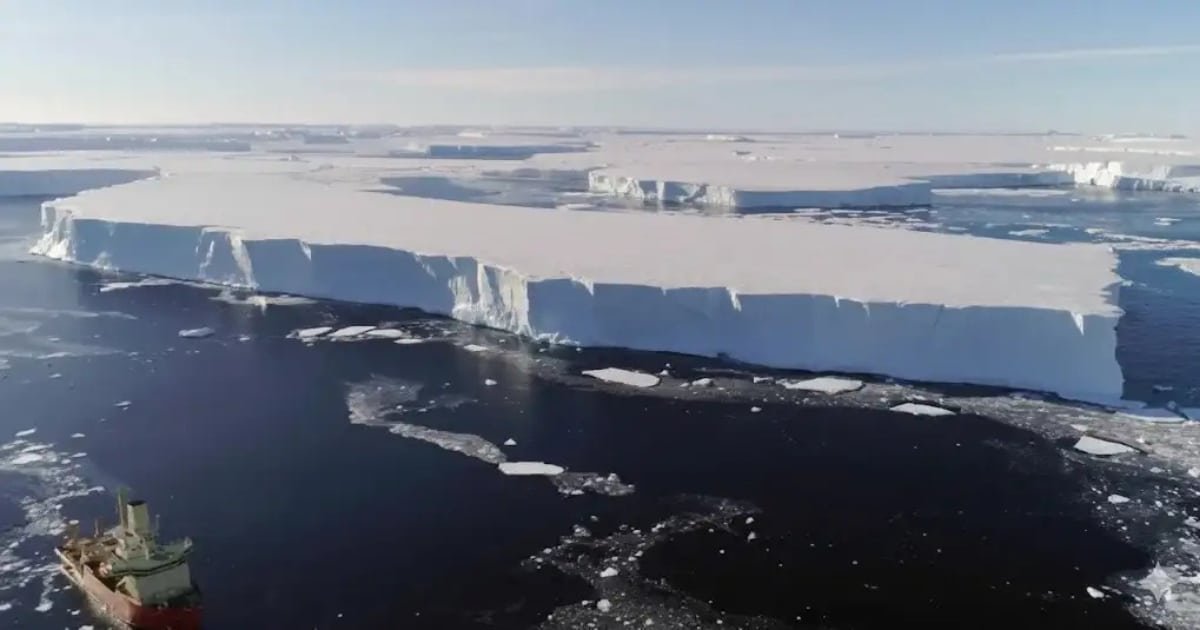




A landmark study released in late 2025 by the University of Manitoba reveals that Antarctica’s Thwaites Glacier, famously known as the “Doomsday Glacier,” is disintegrating from the inside out. Using two decades of satellite imagery and GPS data, researchers led by Debangshu Banerjee found that internal fracturing within a critical shear zone is now a more dominant driver of instability than melting from warm ocean water. These cracks have effectively doubled in total length over the last 20 years, expanding from 100 miles to over 200 miles. This structural decay is causing the eastern ice shelf to lose its grip on an underwater pinning point, which previously served as a stabilizing anchor for the massive ice sheet behind it.
Antarctica’s Thwaites Glacier losing grip as cracks outpace melting
Read More : https://t.co/9I3ZUM3sFq#ARYNews pic.twitter.com/5PACxXbMWK
— ARY NEWS (@ARYNEWSOFFICIAL) December 29, 2025
The research identifies a dangerous “positive feedback loop” where initial long fractures lead to smaller, “chopping” cracks that segment the ice into weaker blocks. As these blocks break apart, the glacier’s flow accelerates, which in turn generates even more fractures. Scientists warn that Thwaites acts as a cork for the West Antarctic Ice Sheet; if this floating shelf shatters, the land-based ice it holds back could flow into the ocean at unprecedented speeds. While a total collapse would unfold over centuries, the study emphasizes that the glacier already holds enough ice to raise global sea levels by two feet, with the potential to trigger a wider collapse that could result in an 11-foot rise.
You May Like To Read: Beyoncé Officially a Billionaire according to Forbes
Check out our latest video: