Strategic and Geographical Significance
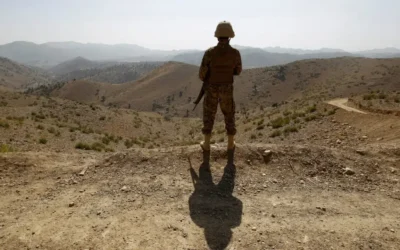
Khyber Pakhtunkhwa and Balochistan are located on the most vulnerable borders of Pakistan. The rocky, and porous borders with Afghanistan and Iran demonstrate how much of a tactical asset this terrain is to insurgents. This border situation is further complicated by the reemergence of the Taliban as the rulers of Afghanistan after 2021, which has allowed such groups as the Fitna-al-Khawarij (FAK) and the Fitna-al-Hindustan (FAH) to reorganize and train.
Separatist sentiments have been fostered in Balochistan by decades of political marginalization, exploitation of resources, poor governance, external interventions and incitement by Indian-proxy terrorist groups. The lack of infrastructure, underdevelopment, and the alleged human rights violations in the region have also driven the local communities further away and made recruits gravitate towards militant causes.
All these geographic and socio-political conditions combine to make KP and Balochistan the natural bastions of militant action. The key to any counterterrorism strategy should therefore be to ensure that these areas are secured via a combination of military, political, and developmental initiatives.
Militancy in KP and Balochistan
Pakistan has also experienced more than 500 terrorist attacks by the middle of 2025, the majority of which (more than 95 percent) have taken place in Khyber Pakhtunkhwa and Balochistan. The concentration of these terrorist activities in KP and Balochistan highlight the dominance of these militants in these provinces. These have included sophisticated ambushes of military convoys and bombings of civilians, evidence of both capacity and an effort to interfere with state authority.
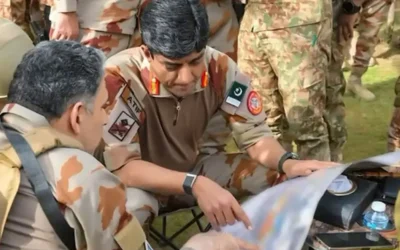
FAK and ISKP are very active in Khyber Pakhtunkhwa, especially in North Waziristan, South Waziristan, Khyber, and Bajaur. One of the worst attacks this year was the June 28 suicide bombing in Mir Ali that killed 13 soldiers and showed that the FAK could get at well-defended targets. ISKP, in its turn, is still using sectarian tensions, attacking minority Shia groups, and religious meetings.
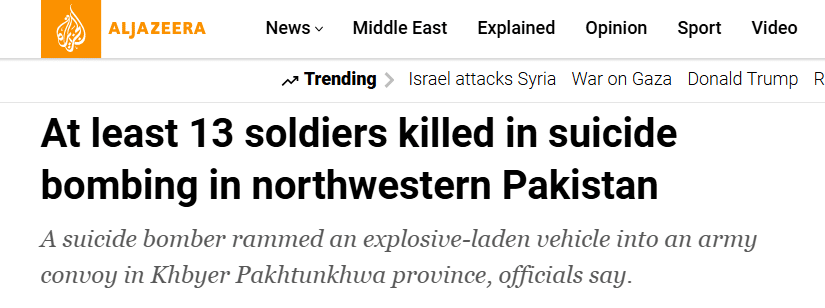
Source: Al Jazeera
Violence has escalated in Balochistan, especially by FAH and its peripheral insurgent groups. Some of the high-profile attacks by these groups have been:
- March 2025 Jaffar Express train hijacking.
- The May Khuzdar school bus bombing, in which 13 children were killed.
- Mastung bus bombing and Machh IED attack on military vehicles in April and May, respectively.
Not only are these attacks increasing in number, but also in sophistication as they are increasingly more coordinated and intelligent on the part of militants. FAH, in particular, has attacked infrastructure tied to the China-Pakistan Economic Corridor (CPEC), posing more strategic concerns to Islamabad as well as Beijing. This increasing violence in KP and Balochistan points to the extent to which militancy has ingrained itself.
Issues of Counterterrorism in These Provinces
In Khyber Pakhtunkhwa and Balochistan, Pakistan experiences numerous structural and operational issues in its counterterrorism fight. The rugged and complex terrain of the two provinces is one of the greatest setbacks, since it provides natural protection and movement advantages to the militant groups. The mountainous ex-FATA areas of KP and the expansive, sparsely populated central and southern Balochistan are hard to patrol, or permanently secure, and restrict the extent of conventional military action.
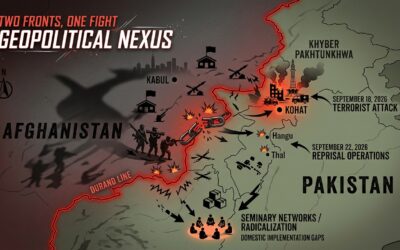
The other big problem is the porous and mostly unmonitored border with Afghanistan, especially along the Durand Line. Even though a big part of the border is fenced, militants still manage to cross it through the holes and safe havens. The passive approach of the Afghan Taliban and the support of the FAK elements by the Afghan Taliban have further complicated the efforts of Pakistan to curb the cross-border militancy.
There exist institutional and governance weaknesses as well. The civilian government has no control in most parts of KP and Balochistan, and the interface between civilian intelligence, local police, and the military is usually divided. In Balochistan, the local community does not trust the state, and this lack of trust has left intelligence blind spots, where people are not willing to cooperate with police because they fear reprisals or have historical grudges.
Additionally, there is a lot of dependence on kinetic force in counterterrorism operations, and this is without paying much attention to the socio-political causes of violence. This has occasionally caused civilian casualties, forced displacements, and backlash that has served as a source of further radicalization. The accusations of state forced disappearances and extrajudicial measures in Balochistan have undermined the reputation of the state authority and even increased the bitterness, particularly among the young generation.
Implications on National Security Strategy of Pakistan
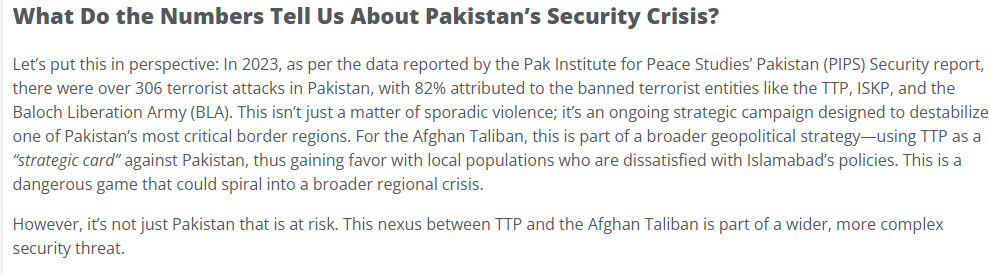
The persistence of Khyber Pakhtunkhwa and Balochistan in the Pakistan militancy context has long-term consequences on national security and the stability of the country. The concentration of violence in these two provinces geographically strains the security forces, and they are unable to act proactively against new threats in other areas. The regular high-casualty attacks, including the June 2025 suicide bombing in North Waziristan and the attack on the school bus in Khuzdar, demonstrate the increasing operational confidence of the militants and the inability of the state to restrain them.
Source: South Asia Times
Among the main implications is how more strategic assets are now vulnerable, such as the China-Pakistan Economic Corridor (CPEC). The targeting of CPEC-related infrastructure, especially in Balochistan, threatens to sour the economic and diplomatic ties between China and Pakistan. The interest of the Baloch insurgents to target Chinese citizens and projects, as observed in previous attacks, indicates that they want to internationalize their struggle and put more pressure on Islamabad.
The continued threat in KP and Balochistan also erodes internal unity and morale of the civilians. In such regions as ex-FATA and southern Balochistan, people exist in a state of constant threat of violence, curfew, or military occupation, which restricts economic activity, education, and health services. This forms a circle of fear, lack of development, and mistrust that the militants use to consolidate themselves.
Strategically speaking, the military-centric approach to countering terrorism in Pakistan has had short-term successes, but has not resulted in long-term peace. Lack of a national comprehensive counterinsurgency policy that incorporates development, political reconciliation, and community policing has given room to the re-emergence of the militants after the operations. The absence of transparency and accountability of the current CT campaigns also creates a further distance between the local communities and international allies interested in human rights and civilian protection.
Region-Specific Counterterrorism Strategy Recommendations
Pakistan needs to implement a multi-dimensional approach, which is region-specific, to ensure that security operations are balanced with political, social, and economic interventions to effectively combat the deep-rooted militancy in Khyber Pakhtunkhwa and Balochistan.
Enhance Civil-Military Collaboration and Intelligence Exchange
One of the major gaps in the existing counterterrorism structure in Pakistan is the absence of coordination between the civil law enforcement organizations, the intelligence apparatus, and the military. Joint intelligence operational centres in the high-threat areas, especially in former FATA and southern Balochistan, will ensure that attacks can be pre-empted by quicker and more localised threat analysis and response.
Implement a Development-Centered COIN Model
Military actions will not be able to counter militancy over the long term. Pakistan needs to implement a development-based counterinsurgency (COIN) strategy that entails the investment in roads, education, healthcare, and employment in war-torn districts. This would attend to local complaints and make extremist recruitment less attractive. Such models can be piloted in special economic zones and community-based initiatives in such districts as Kech, Awaran, and North Waziristan.
Political Dialogue and Reconciliation
In Balochistan, the government ought to reestablish the lines of political reconciliation with non-violent nationalists and civil society organizations. The local support of separatist violence could also be decreased through confidence-building measures, including the termination of enforced disappearances, freeing political prisoners, and fair provincial representation.
Enhance Border Control and Diplomacy in the Region
Pakistan has to focus on closing and securing the main border crossings with Afghanistan and Iran through smart surveillance and biometric technologies. Diplomatic outreach of Kabul with pressure using the regional forums and partners needs to be maintained at the same time to ensure that the Afghan territory is not used to attack Pakistan.
Invest in Community Policing and Counter-Radicalization
Locally recruited police forces with cultural and linguistic connections to the area can go a long way in improving intelligence gathering and building trust. Simultaneously, counter-radicalization projects in madrasas, universities, and on the Internet should be used to refute extremist propaganda with the help of valid religious doctrine and work with young people.
Conclusion
Khyber Pakhtunkhwa and Balochistan stand as the undeniable epicenters of Pakistan’s counter-terrorism struggle, a reality shaped by their challenging geography, porous borders, and deep-seated socio-political grievances. The persistent and increasingly sophisticated militant activities in these regions pose a severe threat to national security, strain economic lifelines like CPEC, and erode the very fabric of internal stability.
While Pakistan’s kinetic operations have offered tactical successes, the enduring nature of the threat underscores the limitations of a purely military-centric approach. A sustainable resolution demands a nuanced, multi-dimensional strategy that integrates enhanced civil-military collaboration, robust development initiatives, sincere political reconciliation, stringent border management, and grassroots counter-radicalization efforts. Only through such a holistic and long-term commitment can Pakistan hope to transform these critical security fronts from battlegrounds into bastions of peace and prosperity.