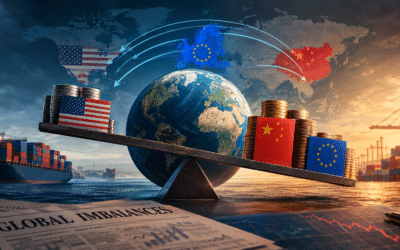
Former United States President Donald Trump is scheduled to meet with Chinese President Xi Jinping this week, marking their seventh face-to-face encounter and the first visit by a US leader to China since 2017. The three-day summit, commencing on Wednesday, is anticipated to address critical issues, including the US-Israel war on Iran, trade imbalances, and the status of Taiwan.
📌 China set to host US President Donald Trump for 1st visit by a sitting American president in nearly 9 years
◼️ Conflict in Middle East, Taiwan, trade, tariffs and high tech remain high on agenda when Trump meets Chinese President Xi Jinping
◼️ Xi and Trump are expected to… pic.twitter.com/qa85fJZ2PY
— Anadolu English (@anadoluagency) May 13, 2026
A History of High-Stakes Diplomacy
Trump and Xi’s relationship began in April 2017 at Trump’s Mar-a-Lago resort in Palm Beach, Florida. Despite Trump’s earlier criticism of China’s trade practices and his controversial phone call with the Taiwanese President, the meeting appeared to foster a personal rapport. However, the summit was overshadowed by Trump’s decision to launch airstrikes on Syria during Xi’s visit.
Subsequent meetings at G20 summits in Hamburg (July 2017) and Buenos Aires (December 2018), as well as in Beijing (November 2017) and Osaka (June 2019), saw the leaders grapple with North Korea’s nuclear ambitions, trade disputes, and intellectual property theft. While some meetings resulted in temporary de-escalation and agreements, such as the “phase one” trade deal, tensions often resurfaced.
Their most recent meeting in October 2025, on the sidelines of the APEC summit in Busan, South Korea, led to a one-year pause in a spiraling tariff war. Both countries eased some restrictions, signaling a potential desire for reconciliation.
Analysis: A Complex Relationship with Fluctuating Dynamics
The Trump-Xi relationship has been characterized by both cooperation and conflict. Initial meetings suggested a potential for strong personal ties, but fundamental disagreements over trade, security, and human rights have consistently strained relations. The imposition of tariffs, restrictions on technology exports, and disputes over intellectual property have punctuated their interactions.
Despite the challenges, the resumption of high-level talks suggests a recognition of the need for continued dialogue. Both nations face pressing global challenges, including economic stability, regional security, and climate change, that may require cooperation. This meeting is very important due to current US-Israel war on Iran which will affect the trade.