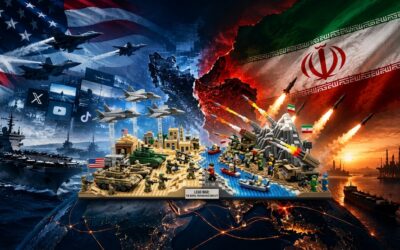
The United Nations Security Council convened on Tuesday for a high-stakes briefing on the Iranian nuclear programme, marking the first formal session since the controversial reinstatement of international sanctions through the “snapback” mechanism.
The meeting highlighted a profound diplomatic rift among world powers regarding the legitimacy of the current sanctions regime and the future of the 2015 Joint Comprehensive Plan of Action (JCPOA).
🚨🇨🇳🇷🇺🇺🇳 BREAKING: Russia and China came out strongly in defense of Iran at the UN Security Council against Western powers
Both countries said the Iran nuclear deal has ended and declared that the UN should stop holding meetings on the issue.pic.twitter.com/g2VNiBQqyF
— Jackson Hinkle 🇺🇸 (@jacksonhinklle) December 24, 2025
Diplomatic Deadlock and Escalating Concerns
Rosemary DiCarlo, UN Under-Secretary-General for Political and Peacebuilding Affairs, informed the Council that despite “intensified diplomatic efforts during the second half of 2025,” no agreement has been reached on a path forward.
Key points from the briefing included:
-
Verification Gap: The International Atomic Energy Agency (IAEA) reported on November 12 that it has “no information” on the current status of Iran’s enriched uranium stockpiles, citing a loss of continuity of knowledge following the suspension of monitoring agreements.
-
Breach of Limits: The IAEA confirmed that Iran has significantly exceeded nuclear limits stipulated in the 2015 deal, with some estimates suggesting a stockpile sufficient for multiple nuclear devices if enriched to military levels.
-
The Best Option: Ms. DiCarlo reiterated that a negotiated settlement remains the only viable path to ensuring a peaceful nuclear programme while providing necessary sanctions relief for Iran.
The “Snapback” Dispute
The session was defined by a sharp legal disagreement over the “Snapback Mechanism” triggered by France, Germany, and the United Kingdom (the E3) in late August 2024.
-
The E3 Position: The European powers, supported by the United States, maintain that Iran’s “significant non-performance” of its commitments necessitated the return of UN sanctions, which were officially re-applied on September 27, 2025.
-
The Counter-Argument: Russia, China, and Iran contend that the snapback is “procedurally and legally flawed.” They argue that under Resolution 2231, the Council’s mandate over the Iranian nuclear file expired on October 18, 2025, rendering the current meeting and the reinstated sanctions null and void.
A Fractured Council
The debate underscores a broader shift in the geopolitical landscape:
-
Legitimacy Crisis: Russia’s envoy accused the UN Secretariat of “bias,” while Iran’s representative insisted the Security Council no longer has a mandate to discuss the issue.
-
Sanctions Restoration: The 1737 Sanctions Committee and its corresponding list of restricted entities have been reactivated, a move the West views as a necessary deterrent and the East views as a provocation.
-
Humanitarian & Economic Stakes: While the West signals that sanctions relief remains possible through “concrete and verifiable steps,” Tehran maintains that it will not submit to “intimidation and political pressure.”
You May Like To Read: The “Accidental” Crash and the Geopolitical Chessboard: Was General Al-Haddad’s Death a Game-Changer for Libya’s Unification?
Conclusion
The United Nations remains committed to a diplomatic solution, but the reactivation of the sanctions architecture has created a new, more volatile reality for international non-proliferation efforts. As Ms. DiCarlo emphasized, “The snapback of sanctions must not be the end of diplomacy—quite the opposite.”
Check out our latest video: