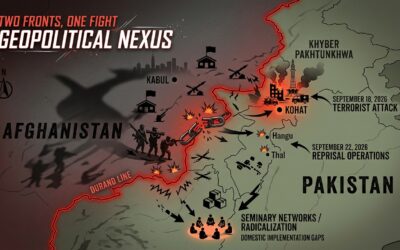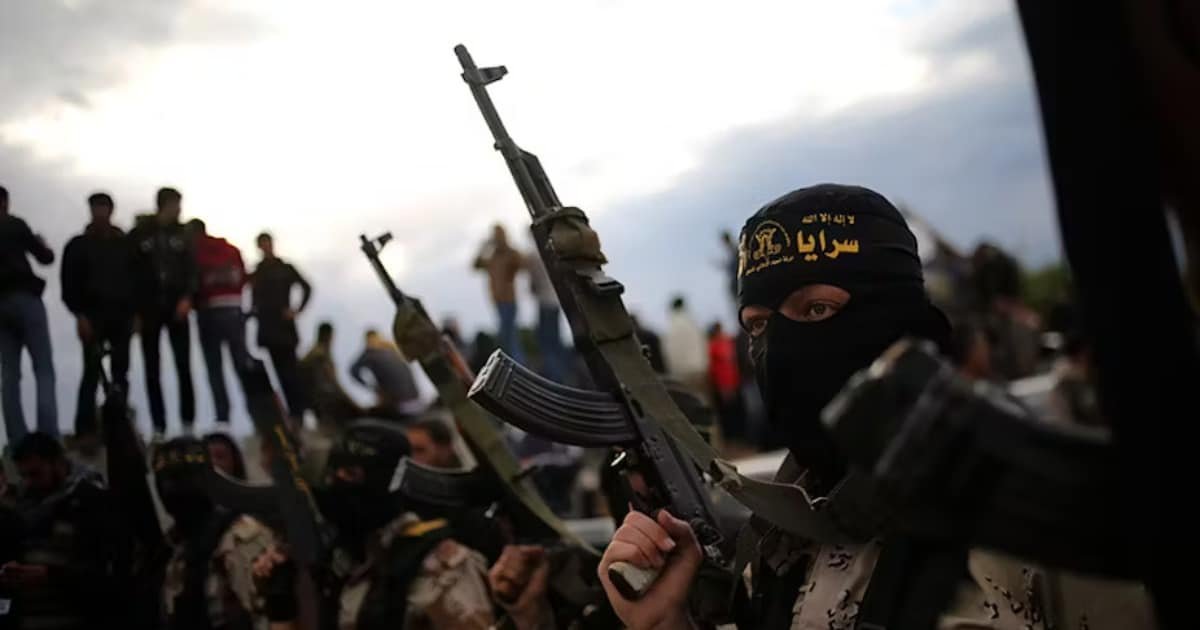





The lexicon of militancy in Pakistan has long been shaped by theological constructs, none more consequential than “takfir” — the act of declaring a fellow Muslim an apostate. Rooted in the early schismatic history of Islam, particularly the Khawarij rebellion, this doctrine has resurfaced with new intensity in Pakistan’s extremist landscape. Groups like the so-called Fitna-al-Khawarij (FAK) and the lslamic State Khorasan Province (ISKP) have operationalized takfir as both a theological weapon and a recruitment tool, justifying violence against Muslims deemed insufficiently aligned with their rigid worldview.
This “takfiri contagion” poses not just a physical security threat but also a profound socio-religious challenge. Its spread corrodes communal bonds, undermines religious pluralism within Islam, and destabilizes efforts to craft a unified national counter-extremism narrative.
Historical Roots of Takfir
The theological roots of takfir trace back to the Khawarij, a sect that emerged during the first Islamic civil wars (fitnas). They were infamous for declaring even the most revered Muslims as unbelievers if perceived to deviate from their absolutist interpretation. Over centuries, mainstream Sunni and Shia scholars consistently rejected takfiri logic as a distortion of Islamic principles. Yet, the idea has periodically reappeared, particularly in times of political crisis.
In modern times, thinkers like Sayyid Qutb and extremist offshoots of Salafi-jihadist movements globalized the takfiri doctrine, fusing it with revolutionary zeal. Pakistan’s own brush with takfiri militancy intensified after the Afghan jihad of the 1980s, when imported radical ideologies began mingling with sectarian fault lines at home.
You May Like To Read: News Deserts and Disinformation Oases: How the Decline of Local Journalism Fuels Fake News in Pakistan’s Regional Context
The Pakistani Context: From Sectarianism to Jihadism
In Pakistan, takfir initially seeped through sectarian conflicts, where Sunni-Deobandi militant groups like Sipah-e-Sahaba Pakistan (SSP) and its offshoot Lashkar-e-Jhangvi (LeJ) declared Shia Muslims as kafir. This excommunication provided theological cover for relentless sectarian killings in the 1990s and beyond.
The emergence of the FAK (a.k.a. TTP) marked a mutation of this doctrine: takfir was no longer directed solely at sectarian rivals but extended to state institutions, security forces, political leaders, and even ordinary citizens accused of collaborating with the government or “Western” systems. The FAK’s ideological literature frames the Pakistani state itself as apostate, thereby making jihad against it not only permissible but obligatory.
ISKP has taken this logic further, branding both Sunni and Shia Muslims who reject its authority as apostates. Its propaganda frequently labels the Taliban (in Afghanistan) as “false Muslims,” echoing the Khawarij’s historical zealotry. This theological elasticity enables these groups to expand their targets without restraint.
Mechanisms of Justification
Extremist groups justify takfir through selective readings of classical jurisprudence. By invoking Qur’anic verses about hypocrisy and disbelief — often stripped from historical context — they construct a binary worldview: believer versus apostate.
For example, supporting democratic elections, working within secular legal frameworks, or cooperating with “un-Islamic” states is construed as apostasy. Religious rituals or piety no longer shield an individual if their political choices conflict with the extremist agenda. In this sense, takfir is not only theological but also profoundly political, weaponized to consolidate control and enforce conformity.
The media arms of FAK and ISKP amplify these narratives through pamphlets, videos, and online forums, where clerics aligned with their cause issue pseudo-fatwas endorsing violence against fellow Muslims. This creates a self-reinforcing echo chamber where excommunication becomes the norm, not the exception.
Socio-Religious Impact
The most corrosive impact of takfiri narratives is the fragmentation of Pakistan’s Muslim society. By branding vast swathes of the population as apostates, extremists erode trust within communities, weaken inter-sect harmony, and delegitimize traditional ulema who reject such excommunication.
Moreover, ordinary Muslims find themselves trapped in a climate of fear: association with state institutions, support for education, or even participating in cultural practices can become grounds for being declared wajib-ul-qatl (liable to be killed). This creates a culture of suspicion and silence, deterring grassroots resistance to extremist propaganda.
At the theological level, takfiri ideology undermines Pakistan’s historically diverse Islamic traditions — Barelvi, Deobandi, Shia, Sufi — by privileging one radicalized strand as “true Islam.” This homogenizing impulse not only fuels violence but also erases centuries of pluralism.
Counter-Narratives: Scholars Versus Extremists
Pakistani Islamic scholars, supported by institutions like the Council of Islamic Ideology (CII) and independent networks of ulema, have increasingly framed groups like FAK and ISKP as modern Khawarij. The strategy is to delegitimize takfiri discourse by drawing on prophetic traditions condemning those who unjustly excommunicate Muslims.
Initiatives like Paigham-e-Pakistan — a state-backed fatwa endorsed by over 1,800 scholars — explicitly denounce takfir and suicide bombings as un-Islamic. While these counter-narratives are critical, their effectiveness is often blunted by two challenges:
- Credibility gaps — extremists dismiss state-linked scholars as “puppets.”
- Limited outreach — radical groups often outpace official messaging in social media spaces where youth are most vulnerable.
Thus, while theological counter-offensives exist, their penetration among at-risk populations remains uneven.
Policy and Strategic Implications
Addressing the takfiri contagion requires more than issuing fatwas. It demands a whole-of-society approach, where state institutions, religious scholars, media, and civil society collaborate to:
- Amplify authentic Islamic teachings against excommunication.
- Invest in grassroots religious literacy programs.
- Regulate extremist online content without stifling legitimate discourse.
- Strengthen community resilience through local clerics trusted by populations vulnerable to radicalization.
At the foreign policy level, Pakistan can also position itself as a leader in the global Muslim community by spearheading initiatives against the misuse of takfir, much as it has championed campaigns against Islamophobia.
The takfiri ideology represents more than an extremist talking point; it is a corrosive theological virus with deep historical roots and devastating modern consequences. By declaring Muslims outside their fold, militant groups like FAK and ISKP create perpetual enemies, ensuring their militancy is never without targets.
Countering this contagion is therefore not just a theological battle but a struggle for Pakistan’s social fabric and security. If unchecked, takfir threatens to hollow out the pluralistic traditions of Islam in South Asia. If confronted with conviction, however, it may yet be contained — delegitimized by the very faith it seeks to distort.
You May Like To Read: The Kulbhushan Jadhav Echo: Enduring Relevance of Espionage Cases in Indian Proxy Warfare