

Ukrainian President Volodymyr Zelensky arrived in Berlin on Sunday for two days of crisis diplomacy, initiating crucial talks with US presidential envoys aimed at securing a resolution to the nearly four-year conflict with Russia.
The meeting underscores mounting pressure from the US administration, led by President Donald Trump, to bring the war to an end, despite lingering disputes over territorial concessions and future security guarantees for Kyiv.
READOUT FROM U.S.-UKRAINE TALKS IN BERLIN, GERMANY:
The meeting in Berlin between President Zelenskyy, Special Envoy Witkoff, Jared Kushner, and delegations from the United States and Ukraine lasted over five hours. Representatives held in-depth discussions regarding the… pic.twitter.com/G7breh5Gab
— Special Envoy Steve Witkoff (@SEPeaceMissions) December 14, 2025
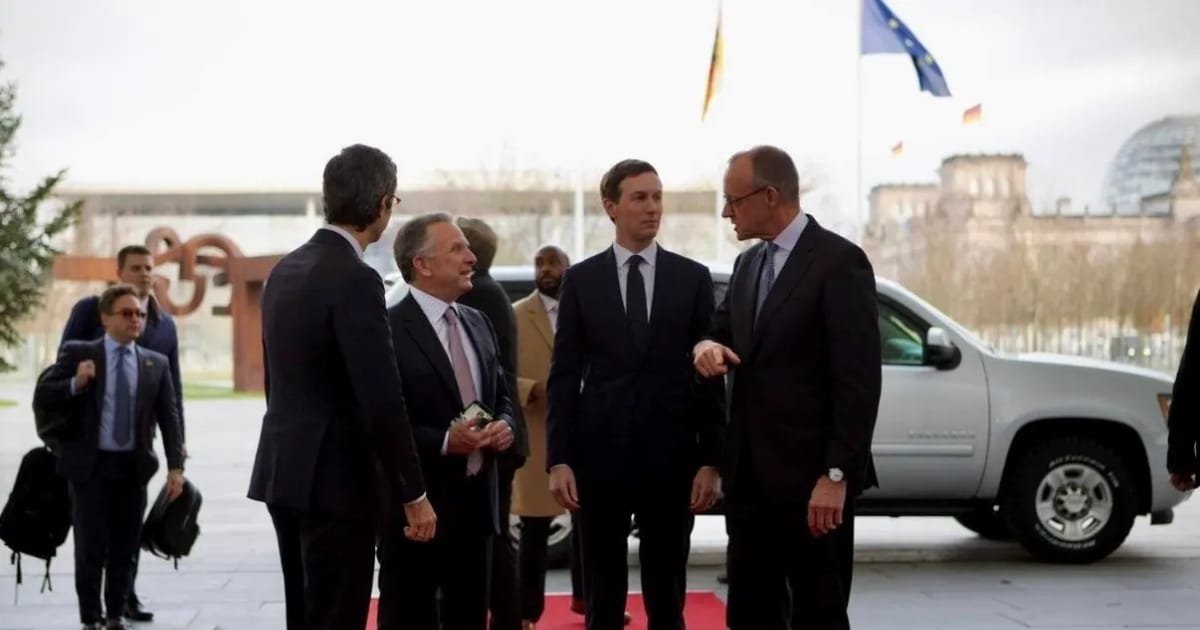
German Chancellor Friedrich Merz hosted the high-level meeting, offering a “warm welcome” to President Zelensky and the US delegation, which included President Trump’s special envoy, Steve Witkoff, and the US president’s son-in-law, Jared Kushner. The talks also featured NATO’s top commander in Europe, US General Alexus Grynkewich.
Writing on X, Chancellor Merz emphasized the shared objective: “We want a lasting peace in Ukraine. Difficult questions lie ahead of us, but we are determined to move forward. Ukrainian interests are also European interests.”
Push for Front-Line Freeze
Prior to the summit, President Zelensky signaled readiness for dialogue but stressed Ukraine’s preferred outcome: freezing the front line in its current position, rather than ceding the entire Donbas region, as demanded by Moscow.
“The fairest possible option is to ‘stay where we are’,” Zelensky told reporters, viewing this as a necessary path to a ceasefire. He acknowledged Russian opposition to this proposal and expressed hope for American support on the issue.
The talks follow the recent disclosure of a Trump administration peace plan that drew criticism for reportedly echoing Moscow’s demands, prompting Kyiv to submit a revised version to Washington. Zelensky confirmed he had not yet received a response to Ukraine’s amendments but was prepared for the dialogue commencing in Berlin.
Russian Objections and Buffer Zone Proposals
Meanwhile, in Russia, Kremlin aide Yuri Ushakov cast immediate doubt on the diplomatic efforts. “I think the contribution of both Ukrainians and Europeans to these documents is unlikely to be constructive, that’s the problem,” he stated, adding that Moscow had not seen the latest documents but anticipated “very strong objections” to any relevant amendments.
Last week, Zelensky revealed that the US had proposed a specific measure for the eastern Donetsk region: only Ukraine, not Russia, would withdraw its troops, allowing for a demilitarized “free economic zone” to be established as a buffer.
European and Ukrainian officials are concurrently seeking security guarantees from the United States before any negotiations regarding territorial concessions can proceed.
You May Like To Read: John Cena takes Final Bow: WWE Legend Retires from Ring after 24-Year Career
The diplomatic push in Berlin will continue on Monday, with Chancellor Merz hosting Zelensky at a German-Ukrainian business conference, followed by a dinner attended by European heads of state and government and the leaders of NATO and the EU.