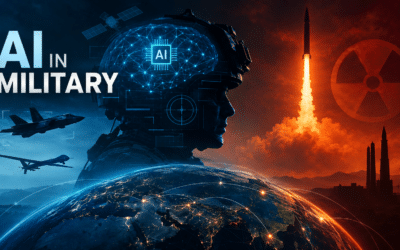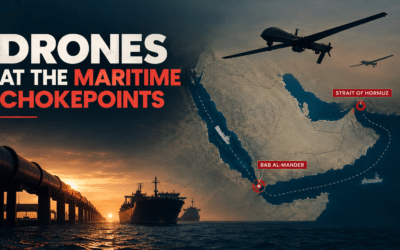





In recent years, artificial intelligence (AI) has moved from civilian applications into the most sensitive domain of all—warfare. From autonomous drones to predictive battlefield analytics, militaries are increasingly integrating algorithms into decision-making. The question is no longer whether AI will be used in conflict, but rather how far command authority and judgment can be delegated to machines. Are algorithms quietly becoming the new generals?
The March of Autonomous Warfare
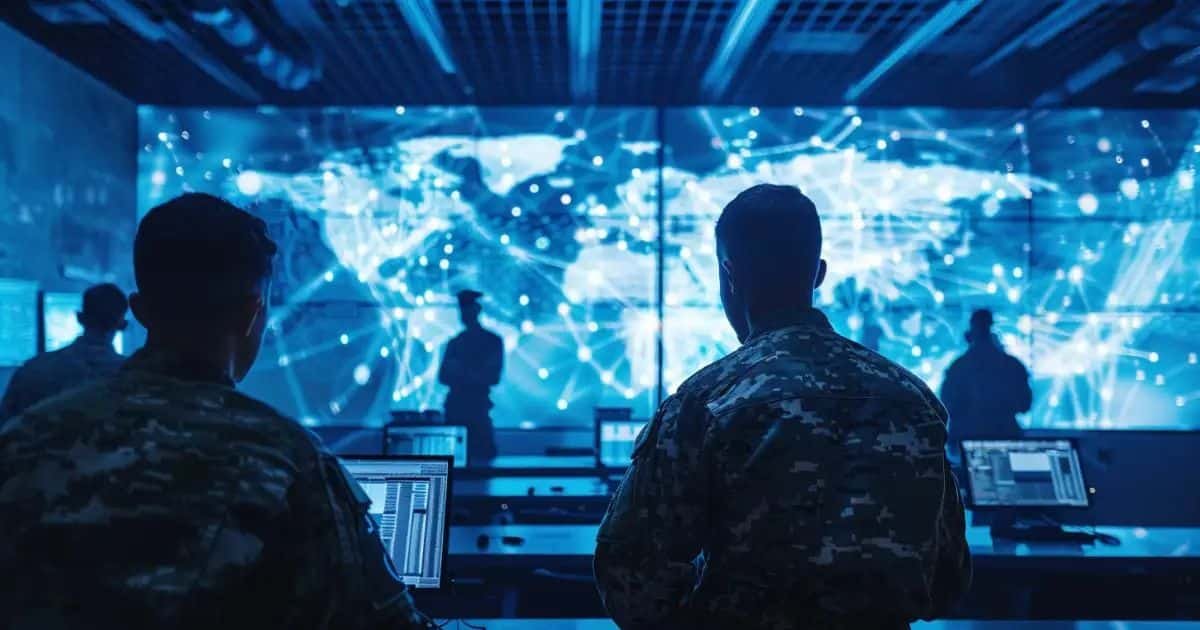
AI’s military applications now span surveillance, logistics, targeting, and even operational planning. The United States has poured billions into initiatives like the Joint All-Domain Command and Control (JADC2) system, designed to link sensors, shooters, and commanders across domains through AI-driven coordination. China’s military doctrine, meanwhile, speaks of “intelligentized warfare” where AI-enabled systems dominate future battlespaces. Russia, Israel, Turkey, and South Korea are also investing heavily in autonomous weapons and robotic combat systems.
What makes this transformation distinct from earlier technological leaps—such as nuclear weapons or precision-guided missiles—is decision autonomy. Drones no longer just follow human commands; in some cases, they are able to identify, track, and strike without direct oversight. The UN Group of Governmental Experts has repeatedly raised concerns over the emergence of so-called “killer robots.” Yet progress on regulating these technologies remains stalled.
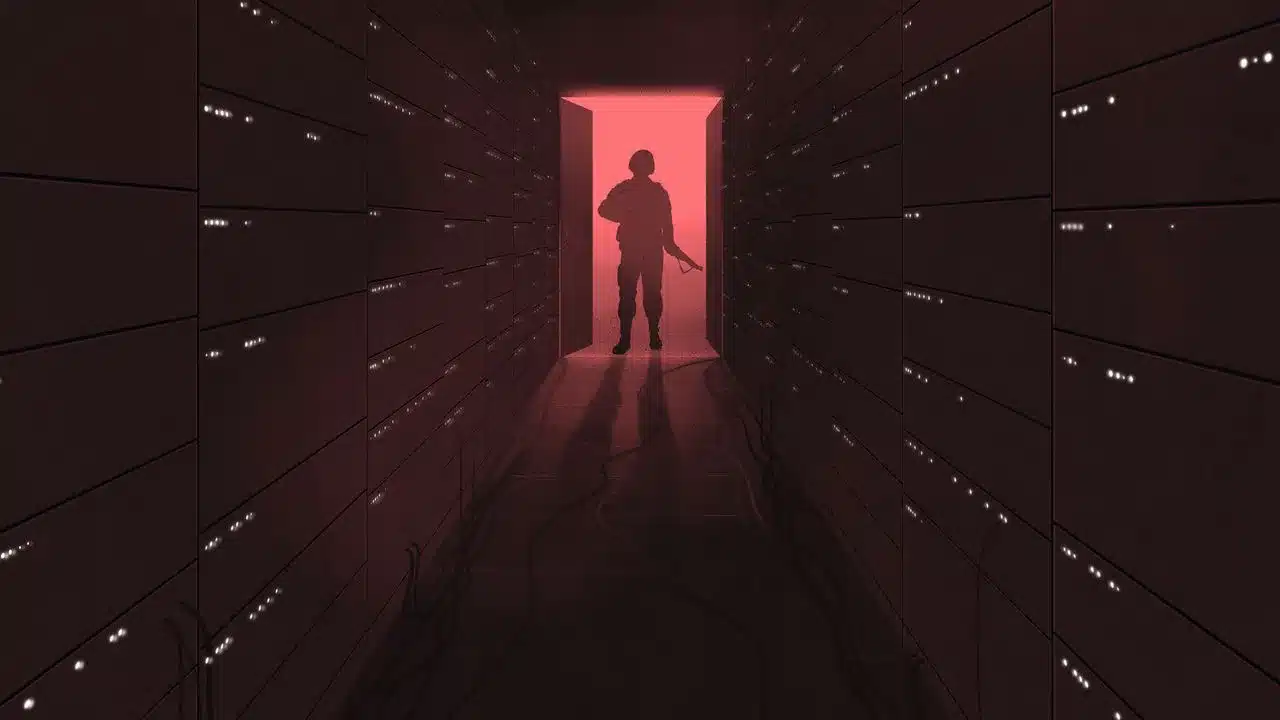
The Algorithm as Commander
At the heart of this shift lies a provocative possibility: algorithms as decision-makers. Consider AI systems capable of recommending strike options within seconds, processing satellite feeds, cyber intelligence, and battlefield telemetry faster than any human could. In high-speed environments—such as hypersonic missile interception or drone swarms—humans may simply not be able to react quickly enough.
Militaries argue that AI can reduce errors, minimize collateral damage, and even save lives by replacing fallible human judgment with data-driven efficiency. But critics counter that war cannot be reduced to computational optimization. Judgment about proportionality, discrimination between combatants and civilians, and strategic escalation are fundamentally political and moral—not algorithmic.
A chilling scenario is one where an AI misclassifies civilian vehicles as hostile assets or interprets electronic interference as an imminent threat, triggering retaliation. Unlike human commanders, algorithms lack contextual reasoning, empathy, or accountability. In essence, they make war faster but not necessarily safer.
Accountability in the Age of Autonomy
Perhaps the most troubling question is: who is responsible when an autonomous system commits an atrocity? A drone strike conducted by an algorithm cannot be court-martialed. Engineers may claim they simply built the system, while commanders argue they did not directly authorize the action. This creates a “responsibility gap” that could undermine the laws of armed conflict.
International humanitarian law (IHL) requires distinction, proportionality, and accountability. But if AI-driven systems begin making lethal decisions, the legal infrastructure for accountability risks collapsing. Some scholars warn of a “moral outsourcing” of war, where states shift blame from human decision-makers to algorithms.
You May Like To Read: Ukraine War’s Ripple Effect: How Energy Security Dilemmas Shape Pakistan’s Imports and Alliances
The Geopolitical Dimension
The AI arms race is not just about military advantage—it is also about global norms. The United States and its allies frame AI as a tool for maintaining deterrence and stability. China positions AI as central to national rejuvenation and military modernization. Russia views it as a force multiplier to offset conventional disadvantages. Meanwhile, middle powers like India, Israel, and Turkey see AI as a way to leapfrog traditional military hierarchies.
Calls for a global treaty banning lethal autonomous weapons—akin to chemical weapons prohibitions—have met resistance. Washington and Moscow prefer “responsible use” frameworks rather than outright bans, while Beijing’s position remains deliberately ambiguous. This fragmented landscape risks a technological Wild West, where rival states race ahead with little oversight.
Beyond the Battlefield: Hybrid Uses of AI
AI’s role in warfare is not limited to drones or missiles. It extends into cyber operations, psychological warfare, and logistics optimization. Algorithms already shape influence campaigns, social media manipulation, and disinformation, blurring the line between peace and war. Predictive analytics can anticipate insurgent activity, while AI-enabled logistics can determine how and when supplies reach the frontlines.
This hybridization underscores a deeper reality: AI is not just a weapon, but an infrastructure of power. Whoever controls data, compute, and algorithms controls not only military advantage but also narratives of legitimacy.
You May Like To Read: French PM Sébastien Lecornu Survives Two No-Confidence Votes Amid Deep Political Divisions
The Road Ahead: Human-in-the-Loop or Human-on-the-Loop?
The policy debate increasingly revolves around the principle of “meaningful human control.” Should humans always authorize lethal action, or is it sufficient if they supervise the system? Some militaries envision a “human-on-the-loop” model where humans monitor AI but rarely intervene. Critics argue this is functionally a fig leaf, as machines will act faster than humans can override.
Ultimately, the issue is not technological inevitability but political choice. States must decide how much authority to cede to algorithms. The danger lies in drifting into a world where humans become rubber stamps for machine-made war.
The rise of AI in warfare signals a profound shift in how conflicts will be fought, managed, and justified. While algorithms may never wear uniforms or medals, they are increasingly embedded in the chain of command. The question is not whether AI can become a general, but whether humanity is willing to accept the risks of letting machines decide matters of life and death.
If war is, as Clausewitz described, a continuation of politics by other means, the insertion of algorithms into command structures raises a troubling question: are we outsourcing politics itself to machines?