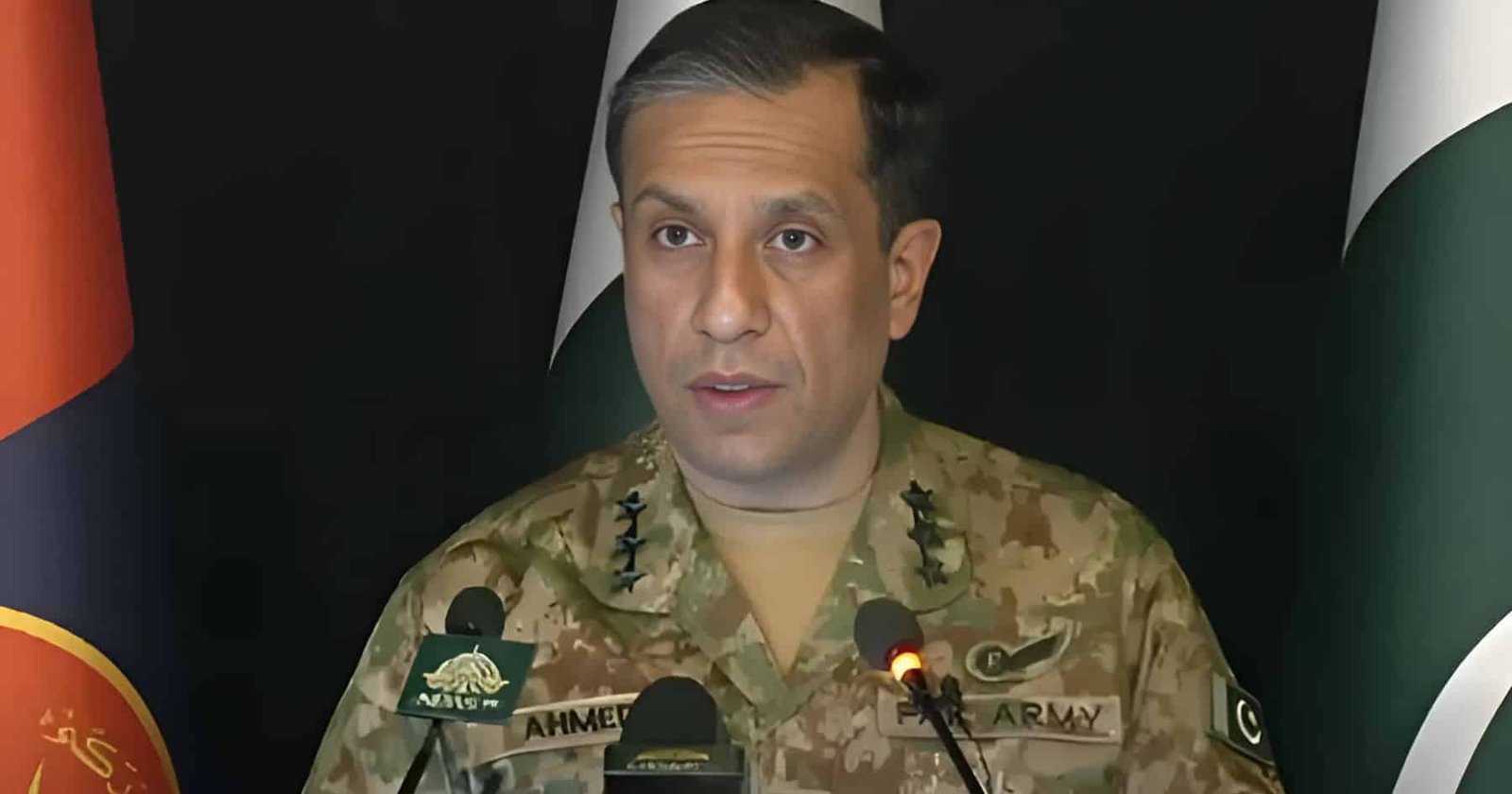


Director General Inter-Services Public Relations (ISPR) Lt General Ahmed Sharif Chaudhry, in a wide-ranging interview with international media, has accused India of being directly involved in terrorism and serious crimes inside Pakistan, citing credible evidence of serving Indian army officers and illegal Afghan nationals’ involvement. The DG ISPR also discussed Pakistan’s counter-terrorism efforts, its complex relationships with the US and China, and the ongoing security challenges posed by abandoned US military equipment in Afghanistan.
India’s Role in Terrorism and Regional Instability
Lt General Chaudhry stated that Pakistan possesses “credible evidence” of Indian state-sponsored terrorism. He alleged that India is using Afghanistan as a base for its operations and that terrorist outfits like the TTP and BLA are their “main tools.” The DG ISPR highlighted that violent incidents within India itself are a result of its extremist policies, and New Delhi attempts to portray these internal issues as external problems.
“Authentic evidence has emerged of serving Indian army officers involved in terrorist acts in Pakistan,” he said, noting that this proof has been presented to the international community multiple times. He called on the global community to help resolve the Kashmir dispute and warned that Indian state institutions are increasingly influenced by extremist ideologies.
Pakistan’s Counter-Terrorism Efforts and Afghan Refugees
Lt General Chaudhry reaffirmed Pakistan’s firm stance against all non-state actors, stating, “There is no place in Pakistan for any militia or armed groups.” He stressed that no individual or group, other than the state, can declare jihad.
Addressing the issue of Afghan refugees, the DG ISPR noted that Pakistan has hosted millions for four decades, repeatedly extending their voluntary return deadline on humanitarian grounds. However, he stated that the original reasons for asylum, such as civil war and foreign interference, “no longer exist,” and he highlighted the concern that US-made weapons left behind after the withdrawal from Afghanistan are now being used in attacks on Pakistani soil. He cited the retrieval of US-made weapons from terrorists involved in the Mianwali airbase attack as evidence and confirmed that Pakistan shares this data with the US. He also pointed out that several militants of “Fitna-e-Hindustan” killed in Balochistan were listed as so-called missing persons, and that half of the missing persons in Balochistan were part of the BLA.
Navigating Strategic Relationships: US and China
The DG ISPR reiterated Pakistan’s commitment to a “longstanding” relationship with the United States, clarifying that “there is no either-or in our relations with other countries.” He appreciated the role of the US and President Donald Trump in mediating a ceasefire between India and Pakistan in May following a four-day escalation.
“Over a period of time, we have been able to enhance and amplify on our convergences (with the US) and deftly managed the divergences,” he said, adding that Pakistan views its relationship with the US as “very important.” At the same time, he affirmed that Pakistan has “very constructive and strategic relationships with China and other countries.” He expressed satisfaction with the US’s recent declaration of the Majeed Brigade as a terrorist outfit, calling it a positive step for counter-terrorism collaboration.
The DG ISPR’s statements reinforce Pakistan’s determined position on national security and its complex, multi-faceted foreign policy in a volatile regional and international landscape.
You May Like To Read:
- Hydro-Diplomacy on the Brink: Managing Transboundary River Disputes in an Era of Water Scarcity
- The Multipolar Pivot: Pakistan’s Strategic Re-orientation Amidst US-China Rivalry, and Rise of Middle Powers
- Climate Litigation and Environmental Justice: The Emerging Role of Courts in Addressing Pakistan’s Ecological Crisis
- Global Health Challenges: Pakistan’s Contribution to Disease Control
- U.S. Imposes New Sanctions on Entities Trading in Iranian Oil