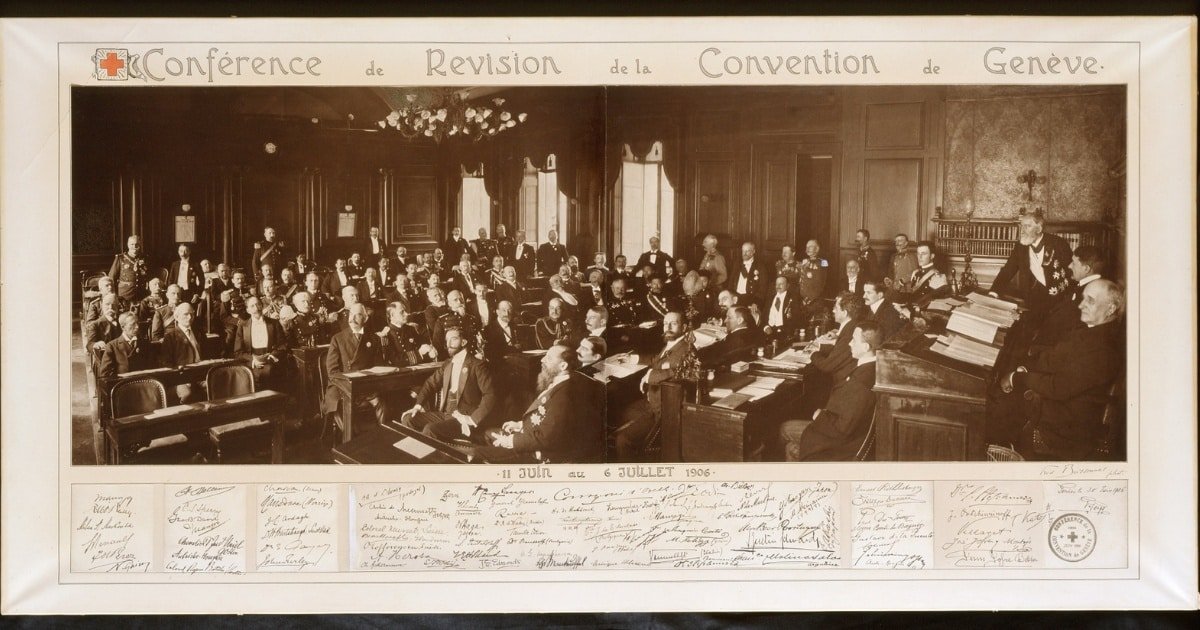





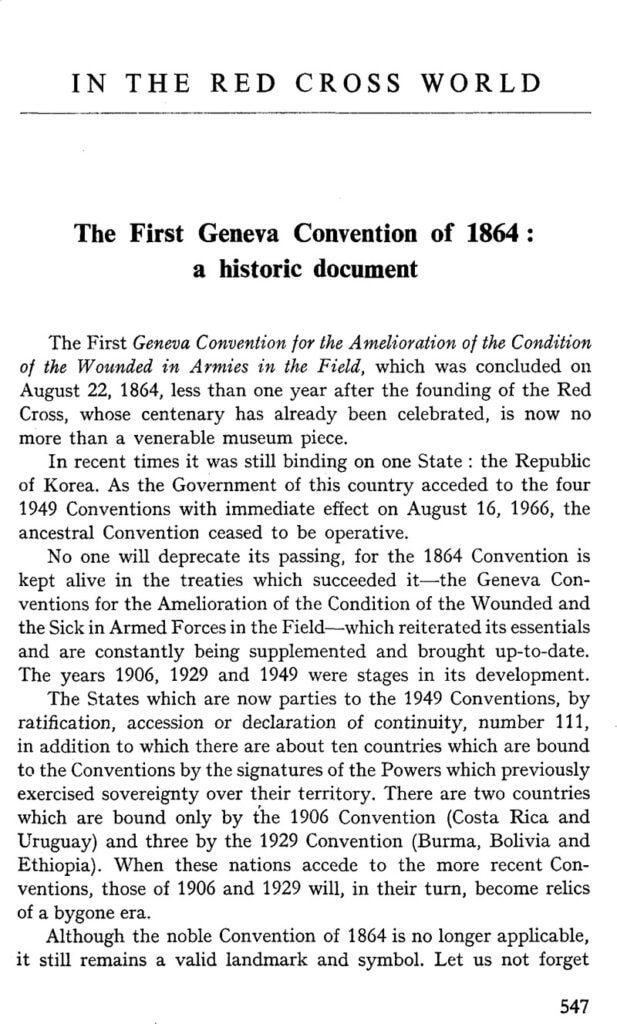
The modern international humanitarian law had its origin on August 22, 1864, when the First Geneva Convention was signed in Geneva. Before this treaty, Europe witnessed wars that abandoned thousands of injured soldiers without any medical aid or refuge; these soldiers sometimes died in deplorable conditions on the battlefield. Influenced by the experiences of Henry Dunant, who observed the carnage of the Battle of Solferino (1859), the International Committee of the Red Cross (ICRC) was established to motivate governments to agree on the widespread adoption of common rules of war. The 1864 Geneva Convention also became the first agreement ever made to protect wounded soldiers and medical workers, and it did not matter which side they fought on. This was the birthplace of subsequent Geneva Conventions and can be considered the milestone of defending human rights in times of armed conflict.
You May Like To Read: Hamas Agrees to New Gaza Ceasefire Proposal Amid Mounting Military Pressure and Humanitarian Crisis
Historical Background
In the middle of the 19th century in Europe, there were frequent military conflicts; on the battlefield, the wounded were very often left without assistance, and the medical staff had no protection against attacks. This was evident following the Battle of Solferino in 1859, in which approximately 40,000 soldiers were killed and injured within a day. The inability to help the suffering motivated a Swiss-born businessman, Henry Dunant, who saw the horrors and later in life wrote a book, A Memory of Solferino. What he did created the notion that countries should come up with policies that would safeguard both the injured and the people taking care of them.
To counter what Dunant was doing, a body of Geneva citizens formed the International Committee of Relief to the Wounded, which was later merged with the International Committee of the Red Cross (ICRC). They aimed to induce governments to become signatories to an international convention so as to render the humane treatment of the wounded combatants a responsibility during conflicts. These initiatives paved the way to the first Geneva Convention of 1864, which was the first binding convention in history to protect the victims of war and those giving medical aid.
Ratification of the First Geneva Convention
The First Geneva Convention was signed on August 22, 1864, by the representatives of twelve European countries in Geneva, Switzerland. The treaty was formally called the Convention in Favour of the Amelioration of the Condition of the Wounded in Armies in the Field, and it laid down norms to guarantee that ill soldiers as well as medical personnel would be respected and shielded when fighting battles. The right of humanitarian principles to be part of international law was achieved by this convention, as the convention was signed by very few countries at the initial stage, such as Switzerland, France, and Prussia. It has also proposed the Red Cross symbol as a universal badge of neutrality and safeguard.
Provisions of the Convention
The first Geneva Convention of 1864 had only ten articles; however, the articles introduced very radical concepts to the laws of war. The main idea was that wounded soldiers, irrespective of which side they were on, had to be respected and taken care of. This had the implication that medical assistance could never be denied to enemy troops because they were enemies.
The other significant regulation was medical staff and facilities neutrality. Doctors, nurses, ambulances, and hospitals were accorded special protection and were not to be attacked or captured, or held accountable while giving medical supplies. This was a great twist since medical labour was accorded the same status as other soldiers in a war.
The convention also began a protective symbol, the Red Cross on a white background, so that armies could identify the hospitals, ambulances, and medics on the battlefield. This logo has assumed a worldwide symbol of neutrality, and it can still be observed by the International Red Cross and Red Crescent Movement.
In the treaty, emphasis was put on the fact that such humanitarian provisions were binding on states that had signed the treaty, and hence war was to be governed by not only power and strategy, but also moral and legal obligation.
Significance and Lasting Impact of Convention
The First Geneva Convention is one of the turning points in history since it became the first written agreement in history that made respecting humanitarian principles over and above military interests. It demonstrated that in times of war, people must be limited in committing some acts of violence and have some responsibilities regarding human dignity. The convention would form the basis of subsequent agreements, most notably the revised Geneva Conventions of 1906 and 1929, but significantly, the 1949 Geneva Conventions that extended to the protection of the prisoners of war and civilians as well. It also spawned the Red Cross Movement, which turned out to be a significant humanitarian force throughout the world.
The International humanitarian law (IHL) in world politics began immediately after the signing of the 1864 treaty and dictated how wars were waged and how the international community would respond to conflicts. The notion that all nations are responsible for how the wounded and civilian population is treated turned into one of the primary conditions of international relations. Although violations of the Geneva Conventions are common, it is still a global standard that is adhered to by almost all countries in the world. Such principles apply to today when international societies respond to wars in such destinations as Ukraine, Syria, and Gaza, which shows that the weight of August 22, 1864, endures in affecting political life and humanitarian activities in the contemporary world.
You May Like To Read: Gulf Economies’ Diversification (Vision 2030): What it Means for Pakistani Labour Exports