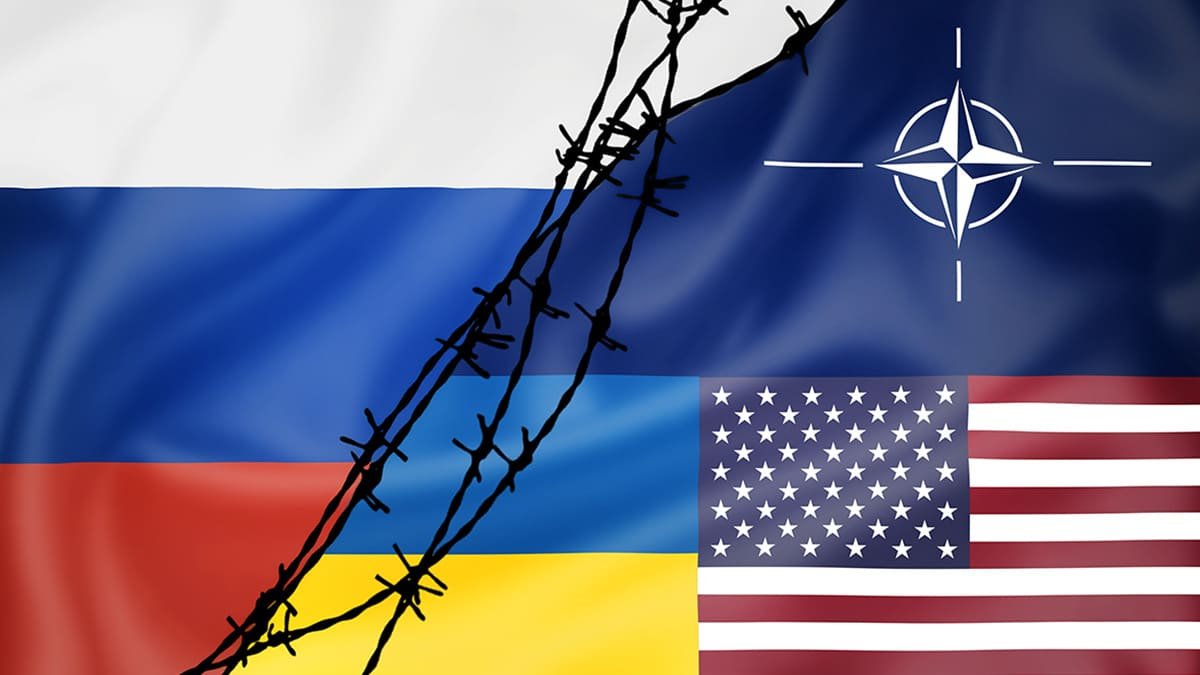



The Context: Trump’s Strategic Shift
On July 14, 2025, former U.S. President Donald Trump launched a dramatic reversal in his Ukraine stance by announcing that the U.S. would provide Patriot air-defense systems and potentially offensive weapons to Ukraine, though funded by NATO allies.
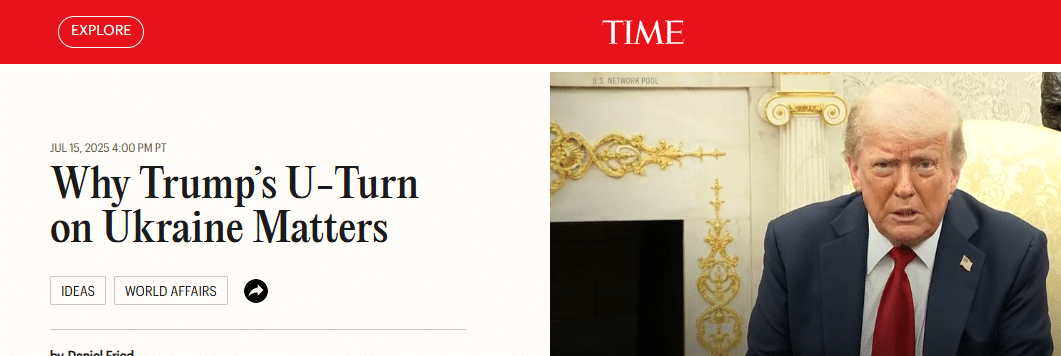
Source: Time
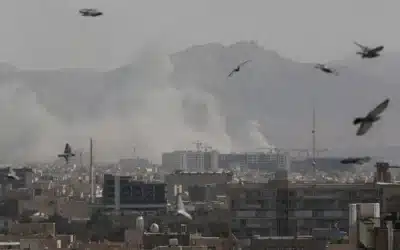
Speaking alongside NATO Secretary-General Mark Rutte, Trump demanded a cease-fire within 50 days, threatening to impose sweeping 100% tariffs on Russia and countries trading with it, such as China and India. He made clear his growing frustration with President Putin, noting that despite cordial phone conversations, Russia continued bombing Ukrainian cities, prompting him to declare: “I am very disappointed with President Putin.” This marks Trump’s sharpest pivot yet: from earlier reluctance to deepen U.S. involvement in Ukraine to a renewed engagement through NATO, leveraging American defense production and diplomatic pressure to counterbalance Russian aggression.
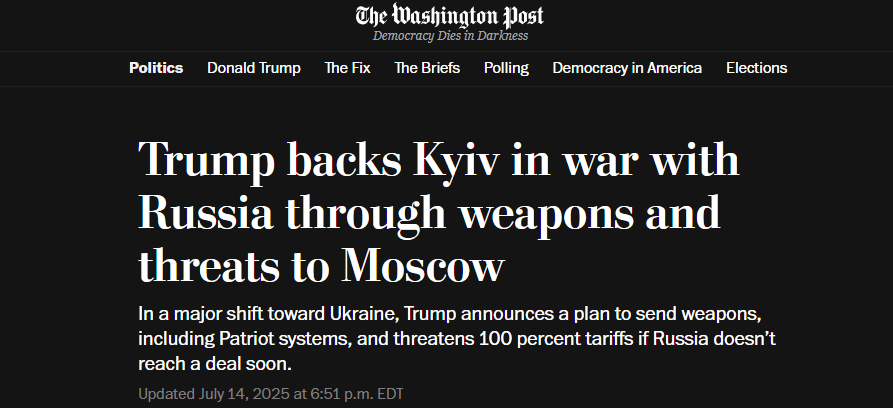
Source: Washington Post
Whereas, Russia has outrightly rejected the American demands for deescalation and ceasefire in fifty days, deeming it unacceptable.
Scope of Aid: Patriot Systems and Beyond
Trump’s announcement includes supplying Patriot missile-defense batteries, with European allies and Canada fronting the cost. Germany, Norway, Sweden, Finland, Denmark, Netherlands, and other partners have committed to deliver systems to Ukraine through U.S.-made purchases. Additional proposals include long-range cruise missiles such as JASSM, capable of striking deep targets in Russian territory including Moscow, marking a potentially decisive escalation in Ukraine’s deterrence capacity. This coordinated transatlantic effort signals a shift toward offensive support, driven by impatience with Russia’s refusal to negotiate, and may alter Putin’s cost-benefit analysis in continuing the war.
Kim Jong Un Backs Russia Unconditionally
On the other hand, North Korea’s Kim Jong Un recently pledged unconditional and ongoing support for Russia including arms, ammunition, and personnel assistance. During a July 12 meeting with Russian Foreign Minister Sergey Lavrov in Wonsan, state media reported the DPRK’s readiness to endorse “all measures” taken by Moscow in Ukraine and reaffirmed the deployment of more munitions and troops.
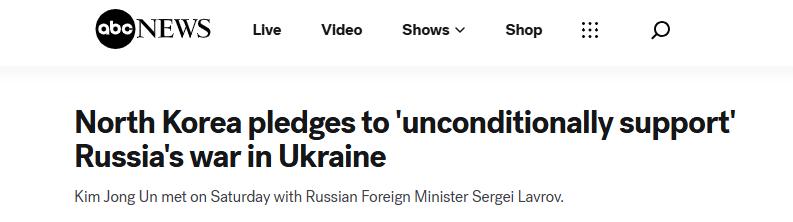
Source: ABC News
Furthermore, South Korean and U.S. intelligence assessments confirm Pyongyang has already supplied containers of shells, rockets, and potentially 10,000+ troops to Russian frontlines.
Strategic Gains and Limits for Ukraine
The U.S. decision to supply advanced weaponry, particularly Patriot missile systems and potentially long-range cruise missiles, significantly enhances Ukraine’s military posture. These systems are not only vital for shielding cities and infrastructure from Russian aerial assaults but also offer a form of deterrence by threatening deeper Russian targets. Beyond the battlefield, Trump’s 50-day ultimatum and promise of sweeping tariffs introduce a new layer of diplomatic pressure on Moscow, aiming to force Putin into negotiations under the looming threat of economic isolation. However, these strategic gains are tempered by the unyielding stance of the Russian leadership. Kremlin officials have dismissed the ultimatum as political posturing, vowing to pursue their objectives regardless of Western threats. Thus, while Ukraine stands to benefit from greater international support and firepower, the durability of those advantages, and whether they translate into meaningful shifts on the ground, ultimately depends on the depth of Russia’s resistance and the resolve of its leadership to absorb growing costs.The Guardian.
The Expanding Global Chessboard: A Renewed U.S.–Russia Confrontation
This latest alignment of forces reflects a deepening resurgence of Cold War-era power blocs, albeit with new players and altered stakes. Trump’s strategic shift not only repositions the U.S. as a more assertive supporter of Ukraine but also rallies NATO allies into a coordinated defense procurement framework. This move counters earlier concerns about fractured transatlantic unity and signals a recalibrated Western approach to deterring Russian aggression, not just through military aid, but through the threat of economic retaliation.
In response, Russia is leaning harder into its relationship with North Korea, transforming a once-symbolic partnership into a tangible supply route for artillery, munitions, and possibly even personnel. North Korea’s pledge of “unconditional” support allows Moscow to circumvent Western arms embargoes and sustain its war effort at a lower cost. This geopolitical polarization, one side dominated by liberal democracies, the other buttressed by authoritarian regimes, underscores a broader struggle for global influence, where Ukraine is both a battlefield and a bellwether.
Paths Forward: Escalation, Diplomacy, or Stalemate?
With new weapons entering the fray and alliances hardening, the Ukraine conflict is poised to evolve along several potential trajectories. The first is an escalation spiral, where increased Western firepower provokes Russia into expanding its military campaign either through more aggressive strikes or by targeting supply chains and neighboring countries sympathetic to Ukraine. This path risks drawing NATO into more direct involvement, intentionally or otherwise.
The second scenario envisions a diplomatic opening, albeit a narrow one. If the threat of U.S. tariffs and global economic pushback begins to materially affect Russia’s economy and if battlefield losses mount. Putin may be compelled to consider a ceasefire or negotiated settlement. Yet, given Moscow’s current rhetoric and strategic stubbornness, this outcome remains unlikely in the short term.
The third and most plausible possibility is a protracted proxy war, in which both sides continue receiving external support, Ukraine from NATO and Russia from North Korea and potentially others like Iran. This would entrench the conflict further, making it less about territorial control and more about endurance, resources, and international positioning. In such a drawn-out contest, the human cost would rise sharply, and any resolution would likely come not from military victory but from exhaustion and strategic recalibration.
Conclusions
Trump’s re-engagement represents a geopolitically significant moment, signaling that the U.S. remains capable of steering both military assistance and economic pressure through NATO. For Ukraine, it offers enhanced defense, deeper diplomatic leverage, and reinforced transatlantic unity. Conversely, Kim Jong Un’s pledge to Russia highlights Moscow’s increasing reliance on non-Western allies to sustain its war effort. This unfolding contest is reflective of a broader struggle: the U.S. and Europe striving to uphold international norms and deter aggression, while Russia, cornered and defiant, builds a new arc of strategic resilience by aligning with isolated states like North Korea. The coming months may determine whether this collision of alliances leads to a negotiated peace or a dangerous spiral into wider confrontation.