




For much of the 20th century, global politics was shaped by an ideological rivalry that seemed absolute. Liberal democracy and market capitalism on one side; authoritarian socialism and planned economies on the other. The Cold War was not only a geopolitical contest but also a battle of grand narratives that promised universal salvation. When the Berlin Wall fell in 1989, the triumph of liberalism appeared complete. Yet three decades later, the world seems neither liberal nor authoritarian in the classical sense. Instead, it appears to be drifting into an ideological vacuum—an age where states experiment with hybrid models, pragmatic governance, and transactional alignments rather than fixed ideological commitments.
From “End of History” to “Return of History”
In his landmark 1989 essay, Francis Fukuyama argued that liberal democracy represented the “end of history”—the final stage of ideological evolution. For a brief moment, the 1990s seemed to confirm his thesis. Liberal institutions expanded, globalization accelerated, and democracy spread to Eastern Europe, Latin America, and parts of Africa.
But this optimism soon gave way to disillusionment. Liberal democracies began to suffer from deep internal crises: rising inequality, populist backlash, declining trust in political elites, and institutional paralysis. Simultaneously, authoritarian states like China and Russia reasserted themselves—not with a clear ideological alternative like communism, but with pragmatic appeals to sovereignty, nationalism, and performance legitimacy.
The result is not the universal triumph of one system but a fragmented world where neither liberalism nor authoritarianism offers a compelling universal model.
The Rise of Hybrid Governance
Across continents, governments are adopting hybrid systems that blend elements of democracy, authoritarianism, and nationalism.
- Turkey retains electoral politics but has consolidated power in a hyper-presidential system under Recep Tayyip Erdoğan, curtailing press freedoms and judicial independence while appealing to religious and nationalist sentiment.
- India, the world’s largest democracy, remains institutionally democratic but increasingly infuses governance with Hindu nationalist ideology, centralizing authority while presenting itself as a “civilizational state.”
- Gulf monarchies such as Saudi Arabia and the UAE are undertaking controlled modernization—allowing social liberalization and economic diversification while maintaining firm authoritarian rule.
- Russia blends nationalism, Orthodox conservatism, and selective anti-Western rhetoric with a resource-dependent economy, while justifying its system as a bulwark against Western “decadence.”
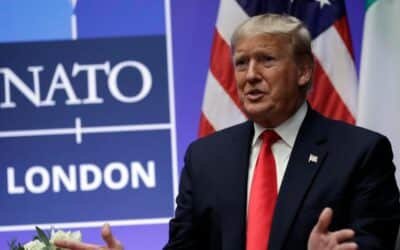
- Even in the West, populist movements from Donald Trump’s “America First” to Italy’s far-right coalitions challenge liberal orthodoxy from within, blurring the line between liberal democracy and illiberal majoritarianism.
These examples suggest that the 21st century is less about competing ideologies and more about pragmatic bricolage, where states mix and match governance models depending on what consolidates power and sustains legitimacy.
The Decline of Grand Narratives
Unlike the 19th and 20th centuries, when liberalism, socialism, nationalism, and Islamism offered sweeping global visions, today’s politics lacks grand ideological narratives. Governments rarely frame their systems as universally exportable. China promotes its model not as communism but as “socialism with Chinese characteristics”—a system it insists is unique, not replicable. Russia’s rhetoric centers on sovereignty and anti-colonial struggle rather than a coherent political ideology.
This is a world of post-ideological pragmatism:
- Policies are adjusted based on immediate domestic needs.
- States borrow from seemingly contradictory traditions.
- Performance, rather than principle, determines legitimacy.
Even the U.S., long the champion of liberal democracy, struggles with credibility when domestic polarization, democratic backsliding, and disinformation undermine its own institutions.
A Multipolar World Without Ideology
The erosion of ideological universals coincides with the rise of multipolar geopolitics. In the Cold War, blocs were organized around ideology: NATO defended liberal democracy, while the Warsaw Pact defended communism. Today, alignments are more transactional.
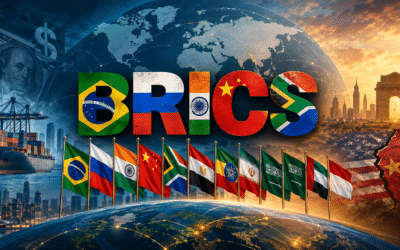
- The BRICS expansion is less about shared ideology than about collective bargaining power against Western dominance.
- The U.S.-India partnership is strategic rather than ideological: Washington overlooks democratic backsliding in New Delhi because India serves as a counterweight to China.
- The China-Russia partnership is built on mutual convenience, not a shared vision of governance.
For smaller states, this creates a world where allegiances are shaped less by ideology than by survival, aid packages, and investment deals. Sovereignty becomes both a shield and a bargaining chip in a fragmented international order.
The Risks of the Ideological Vacuum
An ideological vacuum may sound liberating—no grand dogmas, just pragmatic governance—but it carries serious risks:
- Erosion of Norms: Without ideologies that enshrine principles like human rights or equality, global norms weaken. Refugee protection, climate cooperation, and arms control all rely on shared commitments.
- Transactional Alliances: International relations risk devolving into short-term bargains. Partnerships may be unstable, vulnerable to sudden shifts in interest.
- Weak Multilateralism: Institutions such as the UN, WTO, and even the EU depend on shared values. In a vacuum, multilateral cooperation becomes harder to sustain.
- Citizens at Risk: Domestic politics may prioritize performance and sovereignty over rights, leaving citizens vulnerable to arbitrary shifts in governance.
Toward a Post-Liberal, Post-Authoritarian Age?
Some scholars argue that the 21st century is entering a post-liberal, post-authoritarian age. This does not mean ideology disappears, but that ideology ceases to be the central organizing principle of global politics. Instead:
- States will emphasize civilizational identity over universal models.
- Legitimacy will rest on economic delivery rather than ideological purity.
- Alliances will be driven by geostrategic calculus rather than shared visions.
We may be witnessing the rise of a world defined not by liberalism versus authoritarianism, but by fluid coalitions, civilizational narratives, and digital-era power dynamics.
You May Like To Read: PM Shehbaz Sharif: Ball in Kabul’s Court for Durable Ceasefire
Case Study Comparisons
- China: Markets with authoritarian control, projecting its model as pragmatic but not universal. Its Belt and Road Initiative is less ideological export than infrastructural influence.
- The West: Democracies under pressure from populism, increasingly prioritizing security and economics over liberal evangelism.
- The Global South: Countries like Pakistan, Nigeria, and Brazil navigate multipolarity by pragmatically balancing between blocs, without subscribing to ideological loyalty.
These illustrate the patchwork reality of governance in a post-ideological age.
The 21st century does not belong to liberal democracy, authoritarian socialism, or any single ideological project. It belongs instead to a fragmented, pragmatic order where ideology no longer structures global politics as it once did. States operate in an ideological vacuum, balancing survival, growth, and sovereignty against shifting global dynamics.
Whether this new order produces cooperation or conflict remains uncertain. In the absence of universal principles, the risk is that raw power becomes the only currency of legitimacy—reminiscent less of the 20th century’s ideological struggle, and more of the 19th century’s great-power bargaining.
History has not ended—but ideology as we knew it might have.
You May Like To Read: French PM Sébastien Lecornu Survives Two No-Confidence Votes Amid Deep Political Divisions