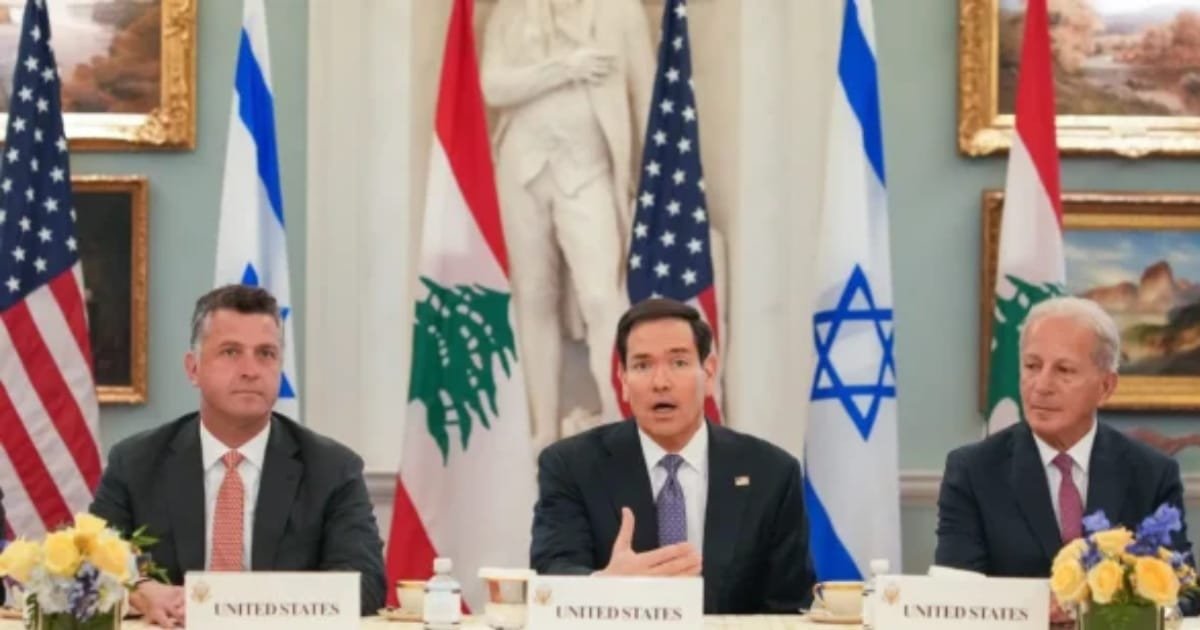





The first direct negotiations between Israeli and Lebanese officials since 1983 took place on Tuesday in Washington, DC, hosted by US Secretary of State Marco Rubio. The more than two-hour meeting occurred against the backdrop of Israel’s ongoing military campaign in Lebanon, which has killed nearly 2,124 people and displaced over 1.1 million since early March.
The US Secretary of State will join Israeli and Lebanese ambassadors in Washington, but their goals clash: Lebanon wants a ceasefire first, while Israel continues its attacks and has not addressed a troop withdrawal.
Al Jazeera’s @ZeinakhodrAljaz reports from Beirut. pic.twitter.com/SVMMcEx3Ll
— Al Jazeera English (@AJEnglish) April 14, 2026
Both sides entered the talks with sharply different priorities. Lebanon pushed for an immediate ceasefire, the safe return of displaced people, and measures to address the humanitarian crisis. Israel, on the other hand, focused on the disarmament of Hezbollah and ruled out discussing a ceasefire at this stage.
Lebanon’s ambassador to the US, Nada Hamadeh Moawad, described the discussions as “constructive” but reiterated the need for an end to hostilities. Israel’s ambassador, Yechiel Leiter, called the exchange “wonderful” and highlighted what he saw as agreement on reducing Hezbollah’s influence in Lebanon.
US Secretary of State Marco Rubio acknowledged the deep complexities, saying progress would take time given “decades of history.”
The talks come amid a fragile US-Iran ceasefire that many hoped would include Lebanon. Iran and mediator Pakistan maintain that Lebanon was part of the truce, while the US and Israel argue it was not.
Hezbollah, which was not represented at the meeting, responded by intensifying attacks on northern Israel and Israeli positions in southern Lebanon. Heavy Israeli strikes also continued throughout the day in southern Lebanon, particularly around Tyre, Nabatieh, and Bint Jbeil.
Israel has maintained a military presence in southern Lebanon despite previous ceasefire agreements, with some officials speaking of establishing a “security zone” up to the Litani River. Critics accuse Israel of using the conflict to entrench its position and redraw borders.
While the Washington meeting marks a rare diplomatic opening after decades of hostility, heavy fighting on the ground and deep divisions suggest that a quick breakthrough remains unlikely.
You May Like To Read: Israeli Strikes Kill Paramedics in Southern Lebanon Amid Ceasefire Efforts
Check out our latest video: