


The geopolitical situation in the Middle East has once again become vulnerable due to a series of assertive Israeli airstrikes on Syrian territory. These recent attacks by Israel, targeted Damascus and the Southern Syrian region of Suweida. Escalation by Israel has ignited fierce condemnation from Syrian officials, drawn international concern, and highlighted the complex interplay of internal Syrian conflicts with regional powers. The objective behind Israel’s attacks—which it labels as, ‘intervention’ in failed efforts to legitimize its actions—is to protect the Druze minority. The consequences of Israel’s escalatory actions are far-reaching, and threaten to exacerbate an already volatile situation.
What Happened and the Human Cost
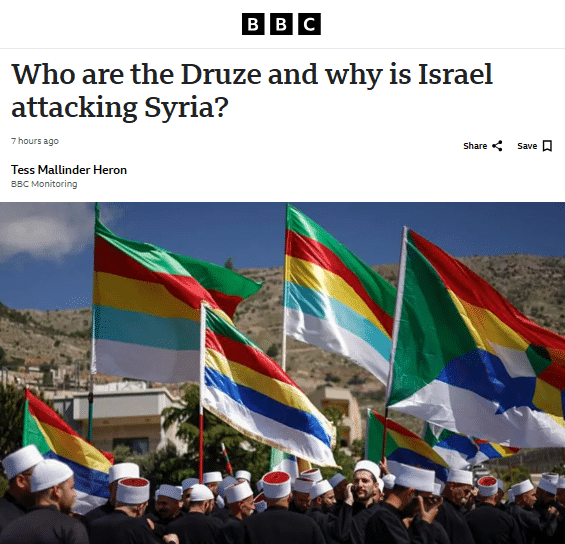
On Sunday, July 13, 2025, the kidnapping of a Druze merchant triggered violent clashes between Druze militias and Sunni Bedouin fighters in southern Syria. By Tuesday, July 15, 2025, Israel militarily intervened, stating their aim was to protect the Druze population and remove pro-government forces accused of attacking them in Suweida. The Syrian Observatory for Human Rights reported at least 350 deaths in Suweida since the start of the conflict on Sunday.
Source: BBC
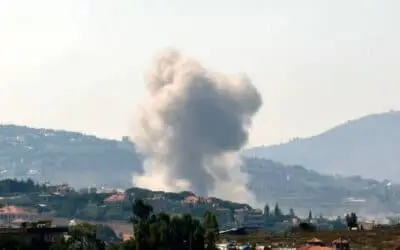
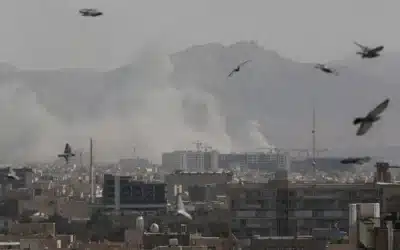
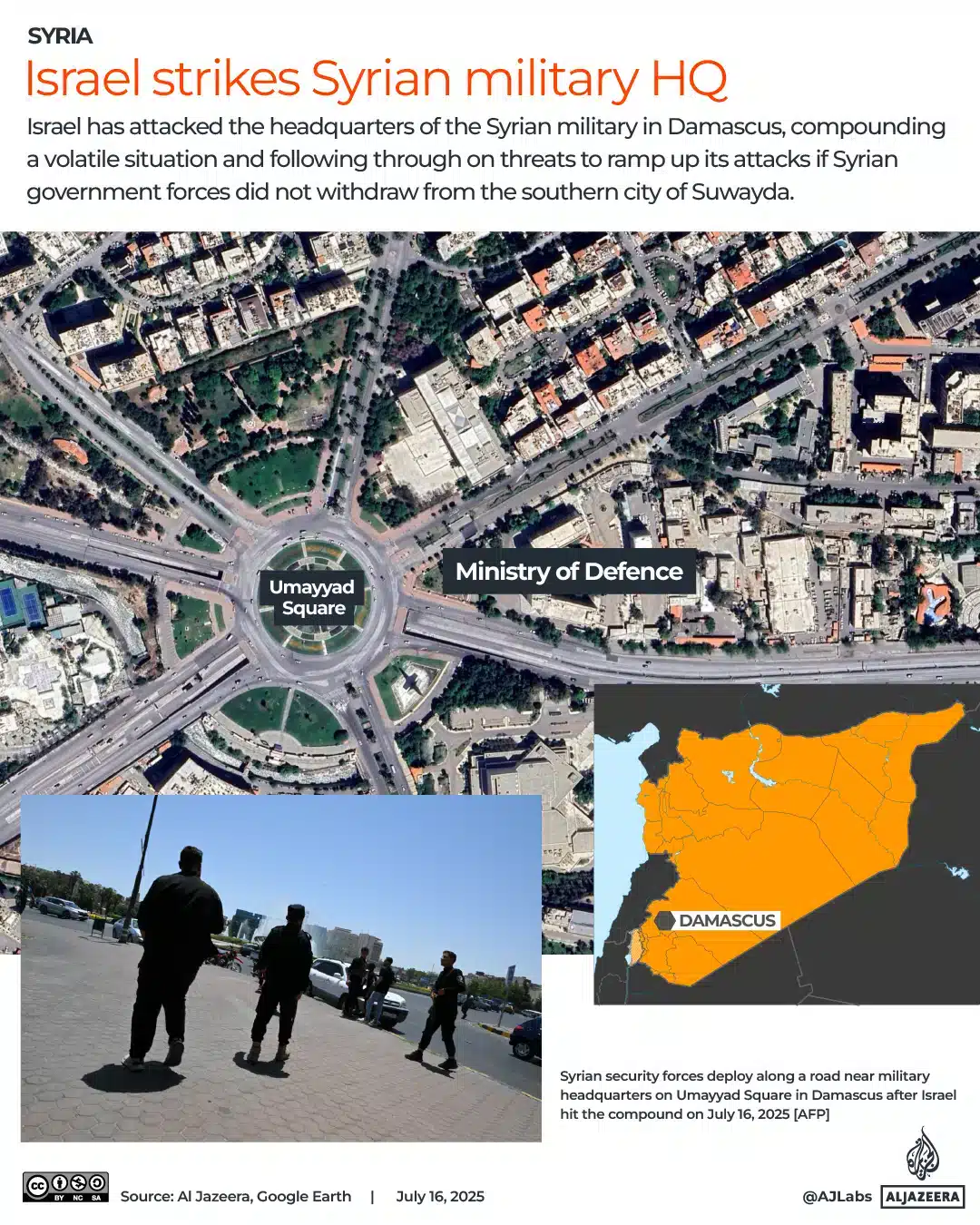
Two days ago, on 15th of July, Israel launched a series of airstrikes on Syria, with major targets in Damascus including the Syrian Defence Ministry and areas near the presidential palace. These strikes followed days of intense aerial bombardment of the Suweida region in southern Syria.
The human toll of these escalating hostilities has been significant. According to the Syrian Health Ministry, at least three people were killed, and dozens wounded in the Damascus attacks. Reports from the Syrian Observatory for Human Rights indicated that more than 250 people had died in these attacks, while security sources cited a higher figure of casualties. The violence in Suweida primarily involved clashes between Syrian government forces, local Druze fighters, and Bedouin tribes, which Israel’s intervention dramatically escalated.
Source: Al Jazeera
The Targets and Reasons Behind the Attacks
The strikes occurred in Damascus, specifically near the presidential palace in Umayyad Square. One strike landed very close to the Presidential palace. Israel claimed responsibility, stating they hit a military target in that area. Separately, in the Southern parts of Syria, Israeli drones targeted the city of Suwayda.
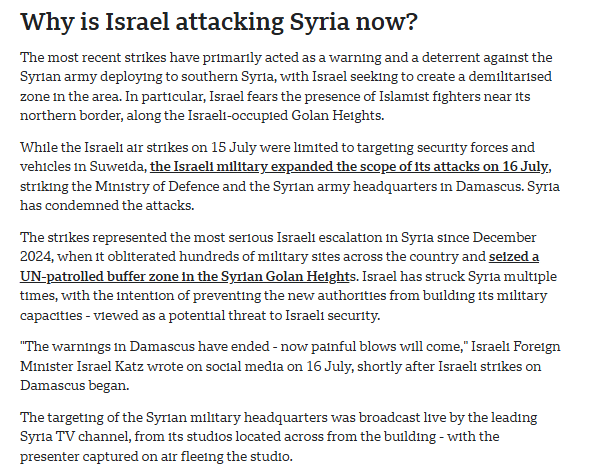
Israel’s primary motivation for these attacks was the protection of the Druze community in southern Syria. Israeli officials asserted that their military actions were necessary to shield the Druze from perceived threats posed by Syrian government forces. Furthermore, Israel has voiced its apprehension regarding Syria’s new leadership, and the persecution of Druze community.
This concern underpinned Israel’s declared stance that it would not permit these forces to establish a presence in southern Syria, near the Golan Heights, particularly given the ongoing deadly sectarian clashes in the Suweida region. The intervention intensified after Syrian government troops, dispatched initially to quell fighting between Druze and Bedouin armed groups, subsequently engaged in clashes with the Druze militias themselves.
Source: BBC
Official Responses and International Reactions
The Israeli attacks have elicited a strong chorus of responses from various stakeholders:
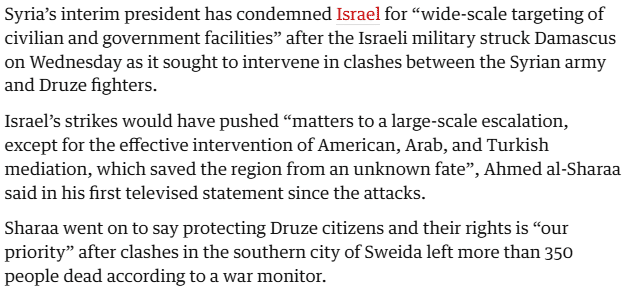
Syrian Interim President Ahmed al-Sharaa condemned Israel’s attacks on both civilian and government sites. In a televised address, he pledged accountability for those who “abused the Druze people” and assured the Druze community that their protection was a priority, stating, “We reject any attempt to drag you into the hands of an external party.”
He added that Syria is “not afraid of war” but would prioritize the national interest. He accused Israel of attempting to “ignite tension and chaos” and that their actions were “criminal and illegal,” contradicting the foundational principles of the Syrian state. The Syrian Foreign Ministry echoed these sentiments, holding Israel fully responsible for the attacks and vowing to protect all citizens, including the Druze.
Source: The Guardian
From the Israeli side, Defense Minister Israel Katz issued a stern warning, stating, “The warnings to Damascus have ended — now painful blows will come.” Israeli Prime Minister Benjamin Netanyahu defended the IDF’s actions, emphasizing that the strikes aimed to protect the Druze community.
International responses included: U.S. Secretary of State Marco Rubio, who expressed deep concern and stated that all parties involved in the Syrian clashes had agreed on “specific steps” to de-escalate the violence. He emphasized the US desire for the fighting to cease.
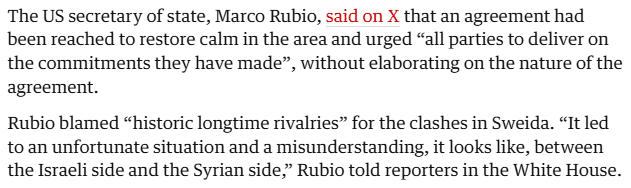
Source: The Guardian
Broader Context and Implications
Following critical aspects are imperative, to fully grasp the gravity of the situation:
- Firstly, the attacks are linked to the internal sectarian clashes within Syria, specifically in Suweida. The Druze, an Arab minority whose religion branched from Islam, number around 700,000 in Syria and approximately 150,000 in Israel.
- Secondly, the timing of Israel’s military intervention is noteworthy. These attacks represent escalation against Syria’s new government, under interim President Ahmed al-Sharaa. The intensification of hostilities comes despite Sharaa’s efforts to foster warmer ties with U.S. and regional countries through security contacts.
- Finally, while the Syrian government announced a new ceasefire in Suweida, and the Syrian army reportedly began withdrawing from the city, the longevity of this truce remains uncertain, given that a previous agreement quickly disintegrated. The U.N. Security Council’s involvement further highlights the international community’s concern over the potential for wider regional destabilization.
The situation in Syria remains precarious, with Israel’s actions adding a dangerous dimension to an already volatile conflict. The declared aim of protecting the Druze community is intertwined with broader regional security concerns, leading to a volatile environment with unpredictable consequences for all involved.
You May Like to Read:
- India’s Cross-Border Strikes in Myanmar: Separatist Groups Accuse Army of Targeted Killings
- North Korea Pledges Support to Russia in Ukraine War: Implications and Global Reactions
- What Now? Decoding the Future of Pakistan-US Ties
- Israel’s Genocidal Violence: Starvation and Massacres in Palestine
- Aid under Fire: Sudan’s War Criminals Weaponize Humanitarian Blockades